⚡ Quick Answer: Growing Strawberries Indoors
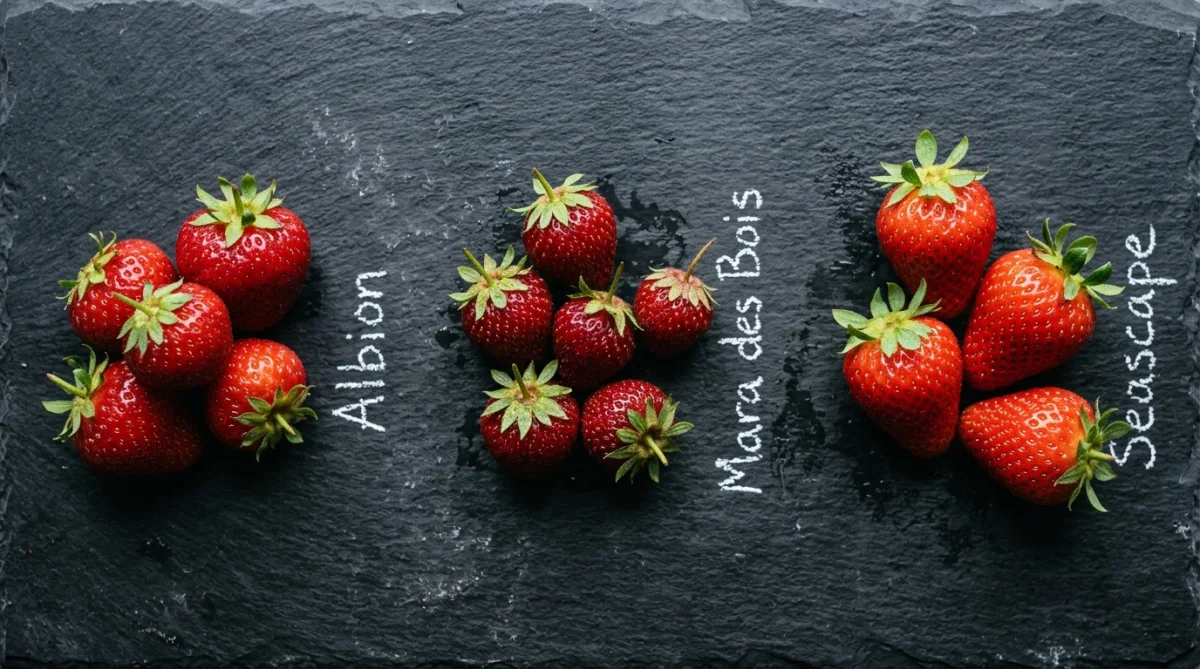
To succeed at growing strawberries indoors year-round, you must plant true Day-Neutral cultivars (such as Albion, Mara des Bois, or Seascape) from bare-root crowns. Plant the central crown with millimeter precision so the potting soil hits the exact midpoint of the crown—never bury it. Provide 14 to 16 hours of full-spectrum LED grow light delivering 250 to 350 PPFD (15 to 22 Daily Light Integral). Maintain daytime temperatures around 68°F to 72°F (20°C to 22°C) and drop nighttime temperatures to 55°F to 60°F (13°C to 16°C) to lock in high-Brix berry sweetness. Vibrate open blossoms daily for 2 seconds with an electric toothbrush to achieve 100% achene pollination and eliminate deformed ‘cat-faced’ fruit, while pruning all vegetative runner stolons immediately.
Growing strawberries indoors allows home gardeners to pluck sweet, sun-warmed, ruby-red berries from their living room shelves in the dead of January. Traditional outdoor strawberry patches face relentless pressure: birds pecking ripe fruit, slugs chewing through crowns, fungal gray mold (Botrytis cinerea) rotting berries during wet spring rains, and a frustratingly brief three-week harvest window. Indoor cultivation eliminates outdoor garden pests and weather devastation, putting every environmental parameter directly under your control. Just as mastering growing garlic in containers and growing potatoes in grow bags bypasses contaminated garden soil, controlled indoor berry production guarantees pristine, chemical-free harvests.
Yet many enthusiastic beginners fail during their first indoor attempt. They set potted plants on a windowsill, watch the leaves stretch toward weak winter light, and harvest sour, button-sized berries or watch their plants rot at the soil line within two months. This failure stems from three specific errors: burying the central crown beneath potting soil, attempting to grow June-bearing varieties that require outdoor winter dormancy, and failing to provide the diurnal temperature shift required for sugar accumulation. Understanding environmental transpiration—principles we detail in moisture physics and transpiration dynamics—is vital for balancing root hydration without inviting fungal decay.
Strawberries (Fragaria × ananassa) are not leafy greens; they are high-metabolism fruiting perennials. To produce dessert-sweet fruit year-round indoors alongside crops like your how to grow a Thai pepper plant or growing vegetables indoors, you must match day-neutral genetics with precise crown planting depth, targeted full-spectrum LED lighting (250 to 350 PPFD), complete flower vibration pollination, and a cooler nighttime temperature drop. Follow this tested framework to harvest sweet, competition-grade strawberries indoors month after month.
🍓 Key Takeaways: Indoor Strawberry Success Rules
- Day-neutral genetics are non-negotiable: June-bearing strawberries only fruit once per year after outdoor winter dormancy. For indoor cultivation, plant true Day-Neutral cultivars (Albion, Mara des Bois, Seascape, San Andreas) that produce continuous flower trusses regardless of day length.
- The millimeter crown rule: The central crown—the compressed rhizome where roots meet leaf stems—must sit precisely level with the soil line. Burying the crown by just 1/4 inch triggers fatal crown rot; planting it too high desiccates upper roots.
- Day vs. night temperature differential drives sugar: Berries grown in a constant 75°F (24°C) environment taste sour and watery because the plant respires away stored carbohydrates at night. Maintain daytime temperatures at 68°F to 72°F (20°C to 22°C) and drop night temperatures to 55°F to 60°F (13°C to 16°C) to lock in high Brix sweetness.
- Acoustic vibration stops misshapen fruit: A strawberry is an aggregate accessory fruit with 200+ individual achenes (pistils). If only half are fertilized, the berry develops lopsided, green, and ‘cat-faced.’ Vibrate open flowers for 2 seconds with an electric toothbrush to ensure 100% pollination.
- Aggressive runner suppression: Snip off all vegetative runners (stolons) immediately with clean shears. Every runner allowed to grow diverts 30% to 40% of photosynthates away from flower initiation and fruit sizing.
1. Can You Grow Strawberries Indoors? The Pros, Pitfalls & Yield Reality
Can you grow strawberries indoors successfully? Yes, absolutely. Modern horticultural LEDs, day-neutral breeding, and automated indoor gardening systems make growing strawberries indoors highly productive in apartments, basements, and utility rooms. By shifting to controlled environment agriculture (CEA), growers completely sidestep the biological hazards of outdoor berry farming.
Indoor strawberry plants bypass the traditional hazards of outdoor berry farming. You will never lose a crop to spotted wing drosophila, pill bugs, or chipmunks, and you eliminate splashing soil that spreads fungal blight. Furthermore, managing clean containers prevents common issues explored in indoor pest and fungus gnat prevention. The primary challenge is replicating the physical ecosystem: providing sufficient photonic energy (light intensity), maintaining active air exchange, and performing the work of bees through manual pollination.
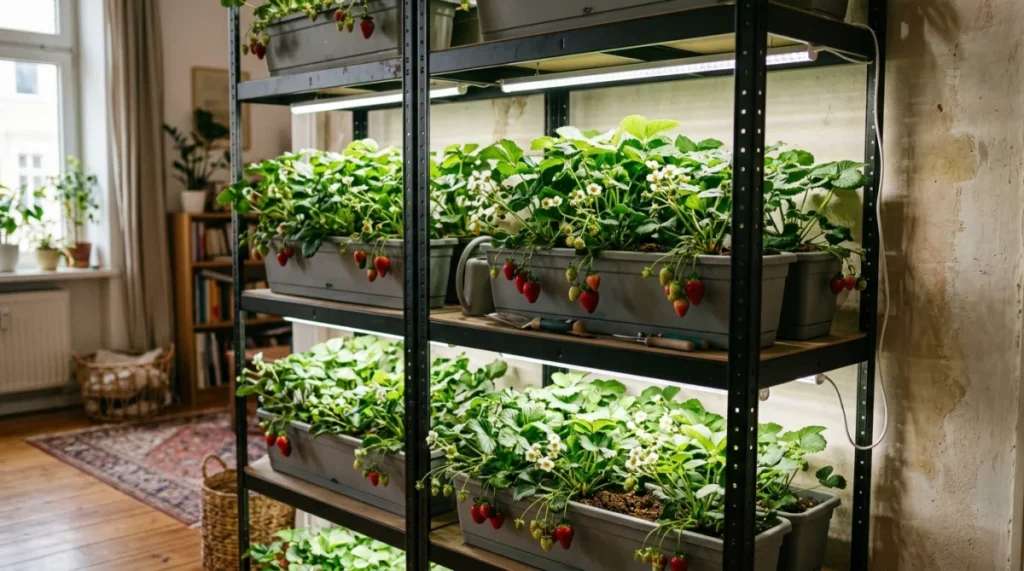
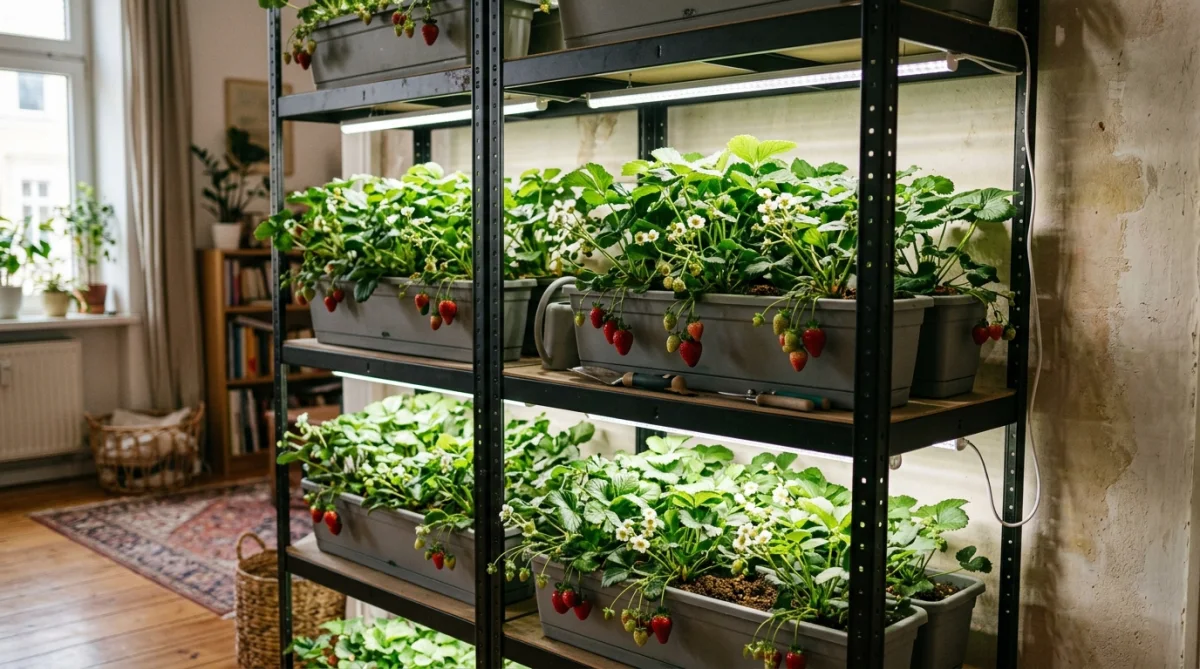
Realistic Indoor Yield Expectations: A healthy, mature day-neutral strawberry plant grown indoors under proper full-spectrum LEDs yields between 0.5 to 1.25 pounds (220 to 560 grams) of fresh fruit per plant per year, harvested in continuous waves every 4 to 6 weeks. A compact four-tier indoor shelving unit holding 16 plants can produce a steady half-pound of gourmet berries every single week.
2. Selecting Varieties for Indoor Strawberry Growing: Day-Neutral vs. June-Bearing
Botanically, strawberries divide into three distinct photoperiodic categories. Choosing the wrong category is the most common reason indoor growers end up with lush green foliage that never produces a single berry, as confirmed by strawberry breeding research at Cornell University Berry Agronomy Program:
• June-Bearing (Short-Day): Varieties like ‘Allstar’, ‘Chandler’, and ‘Honeoye’ form flower buds only during the short days of autumn, require a strict outdoor winter chilling spell below 45°F (7°C), and produce one heavy crop over three weeks in late spring. They are completely unsuited for continuous indoor production.
• Everbearing (Long-Day): Varieties like ‘Fort Laramie’ and ‘Ozark Beauty’ set two separate flushes (early summer and early autumn). They perform adequately, but produce long unproductive gaps between flushes indoors.
• Day-Neutral (The Indoor Standard): Day-neutral cultivars do not respond to day length. As long as temperatures stay between 55°F and 75°F (13°C and 24°C), they form flower trusses, set fruit, and regenerate crowns continuously for 10 to 12 months.
3. Starting Strawberries: Bare Roots vs. Seeds vs. Runners
When planning growing strawberries indoors, the starting plant material directly dictates your harvest timeline and disease risk:
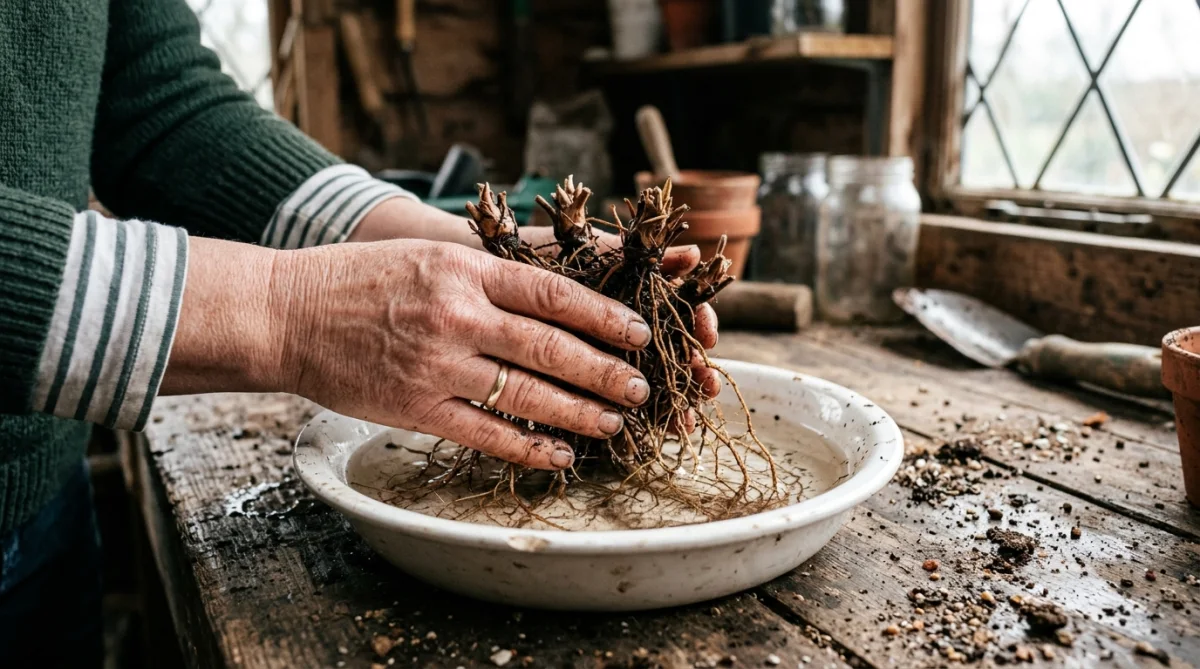
• Bare-Root Dormant Crowns (Recommended): The gold standard. Bare-root crowns are harvested from commercial nursery fields in late winter and kept in suspended cold storage. They arrive as a woody crown with a dense bundle of dry roots. Once planted, they break dormancy within 5 to 7 days, leaf out aggressively, and produce their first ripe fruit within 60 to 75 days. Inspect crowns upon arrival; soak roots in lukewarm water for 30 minutes before planting.
• Starting from Seed: Growing strawberry indoors from seed is botanically fascinating but tests patience. Strawberry seeds require a mandatory 4-week cold stratification period in a freezer, take 14 to 28 days to germinate under humidity domes (often utilizing a {HEAT_MAT_LINK}), and require 5 to 6 months of indoor care before producing their first modest harvest. Reserve seed growing for heirloom alpine varieties (like ‘Alexandria’ or ‘Yellow Wonder’) that do not produce runners.
• Transplanting Outdoor Garden Runners: Avoid bringing outdoor plants or runners inside. Garden soil and outdoor foliage invariably harbor microscopic two-spotted spider mites, thrips, and powdery mildew spores. In a warm indoor room free of natural predators, a single outdoor strawberry plant will unleash an uncontrolled pest outbreak within three weeks, complicating your indoor pest and fungus gnat prevention management.
4. The Millimeter Crown Rule: Planting Depth & Container Setup
Planting depth is the primary failure point in strawberry horticulture. The ‘crown’ is the thickened, short stem junction located directly between the upper leaf stems and the lower fibrous roots. Getting this depth wrong by even a quarter-inch is fatal to growing strawberries indoors, as demonstrated in the responsive botanical diagram below:
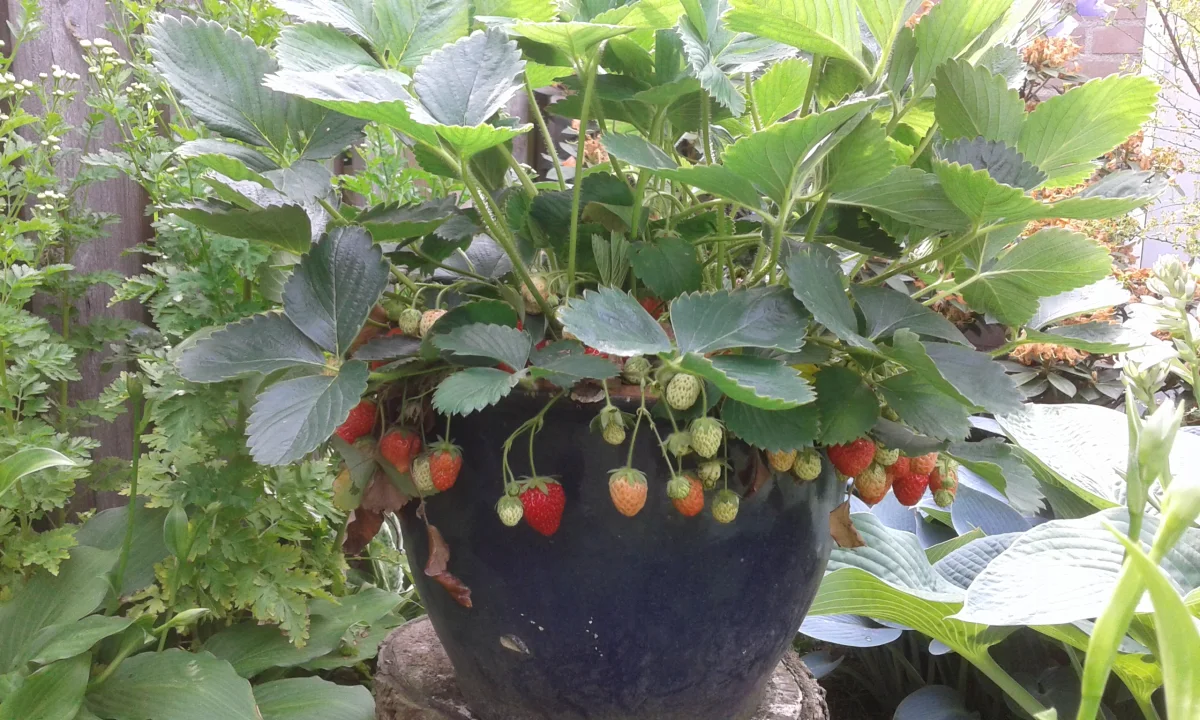
• Container Dimensions: Strawberries possess relatively shallow root systems that spread horizontally. A container 8 to 10 inches deep is ideal. Allow 8 to 10 inches of horizontal spacing between plants (approximately 1 gallon of soil volume per plant). Shallow window boxes, tiered stackable vertical planters, or 1-gallon fabric pots work exceptionally well.
• Soil Formulation: Strawberries demand loose, slightly acidic soil (pH 5.8 to 6.2) with rapid drainage. Blend 50% peat moss or compressed coconut coir blocks, 30% coarse horticultural perlite or pumice, and 20% screened worm castings. Never allow strawberry roots to sit in stagnant water; they require abundant oxygen exchange.
5. Photometric Engineering: DLI, PPFD & Grow Light Schedules
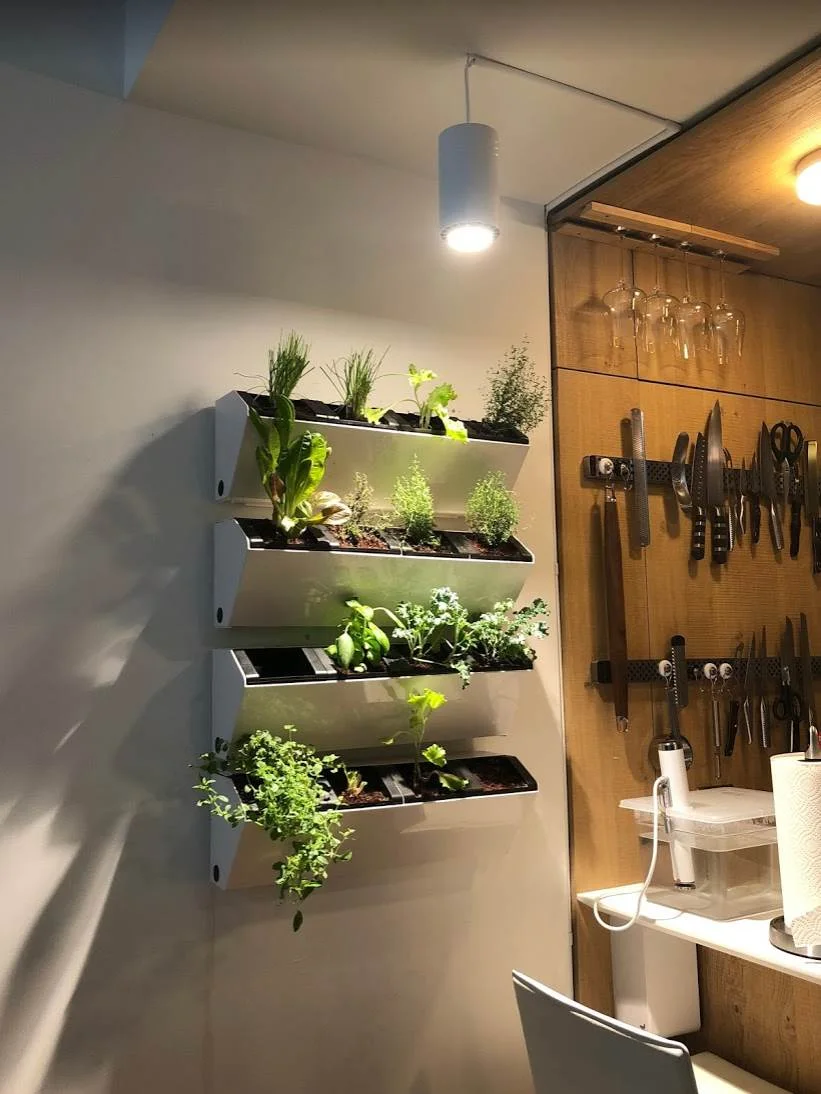
Strawberries cannot fruit on a dim windowsill. Low-E window glass reflects infrared and UV wavelengths, reducing light intensity by up to 60%. To sustain continuous flowering and fruit development when growing strawberries indoors, deploy a high-efficiency full-spectrum LED grow light panel calibrated to horticultural target intensities:
Unlike short-day onions or long-day spinach, day-neutral strawberries produce flowers under any photoperiod between 12 and 16 hours. Running lights for 14 hours daily delivers the optimal balance of photosynthetic carbon accumulation without overheating indoor canopies.
6. The Sugar Secret: Temperature Management When Growing Strawberries Indoors
Commercial CEA strawberry growers know a biological secret that hobbyists overlook: daytime warmth builds sugar through photosynthesis, but nighttime cool locks that sugar inside the berry, a phenomenon well-documented by the UC Davis Postharvest & Strawberry Physiology Center.
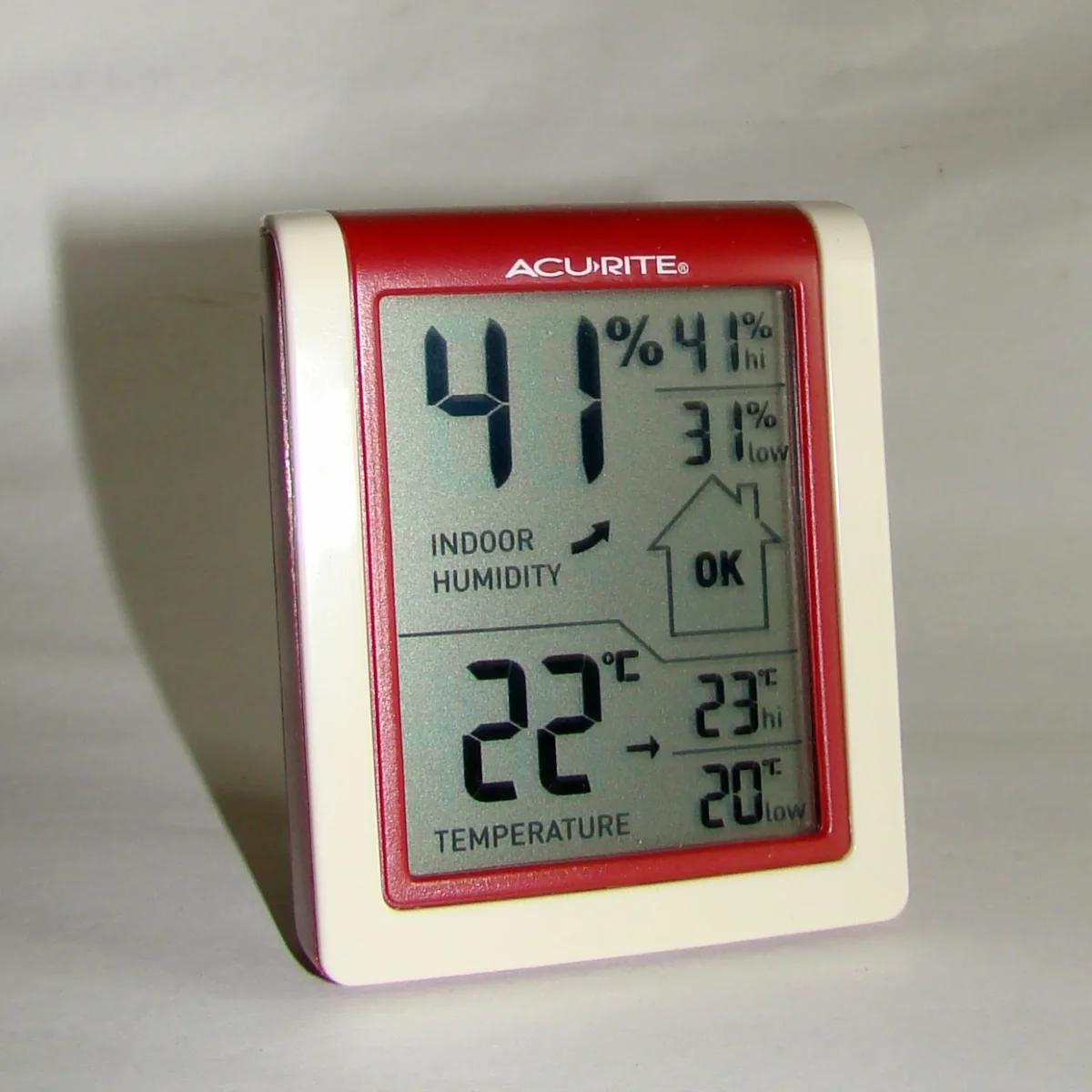
If you keep your indoor grow room at a constant 75°F to 78°F (24°C to 26°C) around the clock, plant respiration remains high through the dark hours. The plant burns through the sucrose, glucose, and fructose it manufactured during the day, resulting in bland, sour, watery berries. To achieve dessert-sweet, store-beating flavor (10° to 12°+ Brix), track your microclimate with a digital thermo-hygrometer sensor:
• Daytime Target: 68°F to 72°F (20°C to 22°C) while the grow lights are illuminated.
• Nighttime Drop: 55°F to 60°F (13°C to 16°C) when lights turn off. In an apartment, achieve this by cracking an adjacent window in winter, setting your thermostat lower overnight, or venting cooler air into your grow tent.
• Relative Humidity: Maintain 60% to 70% RH during vegetative growth, reducing to 50% to 55% RH during fruit ripening to prevent Botrytis gray mold.
7. Complete Pollination Physics for Growing Strawberries Indoors
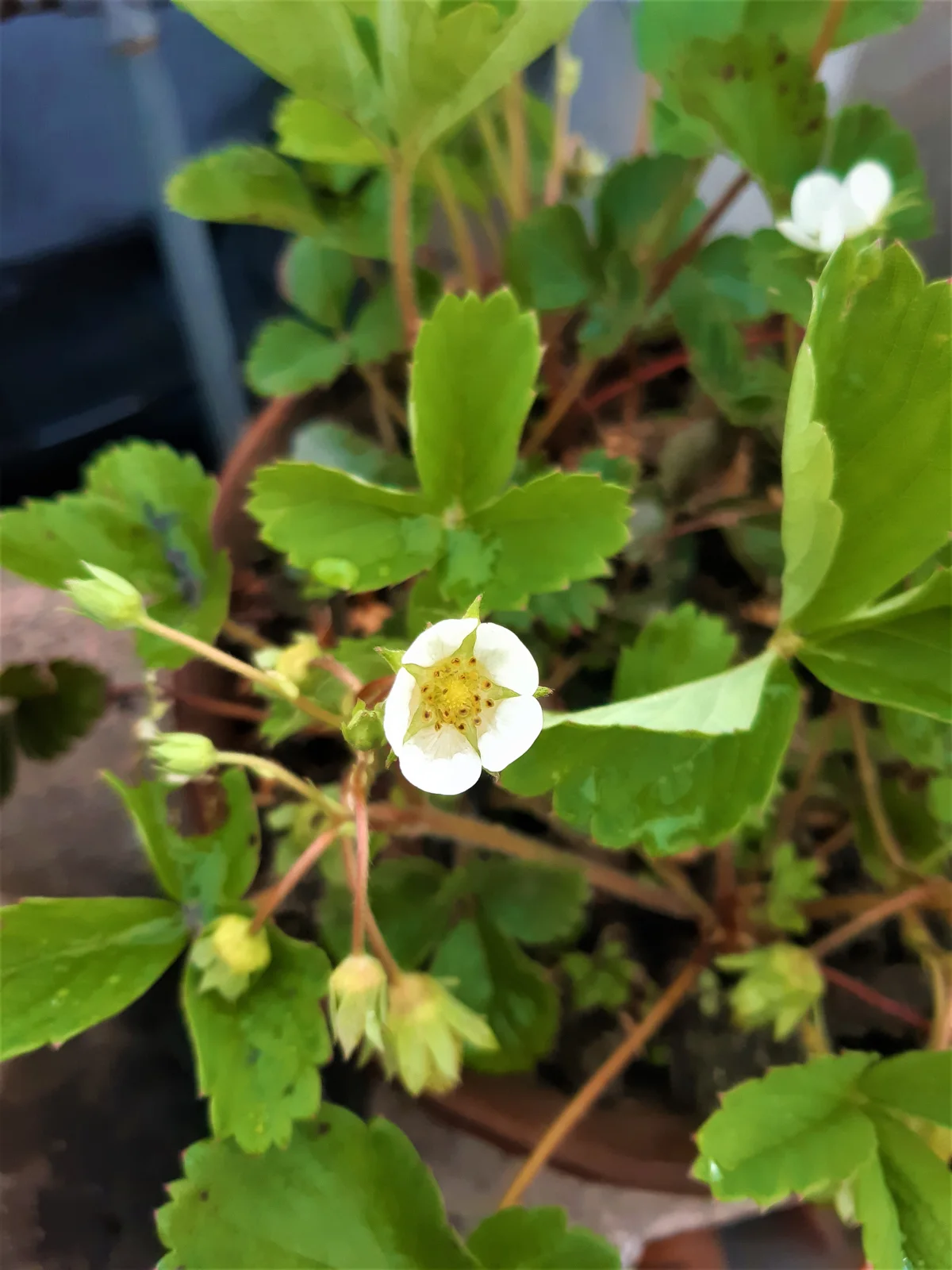
Have you ever harvested an indoor strawberry that was shriveled, puckered, green on one side, and shaped like a deformed claw? In horticultural terms, this is ‘cat-facing,’ and it is caused by incomplete pollination.
A strawberry flower contains a central golden mound composed of 200 to 400 individual pistils (female organs), surrounded by an outer ring of pollen-bearing yellow anthers (male organs). Each fertilized pistil develops into an achene (what we casually call a strawberry ‘seed’). Each developing achene produces auxin, the plant growth hormone that signals the underlying receptacle flesh to expand and sweeten. If only half the pistils receive pollen, only half the berry swells, leaving the unfertilized side hard, green, and stunted.
8. Pruning Runners & Watering When Growing Strawberries Indoors
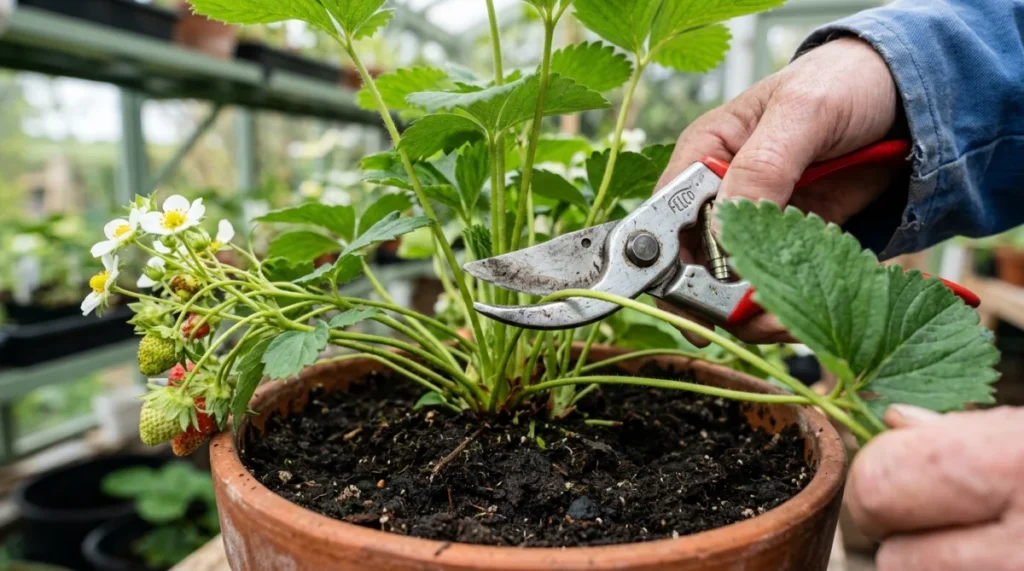
When growing strawberries indoors, plants possess two competing biological drives: vegetative reproduction through horizontal runners (stolons), and sexual reproduction through fruit. In an indoor setting, runners are parasites on your fruit yield.
The Runner Snipping Rule: As day-neutral plants mature, they send out long, wiry stems tipped with miniature plantlets. Snip these off flush with the crown using sharp scissors the moment they emerge. Leaving runners on the plant cuts your ongoing fruit harvest by up to 40%.
Sub-Irrigation (Bottom Watering): Never water indoor strawberries from above with a watering can. Wet leaves and wet crowns create an ideal breeding ground for powdery mildew and Botrytis fruit rot. Water from the bottom: pour water into container saucers and allow the potting mix to wick moisture upward via capillary action for 30 minutes, then discard any standing water, following the irrigation guidelines we outline in moisture physics and transpiration dynamics.
9. Feeding for Heavy Fruit: Organic Nutrients for Growing Strawberries Indoors
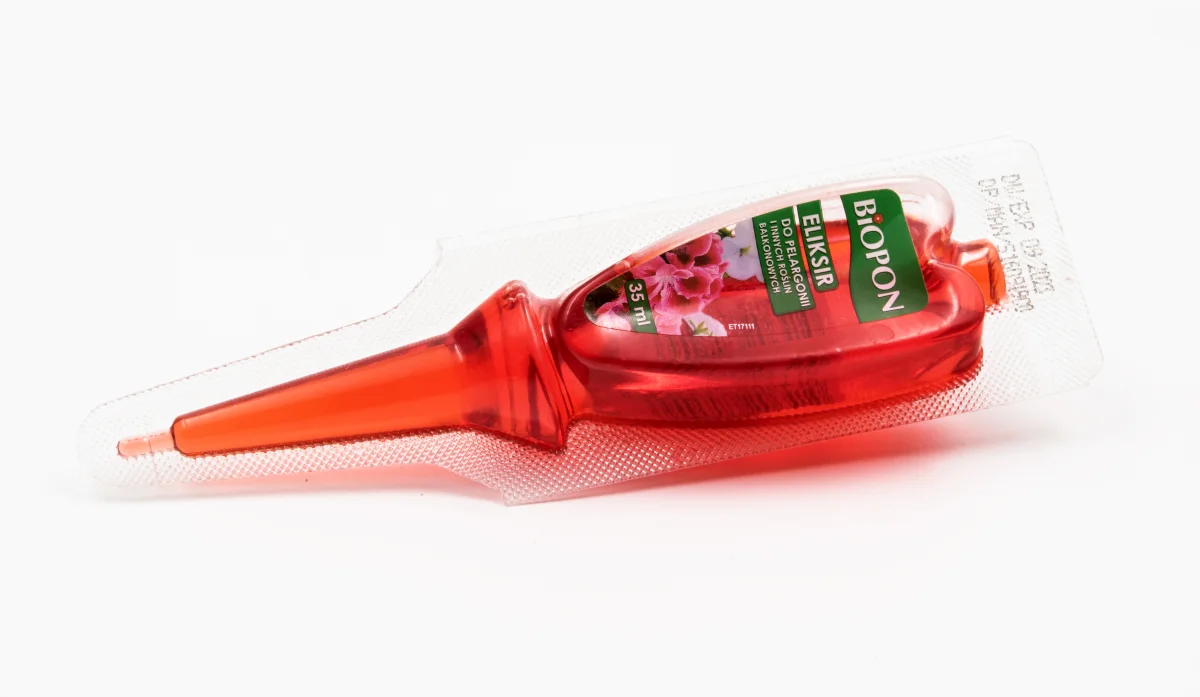
When growing strawberries indoors, plants are sensitive to salt buildup and easily scorched by aggressive synthetic chemical fertilizers. Follow an organic, phased nutritional regimen designed specifically for growing strawberries indoors:
10. Frequently Asked Questions About Growing Strawberries Indoors
Do strawberries grow well indoors year-round? +
How long do indoor strawberries take to produce fruit? +
Why are my indoor strawberries sour or lacking flavor? +
What size pot should I use for indoor strawberry plants? +
Will potted strawberry plants survive indoors over winter? +
11. Master Care Calendar & Checklist for Growing Strawberries Indoors
Follow this chronological step-by-step roadmap to navigate your indoor strawberry crops from dormant bare-root crowns through heavy, continuous harvests:
Summary: Enjoying Fresh Strawberries Year-Round
Mastering growing strawberries indoors proves that you don’t need a sprawling backyard or favorable outdoor seasons to produce abundant gourmet fruit. By selecting robust day-neutral genetics like Albion or Mara des Bois, aligning your planting depth to the millimeter, supplying 250 to 350 PPFD of full-spectrum light, dropping temperatures at night, and practicing thorough acoustic pollination, you create an indoor micro-orchard that yields fresh, ruby-red berries in every month of the year.