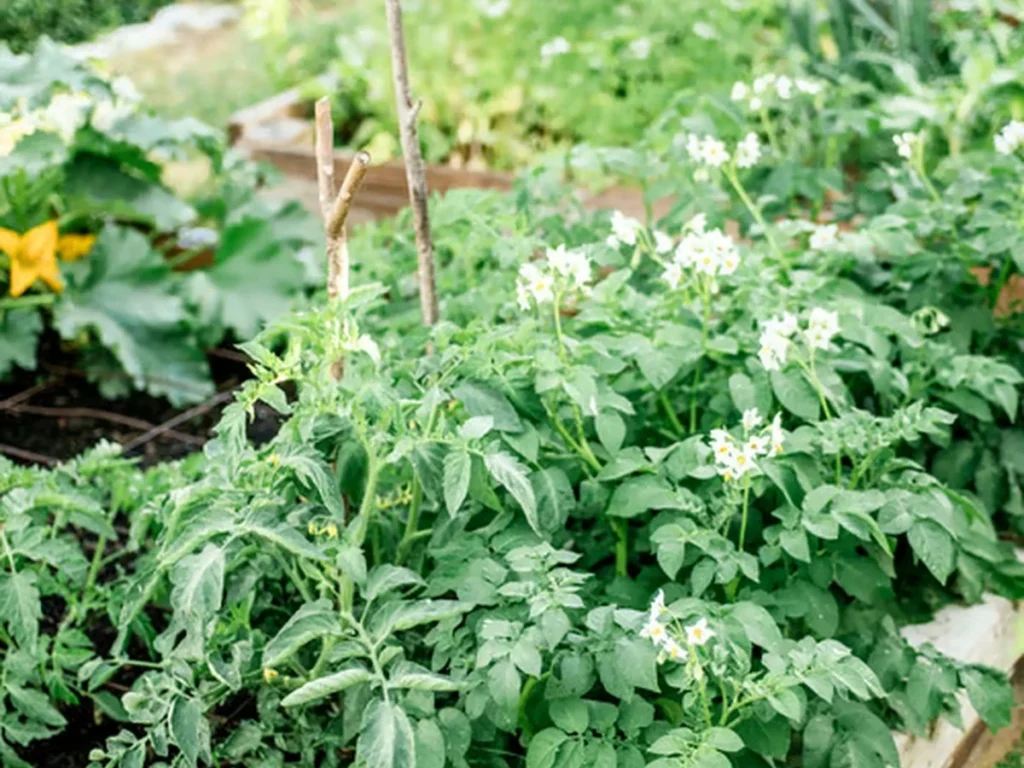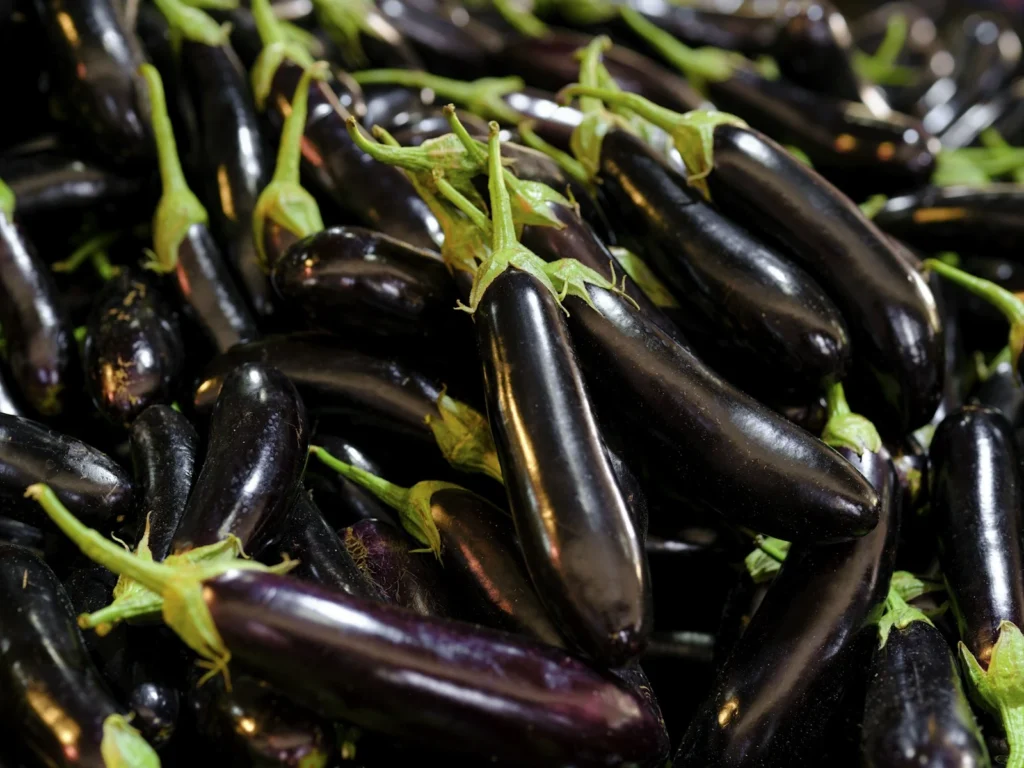
⚡ Quick Answer: How to Grow Chinese Eggplant
Chinese eggplant (Solanum melongena var. serpentinum) is a long, slender, tender-skinned nightshade that outperforms standard globe eggplants in sweetness, productivity, and culinary versatility. Unlike thick-skinned Western varieties that require peeling and heavy salting to extract bitterness, Chinese eggplants possess thin, edible lavender-purple skins, minimal seed cavities, and delicate white flesh that absorbs marinades without turning spongy.
Horticulturist Non-Negotiables: Germinate seeds on a heat mat at 80°F to 90°F (27°C to 32°C), prune all vegetative suckers below the first flowering ‘Y’ fork to lift foliage and prevent soil wilt, and provide consistent deep moisture to eliminate blossom end rot and bitter solanine buildup.
🔬 Field Lab Disclosure & Hands-On Growing Notes
Every protocol in this guide is derived from active growing logs on my testing benches and container trials at Hydroponic Raise. I have grown Chinese and Japanese eggplant cultivars in ground beds, 7-gallon fabric containers, and commercial perlite Dutch buckets. We accept zero sponsored product placements. These instructions reflect what genuinely prevents flea beetle defoliation, stops blossom drop in summer heat, and maximizes fruit yield in home and greenhouse settings. For foundational seed techniques, see our guide on how to start a vegetable garden from seed.
Core Principles for Eggplant Success
- Heat Is Mandatory for Germination: Chinese eggplant seeds will not germinate in cool soil. Maintain seedling heat mats between 80°F and 90°F (27°C to 32°C) for rapid emergence in 7 to 9 days.
- Prune Below the Fork: Prune away all suckers and leaves below the first flowering fork. This channels plant energy into fruit production, boosts airflow, and stops soil-borne Verticillium spores from splashing onto lower leaves.
- Mechanical Flea Beetle Defense: Protect young spring transplants with floating row covers (Agribon AG-19) or kaolin clay. Flea beetles can riddle tender eggplant foliage with hundreds of shot-holes in a single afternoon.
- Container Volume Matters: Container plants need a minimum of 5 to 7 gallons of potting soil. Small pots dry out too quickly, triggering blossom end rot and stunted, bitter fruit.
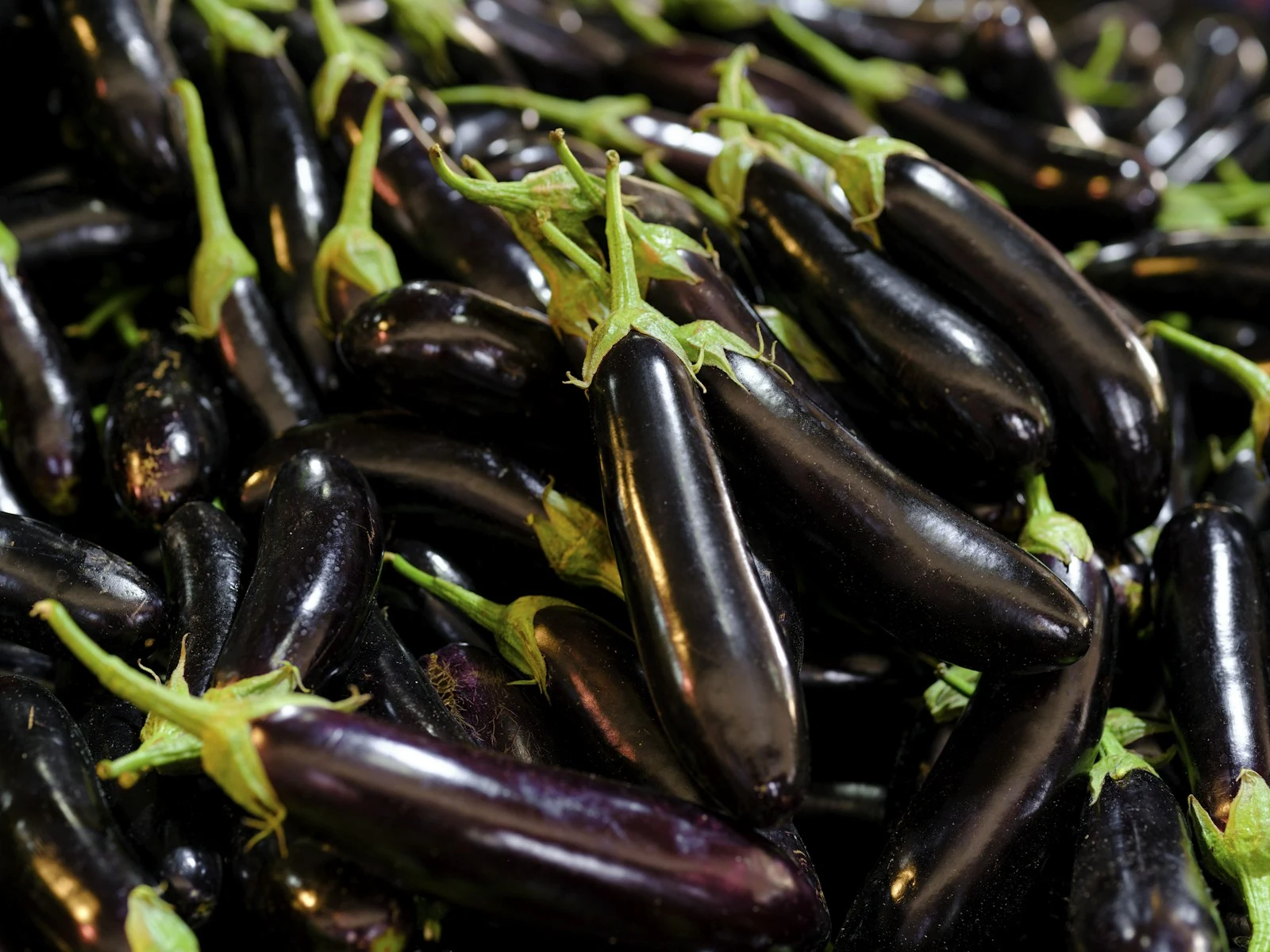
- The Glossiness Harvest Test: Pick fruit while the skin is brilliantly glossy and firm to a gentle thumb press. Dull, matte skin indicates over-maturity, woody flesh, and bitter seed development.
Botanical Anatomy: Chinese vs. Japanese vs. Western Globe Varieties
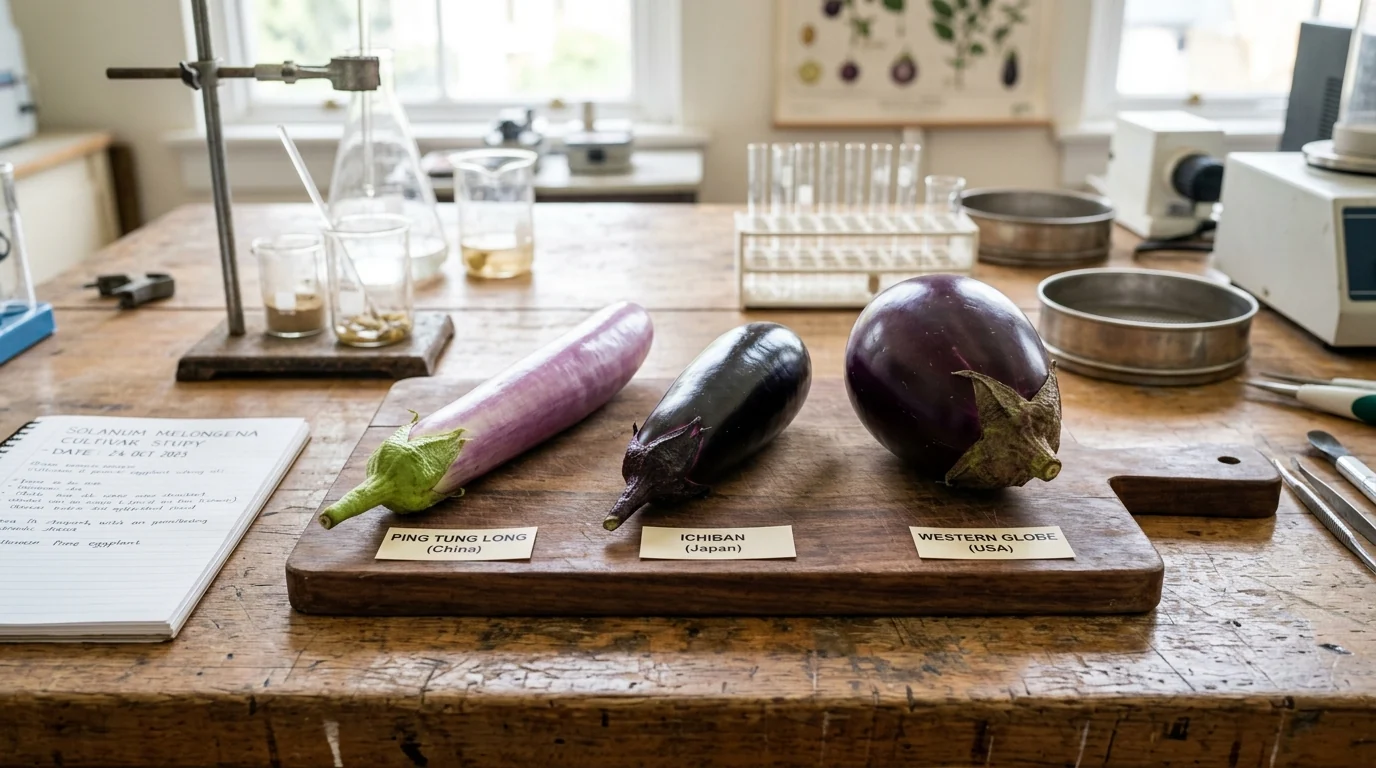
Most gardening websites mistakenly lump Chinese and Japanese eggplants together under a generic ‘Asian eggplant’ label. While both are slender members of the Solanaceae family, their plant genetics, skin thickness, and calyx coloration differ noticeably.
Chinese Eggplant: Characteristics and Cultivars
Chinese eggplant (Solanum melongena var. serpentinum) is characterized by its elongated, gently curving profile that frequently reaches 10 to 15 inches in length with a slender 1.5 to 2-inch diameter. The skin is uniformly light purple, lavender, or bright violet, wrapped around tender, pale white flesh.
The quickest visual way to identify a true Chinese eggplant is the calyx (the stem cap attached to the fruit). Chinese cultivars almost always feature a pale green or light olive-green calyx. Because Chinese varieties contain very low concentrations of solanine alkaloids and have small, undeveloped seed cavities, they possess zero astringent bitterness. You never need to salt or peel Chinese eggplant before cooking.
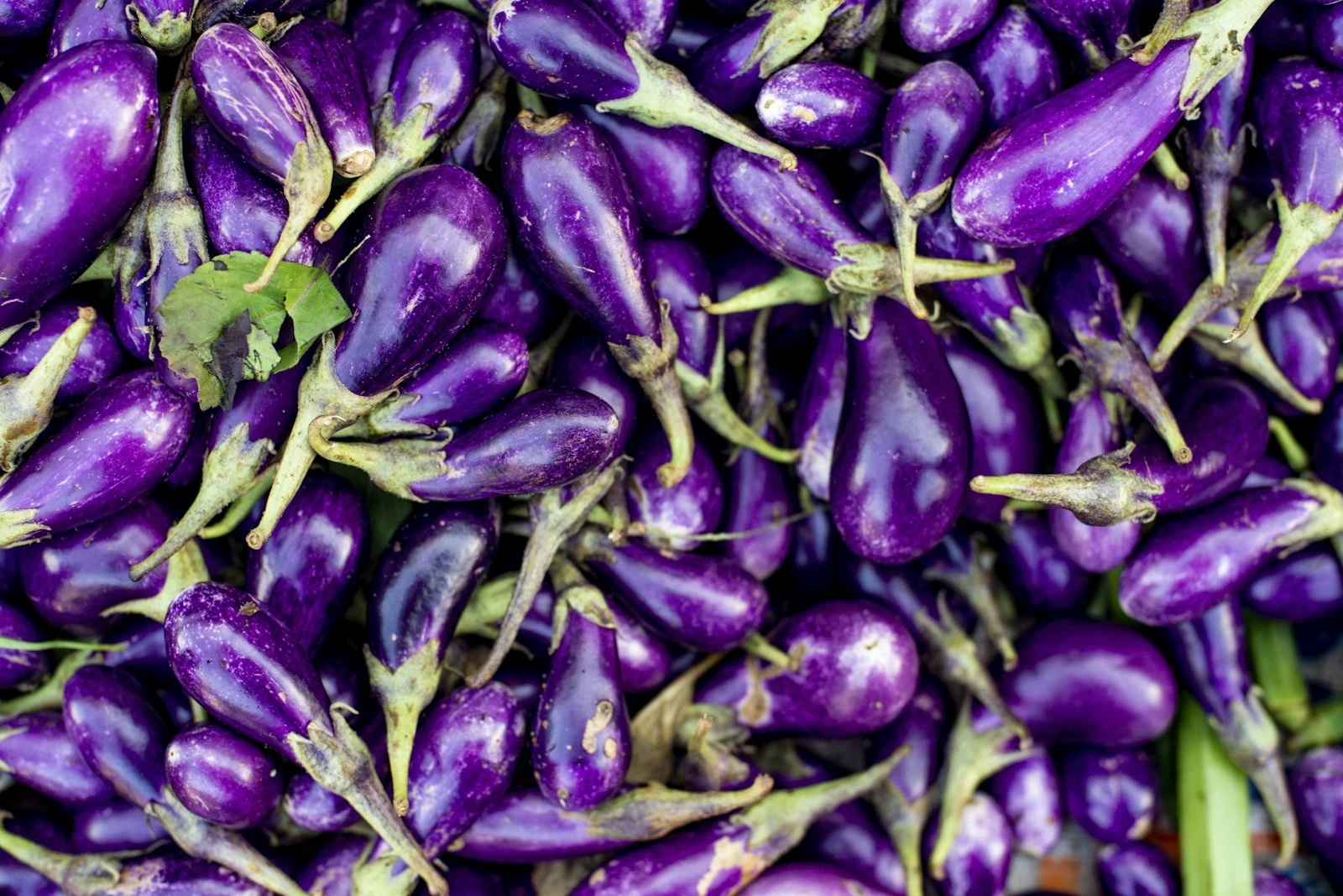
Top-performing Chinese cultivars include:
- Ping Tung Long: The industry benchmark. Slender, straight 12 to 14-inch fruit with light purple skin and bright green calyxes. Highly disease-resistant and thrives in tropical heat and humidity.
- Fengyuan Purple: A prized Taiwanese heirloom producing 10 to 12-inch tender fruit with a slightly paler lavender hue and exceptional melting texture when steamed or stir-fried.
- Fuchsia Bride: A high-yielding hybrid producing uniform, straight, glossy bright fuchsia fruits with tender skin and high tolerance to early-season temperature dips.
- Chinese Long White: An heirloom variety bearing pure ivory-white, tender slender fruit that turns golden when fully ripe, offering a mild, buttery flavor.
The Japanese Contrast: Calyx and Skin Color
In contrast, Japanese eggplants (such as ‘Ichiban’, ‘Millionaire’, and ‘Shikokumaru’) are typically slightly shorter (8 to 10 inches), straight, and exhibit deep, midnight-purple or blackish-violet skin. Crucially, Japanese eggplants possess dark purple or black calyxes that match their skin, and their flesh is slightly denser, making them ideal for high-heat grilling, tempura frying, and miso-glazing (Nasu Dengaku).
Western Globe Comparison
Standard Western globe eggplants (such as ‘Black Beauty’) produce large, pear-shaped fruit with thick, leathery, dark purple skin and extensive spongy seed cavities. Globe varieties contain higher levels of solanine and bitter enzymes, requiring cooks to slice, salt, and press the flesh to purge moisture and bitterness before cooking. Chinese eggplants make this laborious prep work obsolete. For companion nightshade growing tips, explore our guide on peppers and tomatoes for raised beds.
Thermal Biology and the Indoor Seed-Starting Protocol
Eggplants are the most heat-demanding members of the nightshade family, requiring higher thermal units than tomatoes or sweet peppers. Trying to germinate eggplant seeds at room temperature (65°F to 70°F / 18°C to 21°C) is the primary reason gardeners experience poor germination, damping off, and stalled seedlings.
Soil Temperature Dynamics
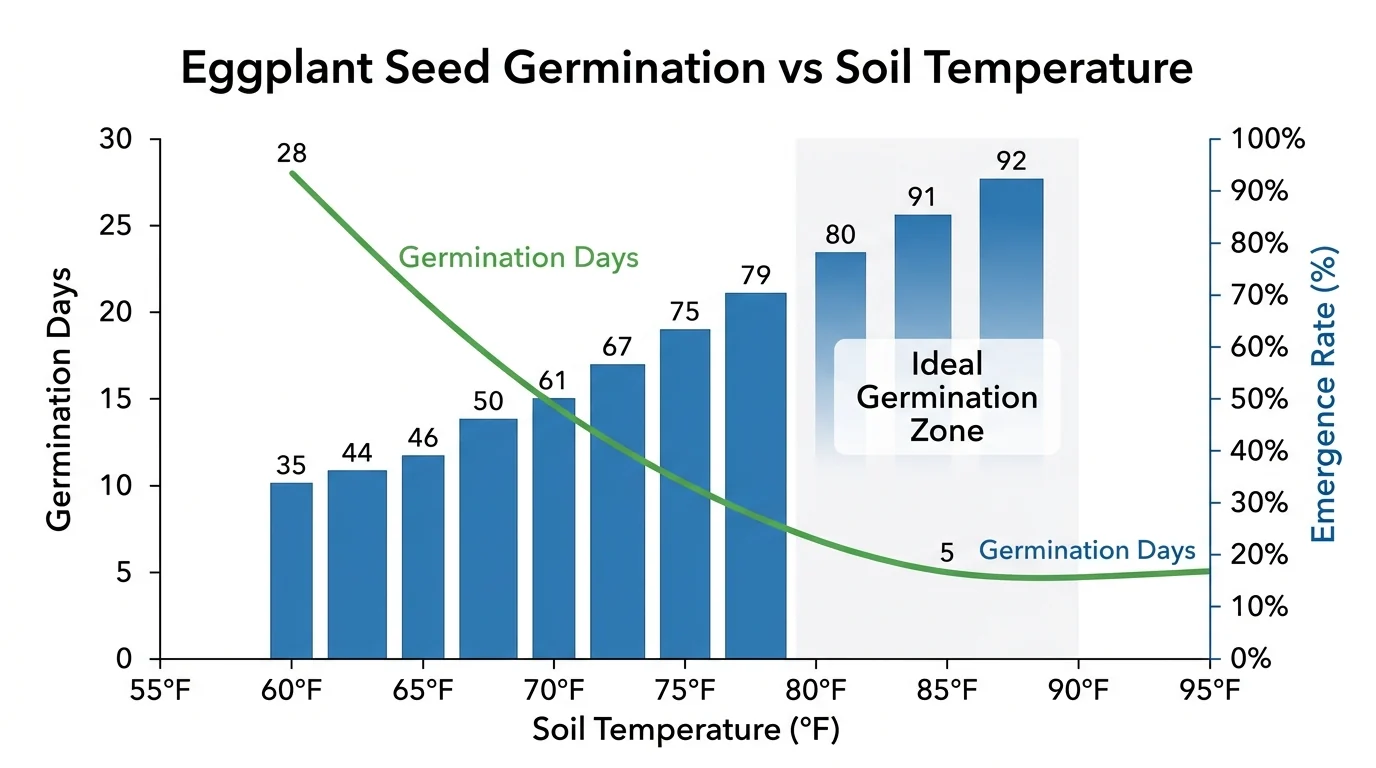
Eggplant seed germination is governed by strict thermal thresholds:
- At 60°F to 65°F (15°C to 18°C): Germination takes 21 to 28 days. Emergence rates drop below 40 percent, and seeds frequently succumb to soil-borne Pythium rot.
- At 70°F to 75°F (21°C to 24°C): Germination takes 12 to 16 days with moderate 70 percent emergence.
- At 80°F to 90°F (27°C to 32°C): Optimal thermal zone. Seeds germinate rapidly in 7 to 9 days with 90 to 95 percent uniform emergence.
🔬 Bench Protocol: Precision Germination Control
On my germination benches, I place waterproof digital heat mats beneath seed trays, using a probe thermometer inserted 1 inch into the seed-starting mix.
Maintain the temperature at 85°F (29°C) until seedlings emerge, then immediately remove the heat mat or drop the thermostat to 72°F (22°C). Leaving warm bottom heat on post-emergence without high light intensity causes weak, leggy stems that flop over.
Seed Starting Step-by-Step
Begin seeds indoors 8 to 10 weeks before your average last spring frost date. Fill 72-cell seedling plug trays with sterile, fine-textured seed-starting mix (peat or coco coir blended with perlite). Sow 2 seeds per cell at a depth of 1/4 inch. Lightly cover with vermiculite, which retains moisture while letting light reach the surface.
Mist thoroughly with warm water and cover with a clear humidity dome. Place the tray on your calibrated heat mat under full-spectrum LED grow lights. As soon as the first cotyledons emerge, remove the humidity dome. Position your LED lights 2 to 3 inches above the canopy, providing 14 to 16 hours of daily light.
Once the seedlings develop their first true leaves, snip the weaker seedling in each cell at soil level with micro-shears. Begin bottom-watering with a half-strength organic liquid fish emulsion (2-4-1 N-P-K) once weekly to fuel root expansion.
The 10-Day Hardening Off Protocol
Eggplants are exquisitely sensitive to cold shock. Exposing indoor-grown seedlings to outdoor temperatures below 50°F (10°C) triggers a physiological dormancy response, chilling the vascular cambium and permanently stunting the plant for 4 to 6 weeks.
Begin hardening off 10 days before transplanting, only after outdoor night temperatures consistently stay above 55°F (13°C):
- Days 1 to 3: Place seedlings in a sheltered, dappled shade location protected from wind for 2 hours, then bring them back indoors.
- Days 4 to 6: Move plants into morning sun for 4 to 6 hours, returning them indoors before sunset.
- Days 7 to 9: Leave plants outdoors in full sun during the day, bringing them into an unheated garage or porch overnight.
- Day 10: Leave seedlings outdoors overnight if the low temperature remains above 55°F, preparing them for planting the following morning.
Soil Chemistry, Bed Preparation, and Nutrition Cycles
Chinese eggplants are heavy feeders that generate massive vegetative canopies while supporting dozens of foot-long fruits. Fast growth requires rich soil, high biological activity, and specific nutrient adjustments at each life stage.
Soil Texture and pH Requirements
Plant in full sun, choosing a site that receives a minimum of 6 to 8 hours of direct, unfiltered sunlight daily. Eggplants perform best in fertile, sandy loam or rich garden loam with a pH between 6.2 and 6.8. If your soil is heavy clay, build raised beds amended with 3 inches of compost and coarse horticultural grit to ensure unrestricted drainage; waterlogged roots quickly trigger root rot and blossom drop.
Pre-Planting Soil Warm-Up (Black Plastic Mulch)
Commercial market growers employ a vital technique that home gardeners often overlook: pre-warming garden beds with black plastic mulch or black landscape fabric 2 weeks before transplanting. Black mulch absorbs solar radiation, raising soil temperatures by 5 to 8 degrees Fahrenheit. Planting into 70°F soil speeds up root establishment by 300 percent compared to bare garden soil.
The 2-Phase Nutritional Strategy
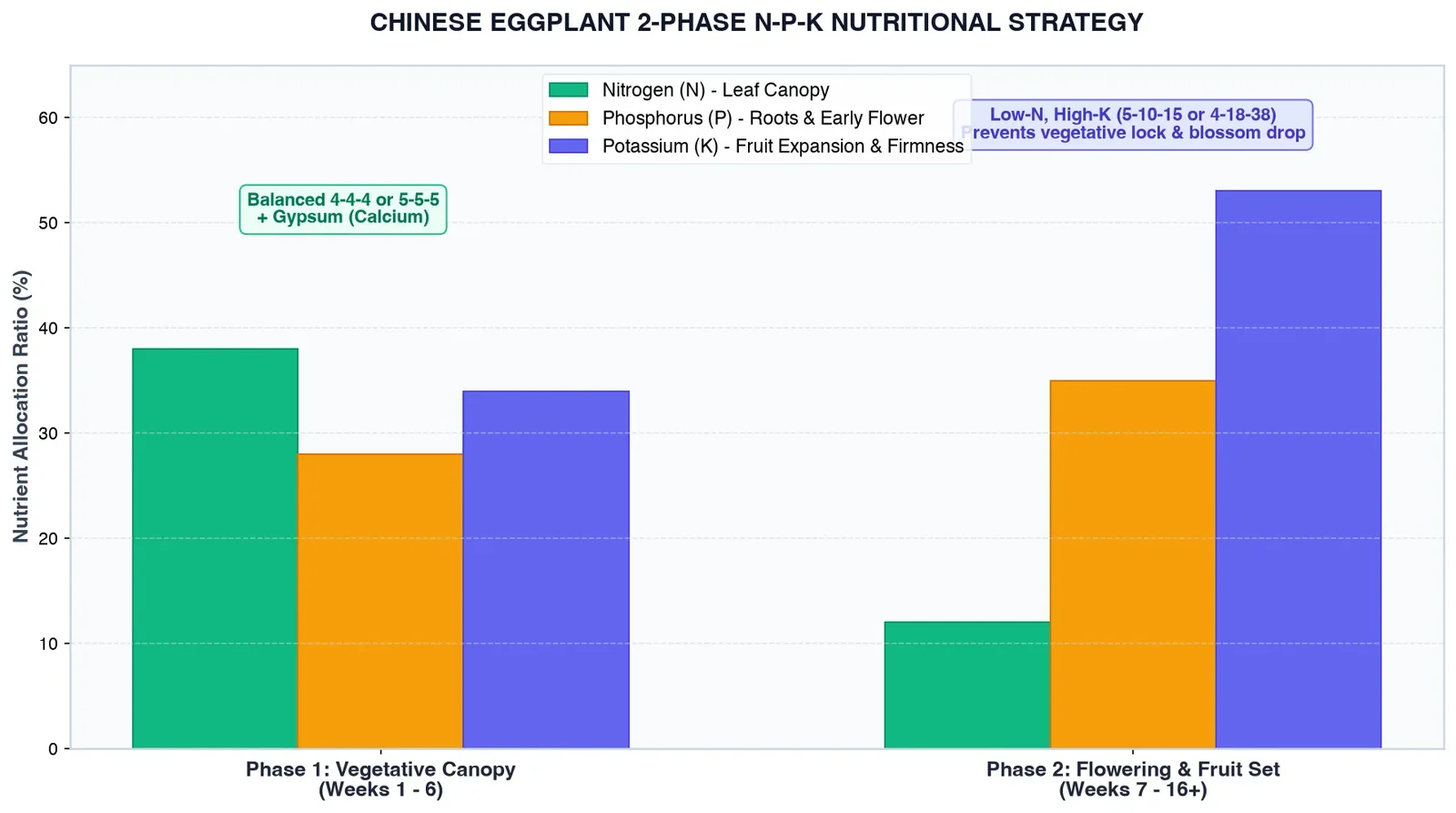
Over-fertilizing eggplants with high-nitrogen fertilizers produces gorgeous, deep-green, five-foot bushes that yield zero fruit because the plant stays trapped in vegetative mode.
- Phase 1: Vegetative Canopy Building: Incorporate a balanced organic granular fertilizer (such as 4-4-4 or 5-5-5) along with 1 cup of bone meal and 1/2 cup of agricultural gypsum (calcium sulfate) per 10 feet of row. Gypsum provides water-soluble calcium without shifting soil pH, protecting expanding fruit against blossom end rot.
- Phase 2: Flowering and Fruit Set: Once the first purple flower buds open, shift nutrition to a low-nitrogen, high-potassium formula (such as organic tomato food with a 3-5-8 or 4-6-10 ratio). Potassium drives carbohydrate translocation into expanding fruit cells, maintaining straight growth and thick cell walls. Side-dress plants with worm castings or organic potassium sulfate every 3 weeks throughout the harvest window. Compare nutrition strategies in our guide on how to grow peppers indoors.
Pruning and Training Masterclass: The Below-the-Fork Rule
If you visit commercial greenhouse growers or watch top production farmers, you will notice their eggplant plants do not look like wild, unruly bushes. They are meticulously pruned and staked. Unpruned eggplants become dense, jungle-like shrubs where inner leaves receive zero light, airflow stalls, and heavy fruits drag in the dirt.
The Forking Architecture of Solanaceae
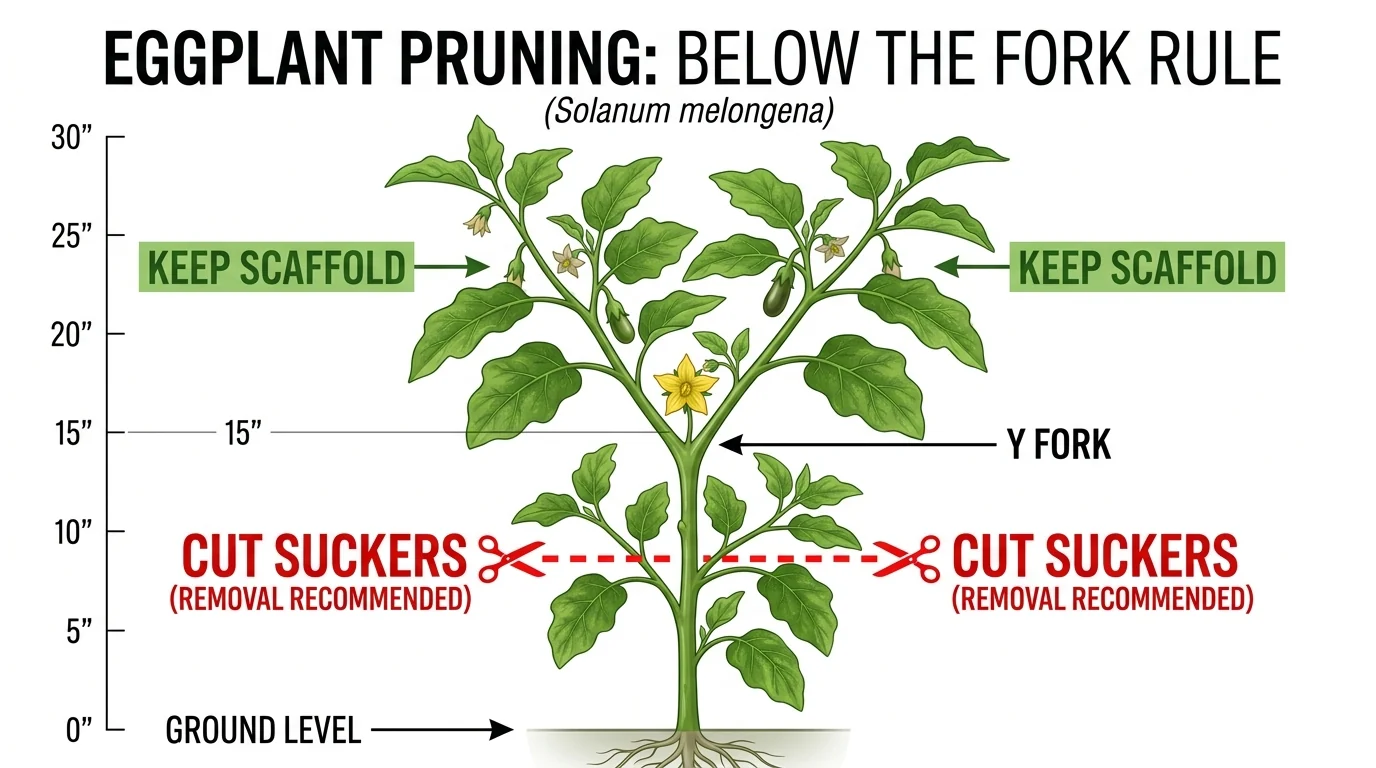
As a young eggplant grows, it produces a single vertical main stem. At roughly 12 to 18 inches in height, that main stem naturally divides into a ‘Y’ junction known as the fork. The plant’s very first flower cluster forms right at the center of this fork.
✂️ The Critical Pruning Rule: Clean Below the Fork
Locate the first flowering cluster at the central fork. Remove every single sucker (side shoot) and leaf growing along the main stem below that fork.
Snap or slice off these lower shoots cleanly when they are 1 to 2 inches long. By clearing the bottom 12 to 15 inches of the stem, you accomplish three critical horticultural goals:
1. Airflow & Disease Defense: You eliminate humidity pockets and prevent rain from splashing soil-borne fungal spores (Verticillium and Alternaria) onto lower foliage.
2. Energy Direction: The plant diverts all root nutrients upward into the primary fruiting scaffold branches instead of wasting carbohydrates on low, unproductive ground leaves.
3. Fruit Clearance: Long Chinese eggplants (which hang 12 to 15 inches down) will not drag in mud, preventing ground rot and slug damage.
Training Scaffold Branches and Mid-Season Maintenance
Above the fork, allow 2 to 3 strong lateral branches to develop as your permanent scaffold limbs. Throughout mid-summer, pinch out weak, inward-growing suckers that crowd the center of the bush. In late summer (4 weeks before your first anticipated autumn frost), perform ‘topping’: snip off the terminal growing tips of all branches. This stops the plant from setting new flowers that cannot mature before freezing weather, forcing all stored sugars into swelling your existing hanging fruit.
Staking and Trellising Methods
A mature Ping Tung Long plant burdened with 15 to 20 heavy, foot-long fruits will easily topple in a thunderstorm if unsupported:
- Central Stake Method: Drive a 5-foot hardwood stake or sturdy metal T-post 12 inches into the ground next to each plant at transplant time. Secure the main central stem with soft cotton twine or rubber garden ties using a figure-eight knot.
- The Florida Weave: For garden rows with 3 or more plants, drive stakes every two plants. Weave heavy box-twine tightly between the posts down both sides of the foliage at 10-inch vertical intervals, sandwiching the scaffold branches securely upright.
- Heavy-Duty Cages: Heavy-duty, square-welded tomato cages (at least 48 inches tall) work well for container installations. Avoid flimsy cone-shaped wire cages, which collapse under the weight of mature eggplant bushes.
Blossom Drop Biology and Hand-Pollination Techniques
Few experiences are more disheartening than watching your eggplant bushes produce dozens of gorgeous violet flowers, only to have the blossoms turn yellow at the stem and drop off the plant without setting fruit. Understanding floral biology reveals why this happens.
The Mechanics of Buzz Pollination
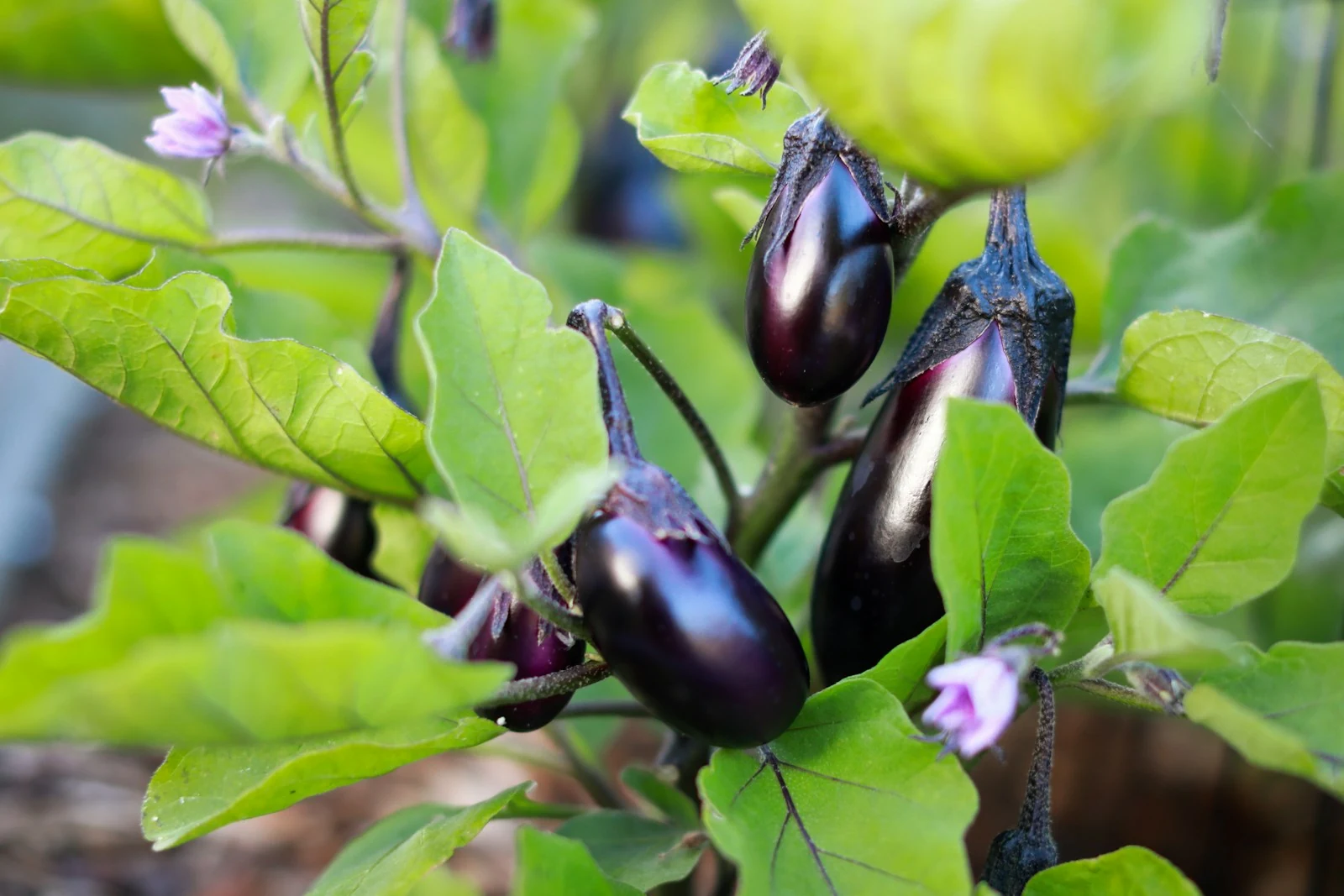
Eggplant flowers are ‘perfect’ (hermaphroditic), containing both male anthers and female stigmas inside the same blossom. However, their anthers are poricidal: pollen grains are locked inside tubular chambers that only release pollen through tiny terminal pores when vibrated at specific sonic frequencies (around 250 to 400 Hz).
Honeybees cannot buzz-pollinate. Bumblebees (Bombus spp.) and solitary carpenter bees are the primary natural pollinators; they grab the floral anther cone with their mandibles and vibrate their flight muscles, producing an audible buzz that ejects an explosive cloud of pollen directly onto the sticky central stigma.
Environmental Triggers of Blossom Drop
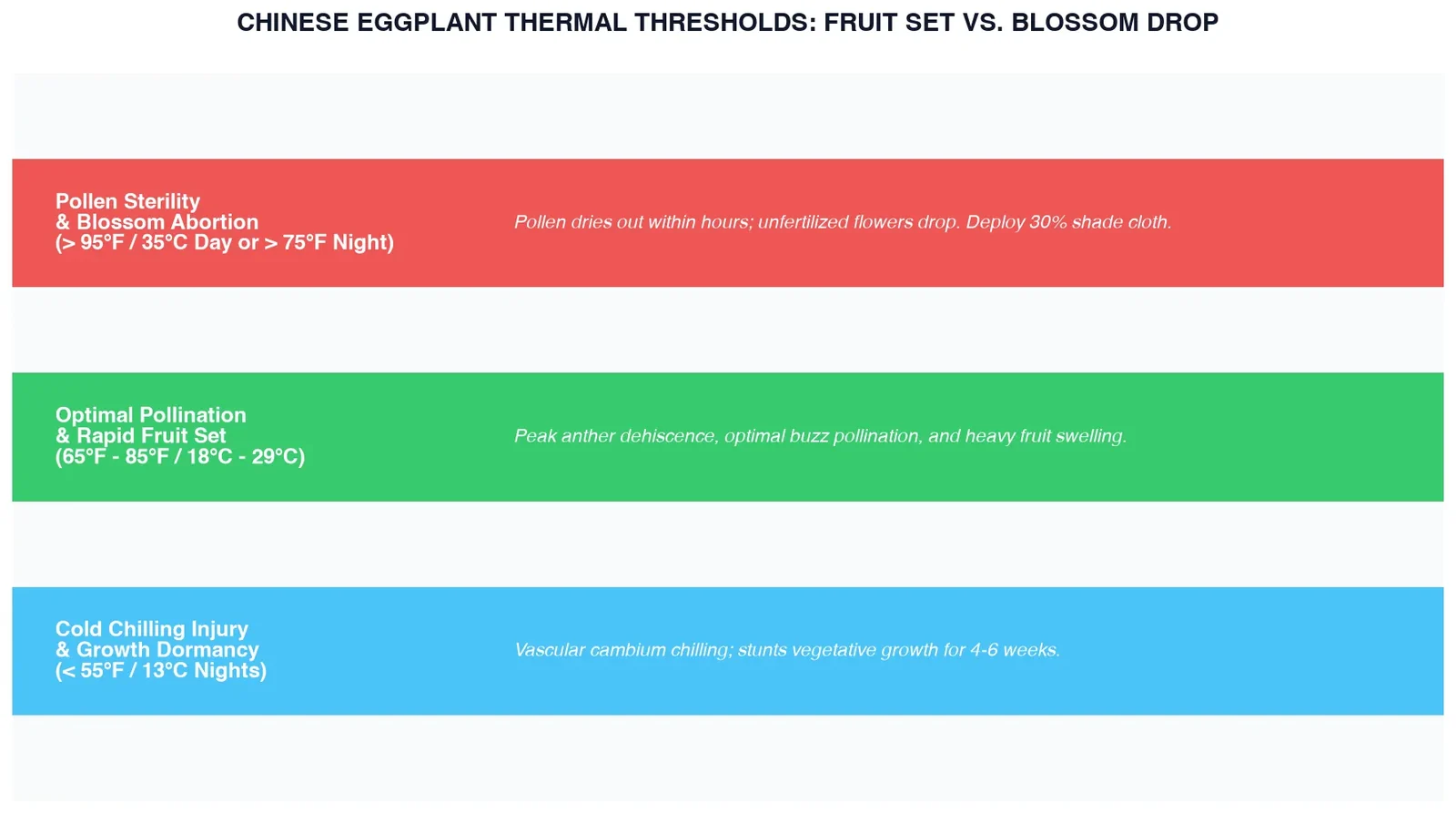
If flowers drop without swelling into fruit, check these four primary environmental causes:
- Extreme Heat and Pollen Sterility: When daytime temperatures exceed 95°F (35°C) or night temperatures remain above 75°F (24°C), eggplant pollen grains dry out and become sterile within hours. The flower fails to fertilize and aborts. Install a 30 percent aluminized shade cloth over the bed during heatwaves to reduce canopy temperatures by 8 to 10 degrees.
- Stagnant Air and High Humidity (>80% RH): Pollen becomes clumped and sticky in high humidity, preventing release. In airless greenhouses or stagnant indoor setups, flowers drop from lack of physical vibration.
- Soil Moisture Swings: Uneven watering stresses vascular pressure, causing plants to abort flowers to conserve hydration.
- Excess Nitrogen: Over-application of high-nitrogen fertilizer stimulates vegetative shoots while inhibiting flower retention.
The Electric Toothbrush Hand-Pollination Trick
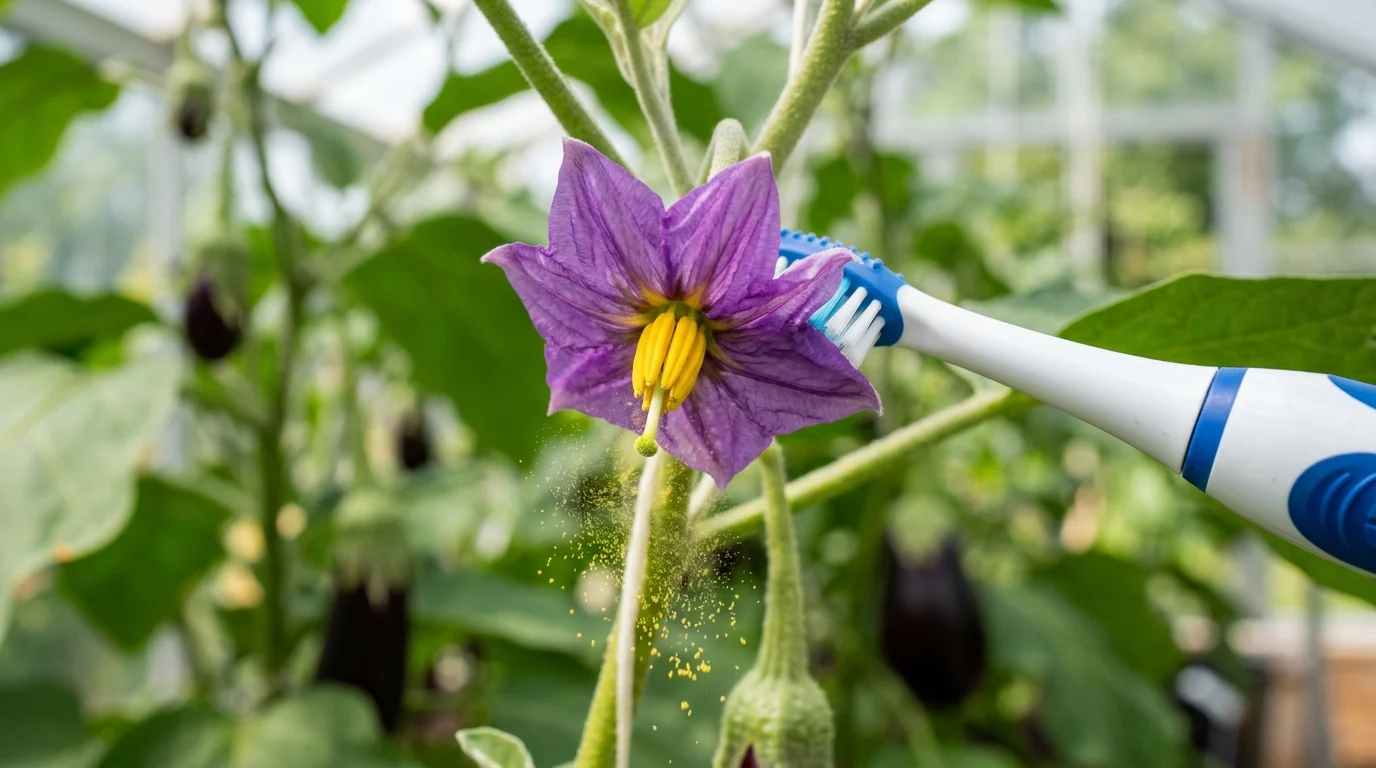
If you are growing eggplants indoors, in a greenhouse, or in an urban high-rise balcony lacking bumblebees, you must pollinate flowers manually. The most effective tool is an ordinary electric toothbrush. Turn on the toothbrush and gently touch the vibrating plastic back of the brush head to the stem just behind the open flower for 2 to 3 seconds between 10:00 AM and 1:00 PM. A visible cloud of yellow pollen will shower onto the stigma, guaranteeing fruit set.
Container Cultivation and Hydroponic Systems
Chinese eggplants adapt beautifully to container and hydroponic growing because their slender fruit grows vertically, saving horizontal floor space while taking full advantage of controlled warmth. For broader indoor techniques, see our guide on growing vegetables indoors.
Container Sizing, Pot Materials, and Drainage
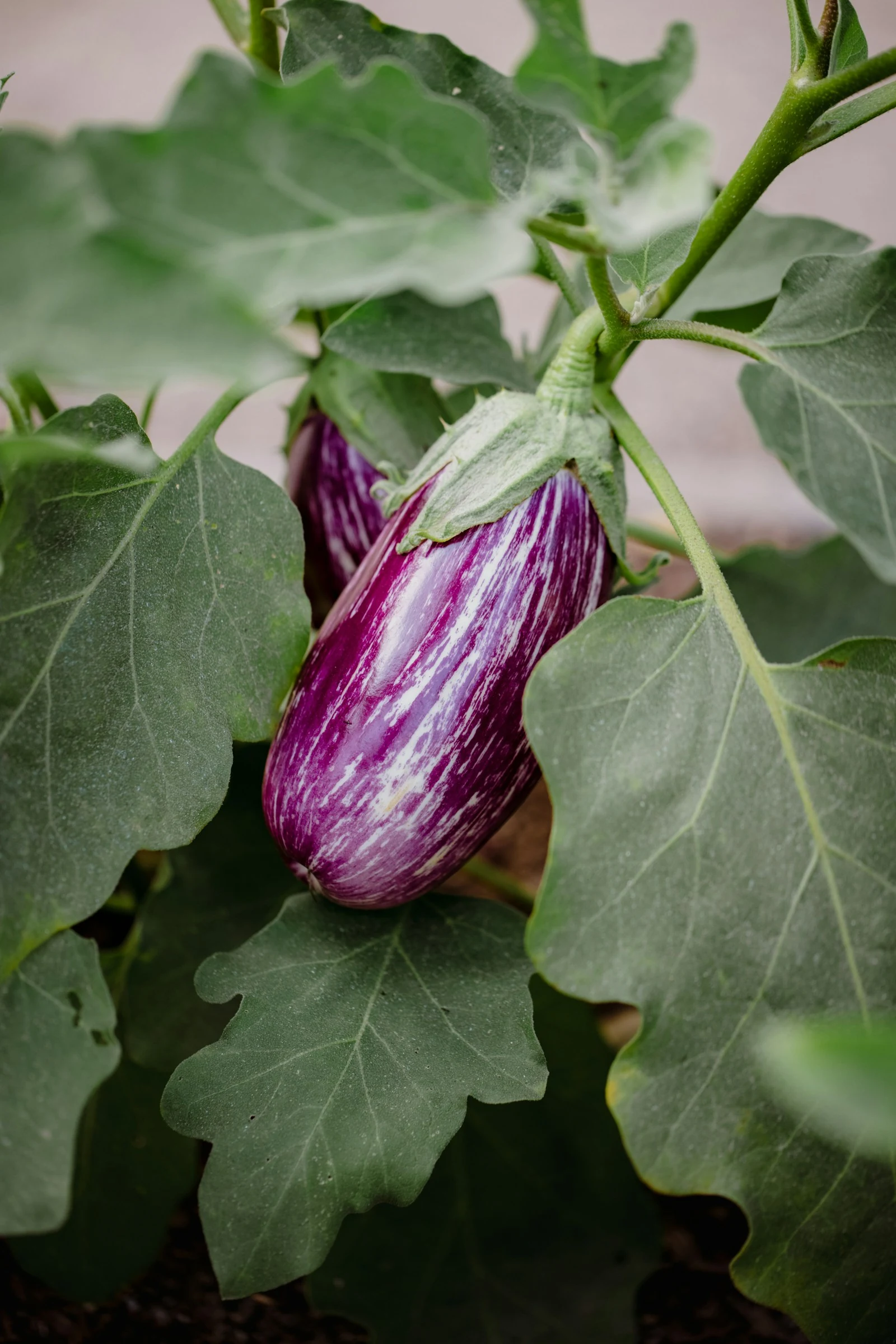
The biggest mistake container growers make is choosing undersized pots. A 10-inch plastic container holds barely 2.5 gallons of soil; on an 85-degree day, that small volume dries out in four hours, cooking the roots and inducing blossom end rot.
- Container Volume: A single Chinese eggplant requires a minimum container volume of 5 to 7 gallons (roughly 12 to 14 inches wide and deep).
- Pot Materials: Breathable fabric containers (such as Smart Pots) are the gold standard. Fabric sidewalls provide ‘air pruning’: when root tips reach the container edge, exposure to air halts circular root spiraling and stimulates dense, fibrous lateral root branches throughout the core.
- Substrate Formula: Never use heavy garden soil in pots. Use a professional potting mix composed of 60 percent peat moss or coco coir, 20 percent perlite, and 20 percent screened compost, enriched with 1/2 cup of organic tomato fertilizer and 2 tablespoons of dolomitic lime per 5 gallons.
Hydroponic Dutch Bucket and DWC Benchmarks
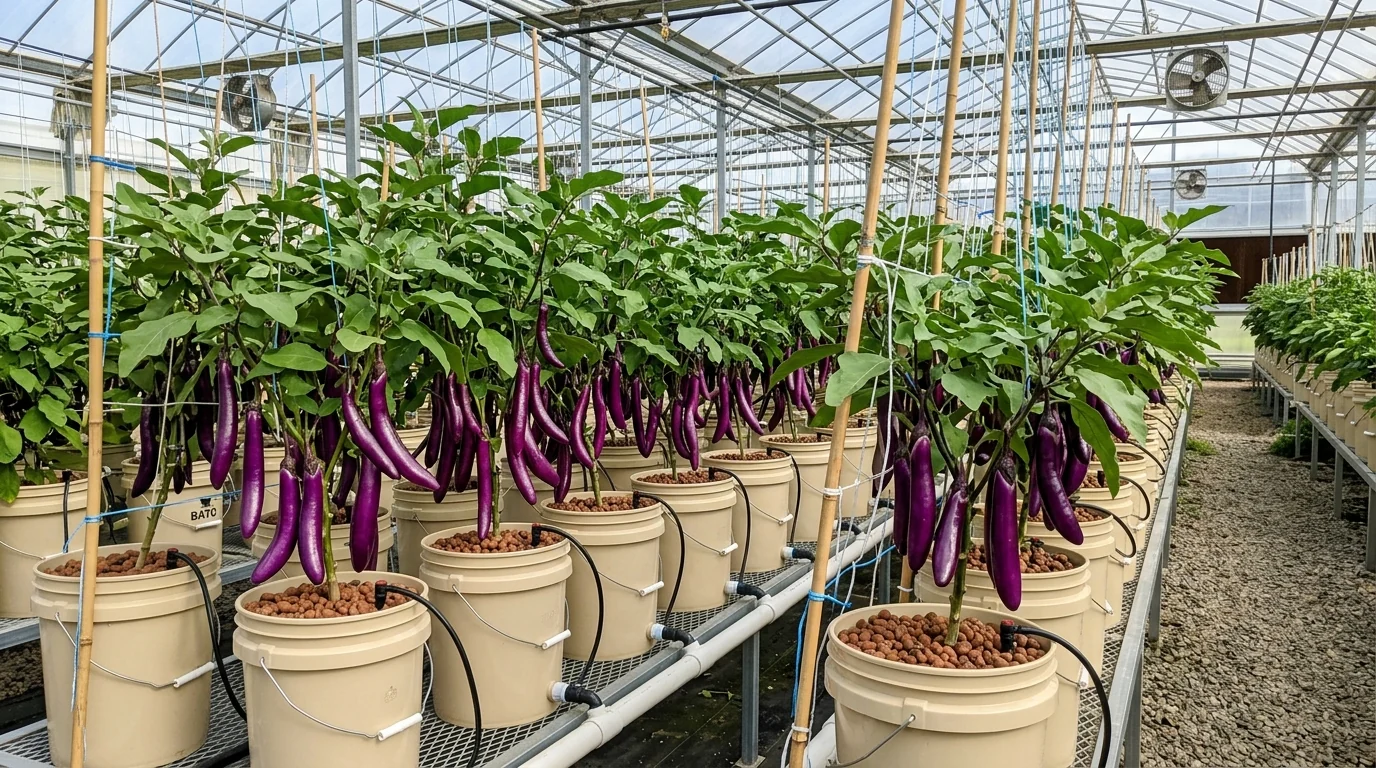
In controlled indoor CEA facilities, Chinese eggplants thrive in recirculating Dutch bucket (Bato bucket) systems fed with drip emitters into coarse perlite or clay pebbles. If you are setting up indoor reservoirs, read our walkthrough on indoor hydroponics for beginners.
- pH Target: Maintain between 5.8 and 6.2. A pH above 6.5 causes iron chlorosis, while a pH below 5.5 triggers manganese toxicity.
- Electrical Conductivity (EC): Maintain 1.4 to 1.8 mS/cm during vegetative growth, increasing to 2.0 to 2.4 mS/cm (1,000 to 1,200 PPM 500-scale) during heavy fruit development.
- Daily Light Integral (DLI): Provide 20 to 25 mol/m²/day under high-output LED horticultural fixtures, operating on a 14 to 16-hour daily photoperiod.
- Dissolved Oxygen & Temperature: Maintain nutrient reservoir temperatures between 66°F and 70°F (19°C to 21°C). Dissolved oxygen levels should remain above 7.0 mg/L via commercial air pumps and micro-diffuser stones.
Organic Pest Defense and Disease Protocols
Solanaceous crops face constant pest pressure. An integrated organic pest management plan prevents insect populations from exploding before your plants set their first fruit.
Flea Beetles (Epitrix hirtipennis)
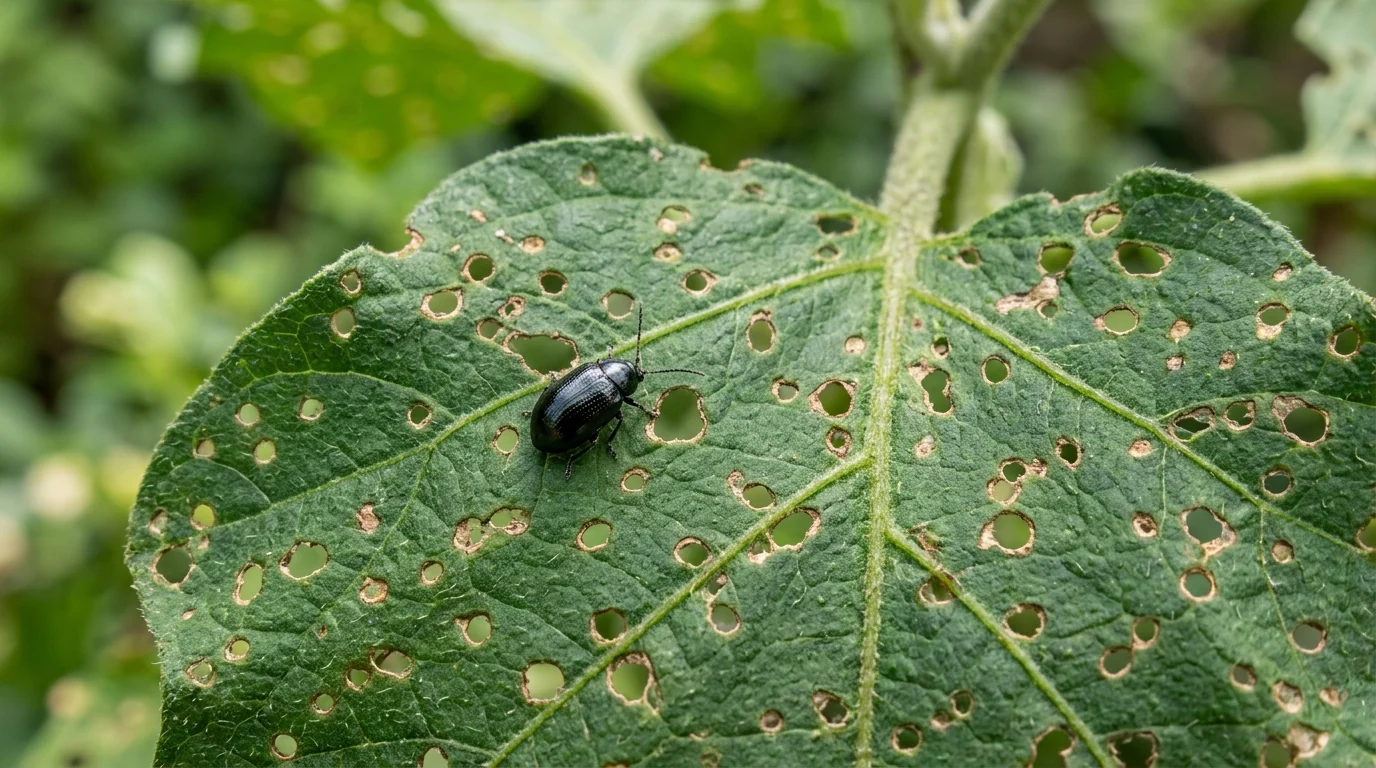
Flea beetles are small, shiny, jumping beetles that target young eggplant seedlings immediately upon outdoor transplanting, chewing hundreds of pinhead-sized holes that skeletonize the foliage.
🛡️ The 3-Tier Flea Beetle Defense Protocol
Strategy 1: Install lightweight insect netting (ProtekNet) or floating row covers (Agribon AG-19) over your beds at planting time. Secure all edges with soil so beetles cannot enter. Leave covers in place until plants begin flowering, by which time foliage is mature, tough, and tolerant of minor feeding.
Strategy 2: Spray seedlings with Kaolin Clay (Surround WP). Kaolin is an organic, inert natural mineral powder that coats leaves in a fine, powdery white film. Flea beetles cannot grip or feed on coated leaves, abandoning the plants.
Strategy 3: Plant a sacrificial trap crop of fast-growing Chinese Daikon radishes 3 feet away from your eggplant rows. Flea beetles strongly prefer radish leaves over eggplant, concentrating on the trap crop.
Tomato Hornworms (Manduca quinquemaculata)
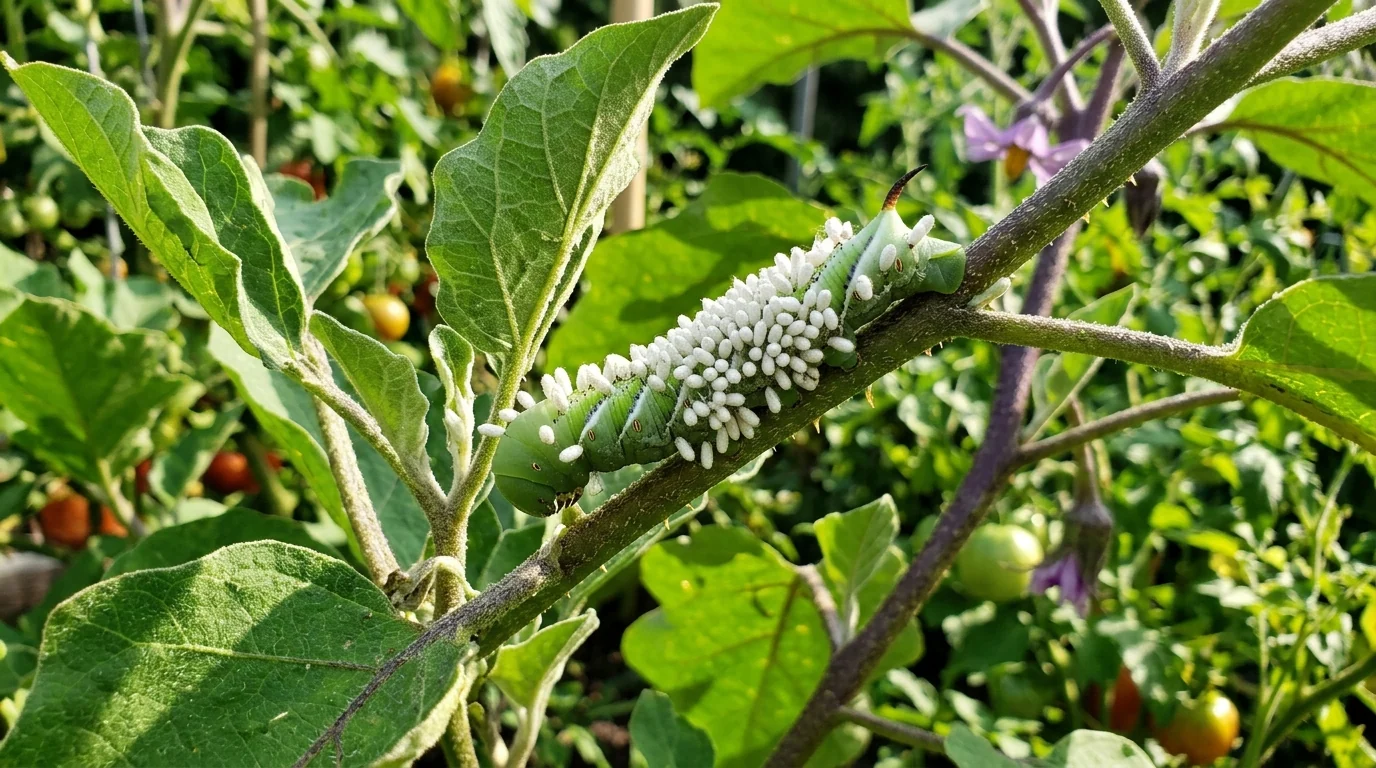
Enormous green caterpillars with white diagonal stripes and a reddish-black posterior horn can consume an entire branch of foliage and fruit in 24 hours. Scout your plants at dawn. Look for dark green, barrel-shaped droppings on leaves below chewed stems. Hand-pick caterpillars and drop them into soapy water. If feeding is widespread, spray late in the afternoon with Bacillus thuringiensis kurstaki (Bt). If you see a hornworm covered in tiny white silken cocoons, leave it alone; those are the pupae of beneficial parasitic Braconid wasps that will hatch and destroy surrounding garden pests.
Two-Spotted Spider Mites (Tetranychus urticae)
During hot, dry weather, spider mites colonize the undersides of eggplant leaves, puncturing cell walls and creating a dusty, yellow stippled appearance before spinning fine silk webbing. Blast the undersides of leaves with a sharp stream of water to break up colonies, followed by an organic insecticidal soap or cold-pressed neem oil spray applied in the evening.
Verticillium and Fusarium Wilt
Soil-borne fungi enter through root wounds and colonize the vascular xylem, causing one side of the plant to wilt during hot afternoons despite moist soil. Leaves turn yellow between the veins and collapse. There is no chemical cure. Prevent wilt through a strict 4-year Solanaceae crop rotation (avoid planting eggplants where tomatoes, potatoes, or peppers grew recently), prune all lower foliage below the fork, and select certified wilt-resistant cultivars like ‘Ping Tung Long’.
Harvesting Science, Cold-Chain Storage, and Kitchen Mastery
Harvest timing determines whether Chinese eggplant tastes sweet and creamy or woody and bitter.
The Visual and Tactile Ripeness Tests
Never harvest Chinese eggplant based on length alone. A small plant stressed by heat may produce a fully mature fruit at only 6 inches, while a vigorous Ping Tung Long in rich soil easily reaches 14 inches.
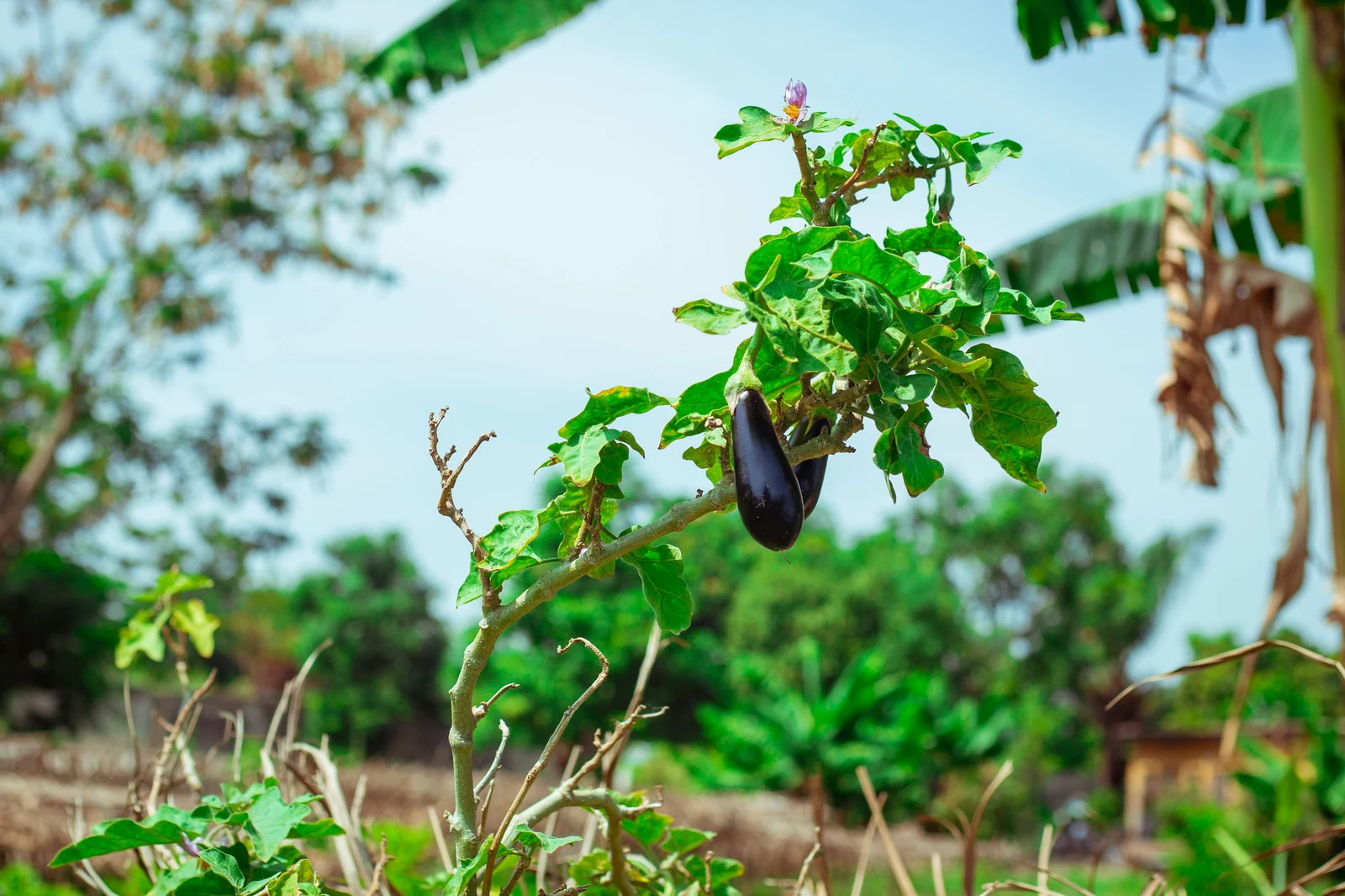
- The Glossiness Test: Unripe fruit has a dull, pale sheen. Peak fruit is brilliantly glossy, reflective, and vividly colored. Overripe fruit loses its shine, turning dull, matte, and yellowish-bronze.
- The Thumb-Spring Test: Gently press the side of the fruit with the pad of your thumb. If the flesh yields slightly and the skin immediately springs back without leaving a depression, the fruit is at peak harvest quality. If the fruit feels rock-hard, it is immature. If your thumb leaves a permanent dent, the fruit is overripe and full of bitter brown seeds.
Harvest Tool Technique
Never twist, pull, or yank eggplant fruit off the vine. Eggplant stems are tough and fibrous; pulling will snap main scaffold branches and tear the crown. Always use clean, sharp bypass pruners or harvest shears, severing the stem 1 inch above the green calyx cap.
Post-Harvest Cold Chain and Storage
Eggplants are tropical fruits subject to chilling injury if stored below 50°F (10°C) for extended periods. Do not store fresh eggplants at standard refrigerator temperatures (34°F to 38°F / 1°C to 3°C), which causes pitting, water-soaked flesh, and rapid browning. Store freshly harvested Chinese eggplants in a cool pantry or wine cellar at 50°F to 55°F (10°C to 13°C) with high relative humidity, or use within 3 to 4 days if stored in the refrigerator crisper drawer.
Culinary Mastery: Zero-Salting Advantage
Chinese eggplant is celebrated across Asian cuisines for its sponge-like ability to absorb rich broths, garlic sauces, and chili oils without turning mushy. Sauté it quickly in a smoking-hot wok with fermented chili bean paste (Doubanjiang), garlic, and black vinegar for authentic Sichuan Eggplant (Yu Xiang Qie Zi). Alternatively, halve lengthwise, score in a diamond pattern, and steam for 8 minutes before dressing with sesame oil, scallions, and soy sauce. Because it contains virtually zero solanine, no pre-salting is required. For complementary Asian greens, see our companion guide on how to grow Chijimisai and Mizuna.
Master Comparison Matrices and Diagnostic Guides
Table 1: Comprehensive Asian Eggplant Variety Matrix
| Cultivar | Type / Origin | Fruit Length | Skin Color | Calyx Color | Maturity | Culinary Strengths |
|---|---|---|---|---|---|---|
| Ping Tung Long | Chinese Heirloom | 12 to 14 in | Light Lavender | Green | 60 to 65 Days | Stir-fry, Steaming; Thin Skin; Sweet |
| Fengyuan Purple | Chinese Heirloom | 10 to 12 in | Pale Lavender | Green | 65 to 70 Days | Ultra-Tender; No Bitterness; Braising |
| Fuchsia Bride | Chinese Hybrid | 10 to 12 in | Bright Violet | Green | 55 to 60 Days | High Yield; Uniformity; Fast Matures |
| Ichiban | Japanese Hybrid | 8 to 10 in | Midnight Violet | Dark Purple | 55 to 60 Days | Grilling, Roasting, Tempura; Firm |
| Millionaire | Japanese Hybrid | 10 to 12 in | Deep Black-Purple | Black/Purple | 55 to 60 Days | Extra Early; High Heat Tolerance |
| Black Beauty | Western Globe | 6 to 8 in (Wide) | Glossy Black | Green/Purple | 75 to 85 Days | Eggplant Parmesan; Requires Salting |
Table 2: Seasonal Planting and Growth Milestone Roadmap
| Phase | Timeline | Target Environment | Action Items & Management |
|---|---|---|---|
| Germination | Weeks 1 to 2 | Heat Mat at 85°F (29°C) | Sow 1/4 in deep; mist; remove dome upon emergence |
| Seedling Expansion | Weeks 3 to 6 | 72°F Day / LED Lights | Thin to single plant; bottom-water with fish emulsion |
| Hardening Off | Weeks 7 to 8 | Dappled Shade to Full Sun | Gradual outdoor exposure over 10 days; night temps >55°F |
| Transplanting | Week 9 (Post-Frost) | Soil Temp >70°F (Black Mulch) | Plant 18 to 24 in apart; install central stakes; apply row cover |
| Pruning Below Fork | Weeks 11 to 12 | Ambient Outdoor Warmth | Remove all suckers below main Y-fork; side-dress with low-N food |
| Peak Harvest | Weeks 14 to 22 | Full Sun / Regular Water | Harvest glossy fruit weekly with pruners; top branches 4 wks before frost |
Table 3: Diagnostic Troubleshooting Matrix
| Observed Symptom | Likely Cause | Primary Factor | Corrective Action Protocol |
|---|---|---|---|
| Blossoms yellow and drop off | Pollen Sterility / Vibration Failure | Temps >95°F or lack of bumblebees | Provide 30% shade cloth; hand-pollinate with electric toothbrush |
| Shot-holes through young leaves | Flea Beetles (Epitrix) | Early spring transplanting without cover | Install floating row cover (Agribon); spray Kaolin clay (Surround WP) |
| Sunken black rot at blossom end | Blossom End Rot (Calcium deficit) | Uneven watering / rapid growth | Maintain steady moisture; amend soil with agricultural gypsum |
| Leaves curl and wilt on hot days | Verticillium / Fusarium Wilt | Cold soil / root damage / no rotation | Prune lower leaves below fork; remove infected plants; rotate crops |
| Yellow stippling and silk webbing | Two-Spotted Spider Mites | Hot, dry, dusty canopy conditions | Blast leaf undersides with water; spray insecticidal soap / neem oil |
| Fruit is bitter and dull colored | Overripe Fruit / Drought Stress | Harvesting past peak glossiness | Pick fruit earlier while skin is mirror-glossy; water consistently |
Frequently Asked Questions: 25 Common Queries Answered
01
What is the difference between Chinese eggplant and regular eggplant?
What is the difference between Chinese eggplant and regular eggplant?
Chinese eggplant is long, slender, and features light lavender skin with a green calyx, whereas regular Western globe eggplant is large, bulbous, and dark purple with a thicker skin. Chinese eggplant contains far fewer seeds, has thinner skin that never requires peeling, and lacks the bitter solanine compounds that require globe eggplants to be salted before cooking.
02
Do you need to salt Chinese eggplant before cooking?
Do you need to salt Chinese eggplant before cooking?
No. Traditional globe eggplants are salted to draw out bitter moisture and break down spongy air cells. Chinese eggplant has naturally sweet, tender flesh with minimal seed pockets and negligible bitterness, allowing you to slice and cook it directly without salting or rinsing.
03
How long does Chinese eggplant take to grow from seed to harvest?
How long does Chinese eggplant take to grow from seed to harvest?
Chinese eggplant requires 8 to 10 weeks of indoor seed starting followed by 55 to 65 days after transplanting to reach its first harvest. In total, expect 110 to 135 days from seed germination to your first fresh eggplant.
04
Why are the flowers on my eggplant falling off without producing fruit?
Why are the flowers on my eggplant falling off without producing fruit?
Blossom drop is most commonly caused by temperature extremes. Daytime temperatures above 95°F (35°C) or night temperatures above 75°F (24°C) cause pollen sterility. In greenhouses or balconies, lack of buzz pollination from bumblebees will also cause unfertilized flowers to drop.
05
Can you grow Chinese eggplant in containers or pots?
Can you grow Chinese eggplant in containers or pots?
Yes, Chinese eggplant thrives in containers. Use a minimum container size of 5 to 7 gallons (12 to 14 inches in diameter) equipped with drainage holes. Fabric grow bags work particularly well by encouraging air pruning of roots and preventing heat buildup.
06
Why are my eggplant seeds taking so long to germinate?
Why are my eggplant seeds taking so long to germinate?
Eggplant seeds require warm soil temperatures between 80°F and 90°F (27°C to 32°C) to germinate. If kept at standard room temperature (65°F to 70°F), germination can take 3 to 4 weeks or fail completely due to damping off. Always use a waterproof seedling heat mat.
07
How do you prune Chinese eggplant plants for maximum yield?
How do you prune Chinese eggplant plants for maximum yield?
Prune away all suckers (side shoots) and foliage growing along the main stem below the first flowering ‘Y’ fork. This channels energy into upper fruiting branches, improves airflow, and lifts fruit so it does not touch the ground.
08
What causes small shot-holes in eggplant leaves?
What causes small shot-holes in eggplant leaves?
Tiny round holes are caused by flea beetles (Epitrix hirtipennis), which attack young seedlings in spring. Protect plants by installing floating row covers immediately upon transplanting, spraying kaolin clay, or dusting with food-grade diatomaceous earth.
09
How do you know when Chinese eggplant is ripe and ready to pick?
How do you know when Chinese eggplant is ripe and ready to pick?
Look for glossy, reflective skin and test the flesh with your thumb. If the skin is shiny and springs back immediately after a gentle press, it is ripe. If the skin turns dull, matte, or yellowish, the fruit is overripe, seedy, and bitter.
10
Is Chinese eggplant a perennial or an annual?
Is Chinese eggplant a perennial or an annual?
Botanically, eggplants are tender tropical perennials in USDA hardiness zones 10 through 12, capable of living and producing for several years. In temperate zones with winter frost (zones 9 and below), they are grown as warm-season annuals.
11
Can you grow Chinese eggplant from grocery store cuttings or seeds?
Can you grow Chinese eggplant from grocery store cuttings or seeds?
You cannot propagate eggplants reliably from stem cuttings. While you can save seeds from fully ripe grocery store eggplants, commercial eggplants are often F1 hybrids whose seeds will not produce true-to-type fruit. It is best to purchase certified open-pollinated or hybrid seeds from reputable seed houses.
12
Why is my Chinese eggplant fruit turning yellow or brown?
Why is my Chinese eggplant fruit turning yellow or brown?
Yellowing or bronzing skin indicates over-maturity. Eggplants turn dull yellow or brown when their seeds mature inside. Harvest earlier while the skin is rich purple and mirror-glossy.
13
How much direct sunlight does Chinese eggplant need daily?
How much direct sunlight does Chinese eggplant need daily?
Chinese eggplant requires full sun, meaning a minimum of 6 to 8 hours of direct, unfiltered sunlight daily. Plants grown in partial shade produce lush green leaves but few flowers and stunted fruit.
14
What is the best fertilizer for growing Chinese eggplant?
What is the best fertilizer for growing Chinese eggplant?
Use a balanced organic fertilizer (such as 5-5-5 or 4-4-4) during early vegetative growth. Once the first flower buds open at the fork, switch to a low-nitrogen, high-potassium fertilizer (such as 3-5-8 or organic tomato food) to promote heavy fruit set without excessive vine growth.
15
Why are the bottom leaves of my eggplant plant turning yellow?
Why are the bottom leaves of my eggplant plant turning yellow?
Lower leaf yellowing is typically caused by natural shading as the upper canopy expands, nitrogen deficiency, or early-stage Verticillium wilt. If yellowing is accompanied by wilting during the day, inspect the plant for soil-borne vascular wilt.
16
Do Chinese eggplants need to be staked or caged?
Do Chinese eggplants need to be staked or caged?
Yes. A single Chinese eggplant bush can bear 15 to 25 heavy, foot-long fruits. Without sturdy central stakes, Florida weave trellising, or heavy tomato cages, branches will bend, split, or sprawl on the ground in thunderstorms.
17
What causes dark, sunken, leathery spots on the bottom of eggplants?
What causes dark, sunken, leathery spots on the bottom of eggplants?
This is Blossom End Rot (BER), a physiological disorder caused by calcium deficiency in rapidly expanding fruit tissues. It is almost always triggered by inconsistent watering rather than a lack of calcium in the soil. Maintain uniform moisture and add agricultural gypsum to your soil.
18
How often should you water Chinese eggplant in a garden bed?
How often should you water Chinese eggplant in a garden bed?
Water deeply once or twice a week, providing 1 to 1.5 inches of water per week. In hot summer weather above 85°F (29°C), container-grown plants require daily watering to prevent root dehydration.
19
What are the best companion plants for Chinese eggplant?
What are the best companion plants for Chinese eggplant?
Excellent companion plants include basil, marigolds, bush beans, and alliums (onions and garlic). Beans fix atmospheric nitrogen into the soil, while alliums and marigolds repel flea beetles and nematodes.
20
Can you grow Chinese eggplant indoors under grow lights?
Can you grow Chinese eggplant indoors under grow lights?
Yes. Compact cultivars like ‘Ping Tung Long’ grow well indoors under full-spectrum LED grow lights delivering a Daily Light Integral (DLI) of 20 to 25 mol/m²/day. Hand-pollinate open flowers using an electric toothbrush to ensure fruit set.
21
What is the difference between Chinese eggplant and Japanese eggplant?
What is the difference between Chinese eggplant and Japanese eggplant?
Chinese eggplants are typically longer (10 to 15 inches), lighter purple or lavender, and possess green calyxes. Japanese eggplants are slightly shorter (8 to 10 inches), deep midnight-purple with dark purple calyxes, and feature denser flesh suited for grilling.
22
Can you freeze fresh Chinese eggplant for winter storage?
Can you freeze fresh Chinese eggplant for winter storage?
Do not freeze raw eggplant, as its high water content turns into brown mush upon thawing. To freeze, slice into rounds, blanch in boiling water for 3 minutes, chill in an ice bath, pat dry, and freeze in vacuum-sealed freezer bags.
23
Why does my Chinese eggplant taste bitter?
Why does my Chinese eggplant taste bitter?
Bitterness is caused by harvesting overripe fruit with mature seeds, or by severe drought stress during fruit enlargement. Harvest fruit while still glossy and maintain regular, even watering to ensure sweet flesh.
24
Are Chinese eggplant leaves toxic to pets and humans?
Are Chinese eggplant leaves toxic to pets and humans?
Yes. Like all nightshade foliage, eggplant leaves and stems contain solanine glycoalkaloids, which are toxic if ingested in quantity by humans, dogs, cats, or livestock. Only the ripe fruit is edible.
25
How do you save seeds from Chinese eggplant?
How do you save seeds from Chinese eggplant?
Allow selected fruits to remain on the vine past the edible stage until they turn dull, leathery, and yellow-brown. Cut open the fruit, scoop out the mature brown seeds into a bowl of water, separate pulp, rinse thoroughly, and dry on coffee filters for two weeks.