⚡ Quick Answer: What Makes Royal Burgundy Bush Beans Special?
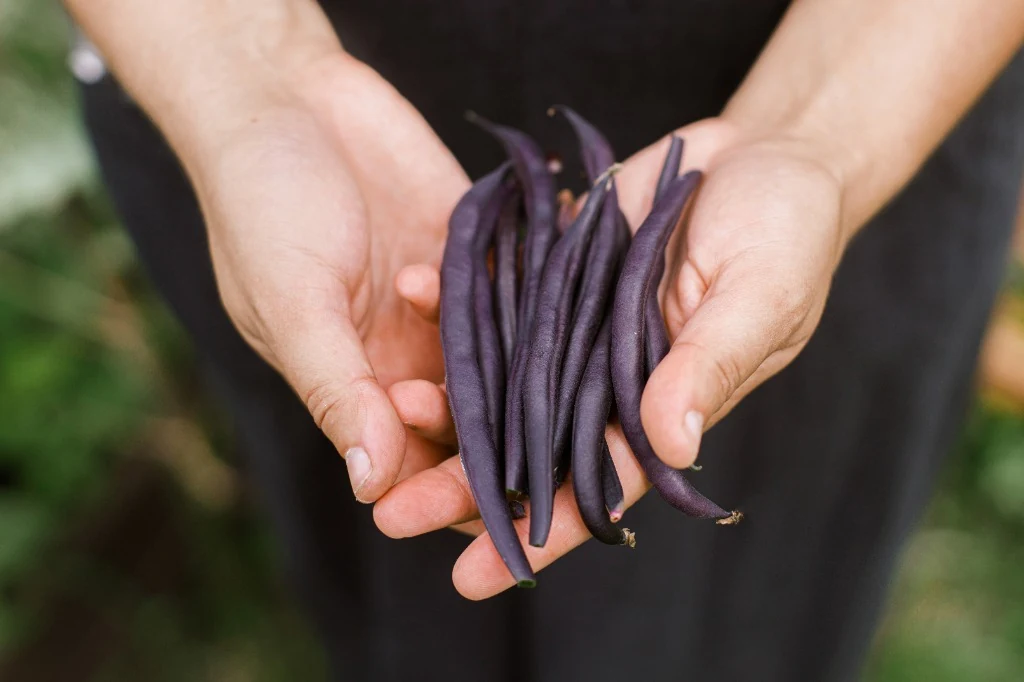
Royal Burgundy bush beans are an open-pollinated, determinate heirloom snap bean bred by the University of New Hampshire in 1957. Unlike green snap beans that require 65°F+ soil, Royal Burgundy germinates in cold spring soils as low as 55°F (13°C), allowing planting 2 to 3 weeks earlier. The compact 15–20 inch plants produce heavy clusters of stringless 5–6 inch purple pods that require no trellising, naturally resist Mexican bean beetles via anthocyanin pigments, and turn bright emerald green when blanched.
Section 1: The Botanical Marvel of Royal Burgundy: History, Breeding, and Cold-Soil Genetics
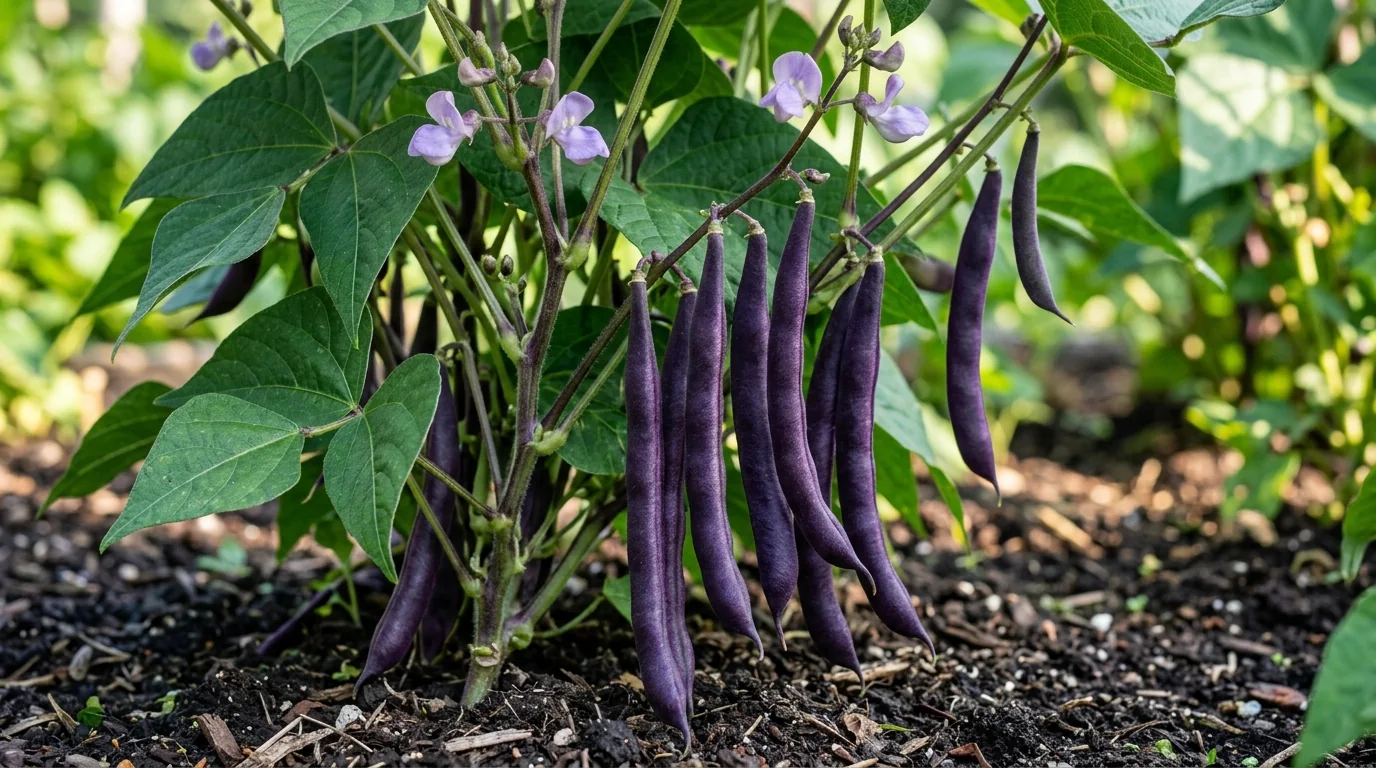
When gardeners choose cool-season legumes, royal burgundy bush beans (Phaseolus vulgaris) stand out as one of the most rewarding heirloom crops in North America, seamlessly combining striking visual elegance, high productivity, and unmatched cold-soil vigor. Widely recognized for its lustrous, deep violet-purple pods hanging in heavy clusters against dark emerald foliage, Royal Burgundy is far more than an ornamental novelty. It is a purpose-bred culinary workhorse engineered specifically to overcome the single greatest vulnerability of the common garden bean: susceptibility to cold, damp spring soils.
What are Royal Burgundy bush beans, and where did they originate?
Royal Burgundy bush beans are an open-pollinated, determinate heirloom snap bean variety developed in 1957 by legendary plant breeder Dr. Elwyn Meader at the University of New Hampshire Agricultural Experiment Station. Dr. Meader crossed standard commercial green snap beans with a primitive, wild purple-podded landrace collected from the high-altitude Andean mountains of South America. His objective was to produce a compact bush bean that could reliably germinate in the cool, soggy soils of early northern New England springs, where conventional green bean varieties quickly succumbed to seed rot.
The result of Dr. Meader’s breeding work was originally introduced under the name ‘Royalty Purple Pod’ (and later stabilized and marketed widely as Royal Burgundy). The variety immediately revolutionized early-season bean production. Unlike traditional green beans that demand soil temperatures of at least 65°F to 70°F (18°C to 21°C) to emerge, Royal Burgundy possesses unique cool-soil vigor, germinating smoothly in soils as cool as 55°F to 60°F (13°C to 15.5°C). This biological trait allows northern gardeners to sow seeds two to three weeks earlier in spring, securing an early summer harvest long before standard cultivars mature.
Section 2: Plant Morphology, Stature, and Physical Support Requirements
Understanding the structural architecture of Royal Burgundy ensures optimal garden spacing and eliminates unnecessary vertical trellising infrastructure.
Are Royal Burgundy beans bush or pole beans, and do they need a trellis or staking?
Royal Burgundy beans are strictly bush beans (determinate habit), meaning they do not require a trellis, pole, netting, or staking of any kind. The plant’s genetic programming causes main vegetative stems to terminate in flower clusters at a fixed height, producing an upright, self-supporting shrub rather than continuous climbing vines.
The plants develop thick, fibrous central stems with heavy lateral branching that creates a dense, umbrella-shaped canopy. Under normal outdoor garden conditions, the plants stand completely upright under their own weight. However, when plants carry heavy flushes of 30 to 40 mature pods simultaneously during summer rainstorms, outer lateral branches can bend toward the ground. Planting in multi-row blocks where neighboring canopies touch provides natural mutual support, keeping purple pods elevated cleanly away from damp soil.
How tall do Royal Burgundy bush bean plants grow?
Royal Burgundy bush bean plants typically grow 15 to 20 inches (38 to 50 centimeters) tall with a lateral canopy spread of 12 to 18 inches (30 to 45 centimeters). In rich, compost-amended soil with full sunlight, vigorous specimens occasionally reach 24 inches tall. Their compact footprint makes them one of the most versatile vegetables for square-foot gardening, raised bed borders, patio containers, and indoor grow tents.
| Botanical & Agronomic Parameter | Cultivar Standard Specification |
|---|---|
| Botanical Classification | Phaseolus vulgaris var. nanus (Fabaceae / Legume Family) |
| Breeding Origin & Pedigree | Dr. Elwyn Meader, University of New Hampshire (1957); Heirloom Open-Pollinated |
| Growth Habit & Plant Stature | Determinate compact bush; 15 to 20 inches tall, 12 to 18 inches wide |
| Days to Maturity (DTM) | 51 to 60 days from direct outdoor sowing |
| Soil Germination Temperature | Minimum 55°F (13°C); Optimal 65°F to 75°F (18°C to 24°C) |
| Pod Dimensions & Characteristics | 5 to 6 inches long; round, straight, stringless, deep violet-purple; buff-tan seed coat |
| Genetic Disease & Pest Resistances | Common Bean Mosaic Virus (NY 15 strain); natural resistance to Mexican Bean Beetles |
Section 3: Soil Science, Cold-Soil Physics, and Rhizobium Inoculation
Soil temperature and microbial biology govern snap bean emergence and vegetative vigor. Mastering these subterranean factors ensures explosive early growth.
Can Royal Burgundy beans germinate in cool or cold soil?
Yes, Royal Burgundy beans possess an extraordinary genetic capacity to germinate in cool soils down to 55°F (13°C). Standard green snap beans (such as Blue Lake or Tendergreen) require soil temperatures above 65°F (18°C). When planted in cold, saturated spring ground, standard green bean seed coats imbibe chilling water that ruptures cell membranes, causing seed rot caused by soil-borne Pythium species.
In contrast, Royal Burgundy’s dark seed coat (testa) is rich in protective phenolic tannins and specialized lipids that prevent cellular imbibition damage under low temperatures. While seeds sprout in 6 to 8 days in warm 70°F soil, they will emerge steadily in 10 to 14 days in cool 55°F to 60°F soil without rotting. This allows northern growers in USDA Zones 3 through 6 to direct-sow seeds outdoors up to three weeks before their last expected spring frost date.
Do Royal Burgundy beans need fertilizer, and should you inoculate with Rhizobium bacteria?
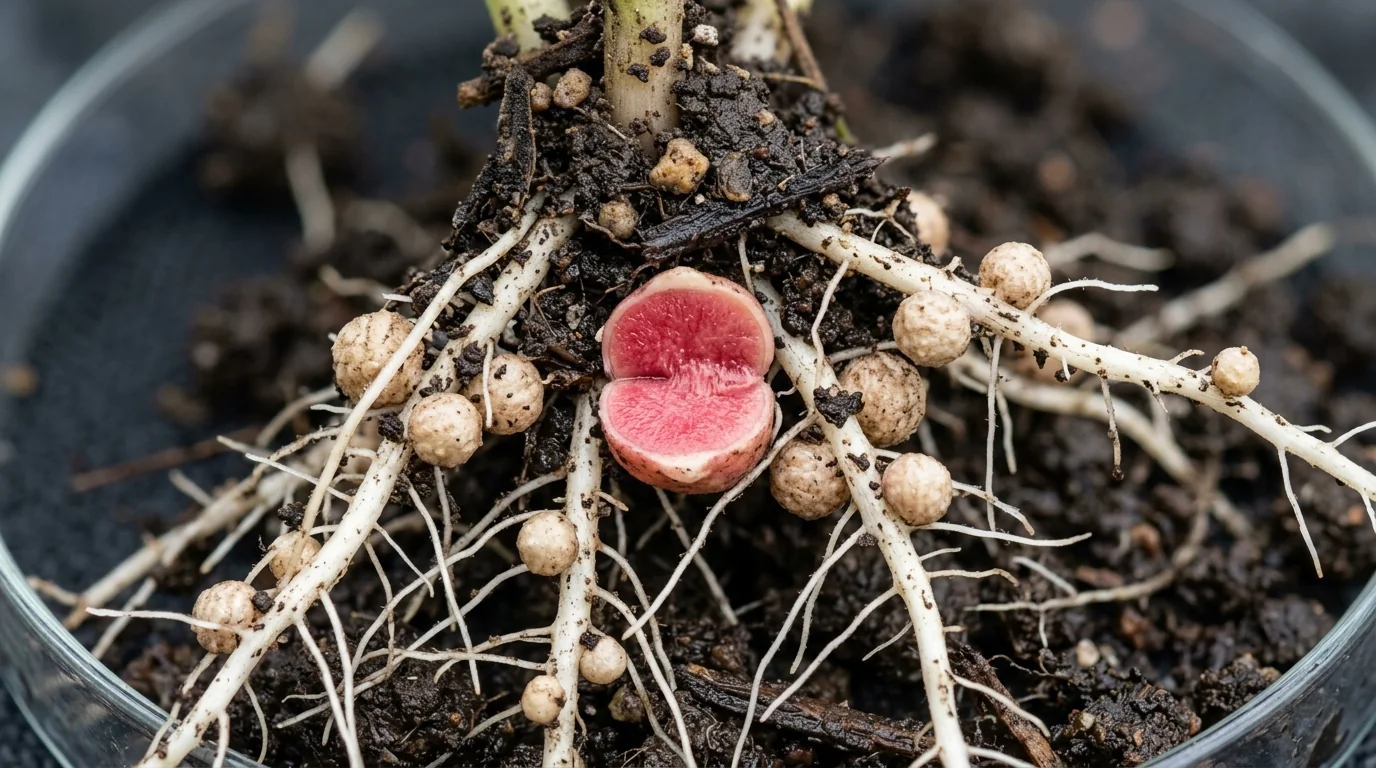
Royal Burgundy beans require very little nitrogen fertilizer because they are legumes capable of biological nitrogen fixation. Through a symbiotic relationship with beneficial soil bacteria known as Rhizobium leguminosarum biovar phaseoli, the plant forms specialized nodules along its root system. These bacterial colonies absorb atmospheric nitrogen gas (N2) from soil pore spaces and convert it into water-soluble ammonium (NH4+), directly feeding the host plant.
Applying high-nitrogen synthetic fertilizer (such as 10-10-10 or urea) suppresses this natural nodulation process. When flooded with synthetic nitrogen, bean plants produce excessively lush, dark green foliage, delay flowering, and abort flower buds, resulting in sparse pod yields. Instead, prepare garden soil aligned with USDA Natural Resources Conservation Service (NRCS) soil fertility guidelines, using balanced organic compost and bone meal to supply phosphorus and potassium (which fuel strong root growth and blossom retention).
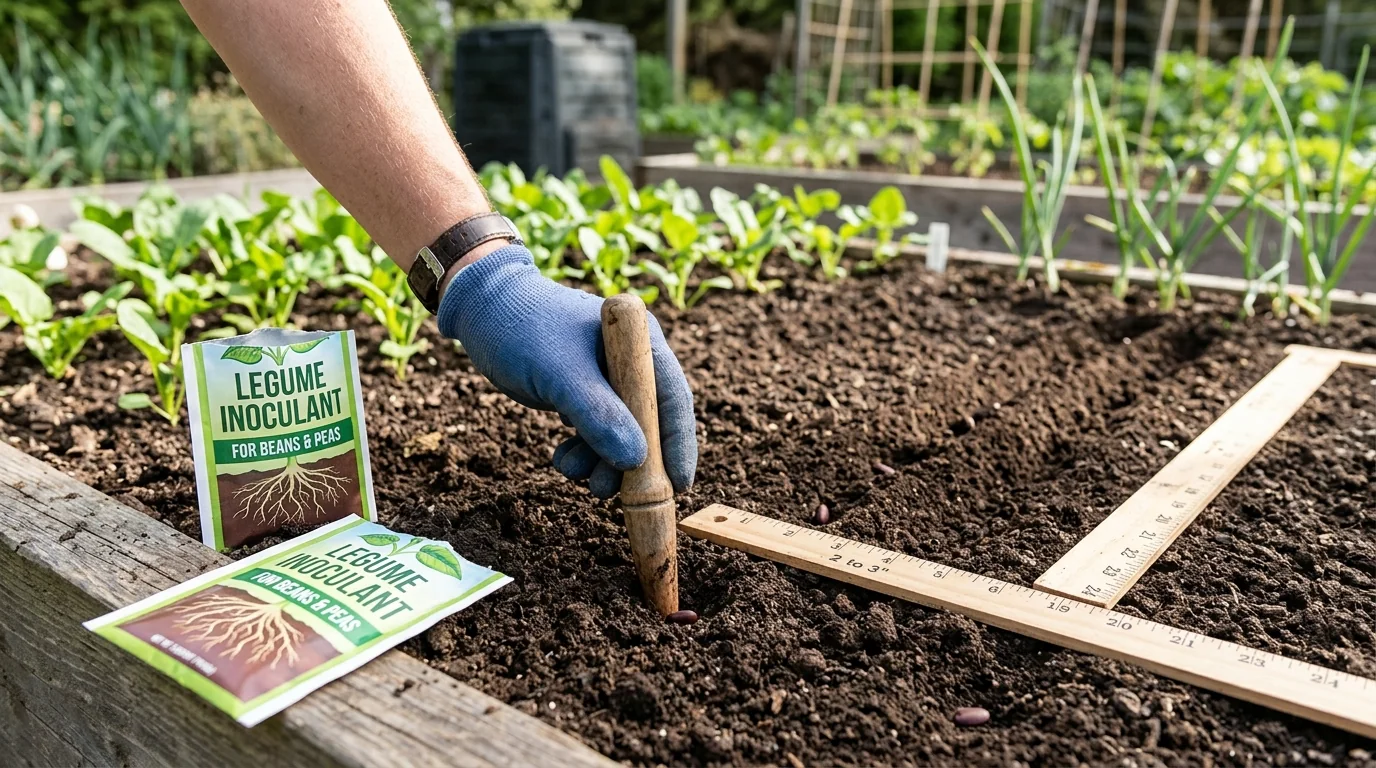
The Inoculation Protocol: If you are planting beans in a new garden bed, raised box, or container potting mix that has never grown legumes, the soil will lack viable Rhizobium bacteria. To establish biological nitrogen fixation, purchase a packet of garden legume inoculant powder. Moisten bean seeds lightly with water or skim milk, dust them thoroughly with the black inoculant powder until evenly coated, and plant immediately in damp soil. Within three weeks, digging gently around root crowns will reveal plump, pink-cored nodules confirming active nitrogen production.
Section 4: Direct Sowing, Spacing Architecture, and Succession Planting
Bush snap beans resent root disturbance, making direct outdoor sowing the gold standard for commercial and home cultivation.
How do you plant and space Royal Burgundy bush bean seeds for maximum yield?
Always direct-sow Royal Burgundy seeds outdoors in their permanent garden position (as detailed in our master guide on how to start a vegetable garden from seed). Bush bean seedlings develop a fragile, non-fibrous taproot system that experiences severe transplant shock when moved from seed trays, permanently stunting top growth.
Follow this precise planting architecture:
- Sowing Depth: Sow seeds 1 inch (2.5 cm) deep in average garden loam. In very light, sandy soils that dry out quickly, plant 1.5 inches deep. In heavy clay, plant no deeper than 0.75 inch to prevent crusting crust from trapping emerging cotyledons.
- In-Row Spacing: Space seeds 2 to 3 inches apart within the row. Once seedlings reach 3 inches tall with their first true leaves, thin plants to a final spacing of 4 to 6 inches apart. Crowding plants closer than 4 inches restricts airflow and invites fungal white mold.
- Between-Row Spacing: Space rows 18 to 24 inches apart. If planting in intensive raised garden beds (see our detailed guide to raised bed garden spacing), arrange seeds in an equidistant grid spaced 6 inches apart in all directions.
- Soil Contact: Firm soil gently over planted seeds with the flat palm of your hand or the back of a hoe to ensure tight seed-to-soil contact, which accelerates water uptake.
How do you succession plant Royal Burgundy beans for continuous summer harvests?
Because Royal Burgundy is a determinate bush bean, a single planting produces the vast majority of its crop over a concentrated two to three-week window before tapering off. Gardeners who plant only a single spring crop often face a sudden glut of purple beans followed by a midsummer void.
To secure a non-stop harvest of tender snap beans from late June through October, consult our interactive growing cycle planner and implement a structured succession sowing schedule. Sow a new row or garden block every 14 to 21 days until 65 days before your first expected autumn frost. Autumn-grown Royal Burgundy crops are particularly rewarding: cooler late-summer night temperatures intensify anthocyanin synthesis, producing pods with exceptionally dark, velvet-violet pigmentation.
| Succession Wave | Sowing Target Window | Expected Harvest Window | Agronomic Focus & Soil Management |
|---|---|---|---|
| Wave 1: Early Spring Crop | 2 to 3 weeks before last spring frost (Soil 55°F+) | Late June to Early July | Capitalize on cold-soil germination vigor; direct sow with Rhizobium inoculant |
| Wave 2: Early Summer Crop | Mid-June (2 weeks after Wave 1 emerges) | Mid-to-Late July | Peak vegetative canopy expansion under long 14-hour summer photoperiods |
| Wave 3: Midsummer Crop | Early July | Mid-to-Late August | Water deeply during flowering; apply 2 inches of clean straw mulch to cool soil |
| Wave 4: Late Fall Crop | Late July to Early August (70 days before frost) | Late September to Mid-October | Cool autumn nights maximize anthocyanin density; harvest before hard freezes |
Section 5: Irrigation Physics and Flowering Moisture Management
Water availability during specific reproductive windows dictates whether blossoms set plump pods or abort entirely.
How often and how much should you water Royal Burgundy bush beans?
Royal Burgundy bush beans require approximately 1.0 to 1.5 inches of water per week, applied in one or two deep soakings rather than daily light sprinklings. In average summer weather, water every 4 to 6 days. During hot, dry stretches with temperatures exceeding 85°F (29°C), increase watering frequency to every 2 to 3 days.
Because bush beans have relatively shallow root systems concentrated in the top 8 to 12 inches of soil, they cannot access deep subsoil moisture like deep-taprooted crops (as explored in our watering physics guide on how often to water sunflowers). Monitor soil moisture by inserting your finger 2 inches into the soil. If the top 2 inches feel dry and crumbly, apply water slowly at the base of the plants until the root zone is saturated down to 8 inches.
Why are my Royal Burgundy bean flowers falling off without producing pods?
Blossom drop in snap beans stems primarily from two environmental triggers: moisture stress and extreme summer heat.
The Flowering Moisture Window: The period between flower bud opening and initial pod elongation is the plant’s most moisture-critical window. If soil dries out during anthesis, the plant enters protective survival mode and sheds open blossoms to conserve hydration. Keep soil consistently damp (like a wrung-out sponge) while flowers are present.
Thermal Pollen Sterility: When ambient daytime temperatures exceed 90°F (32°C) or nighttime temperatures remain above 75°F (24°C), bean pollen grains become thermally non-viable. The flower cannot fertilize its ovules, causing unfertilized blooms to dry up and drop within 48 hours. In hot southern climates, grow Royal Burgundy as a spring and autumn crop, avoiding midsummer pod setting.
Section 6: Container Cultivation and Indoor Hydroponic Setups
Thanks to its compact 18-inch stature, Royal Burgundy is one of the premier snap bean cultivars for container gardening, raised planters, and indoor hydroponic systems.
What size pot or container do you need to grow Royal Burgundy beans?
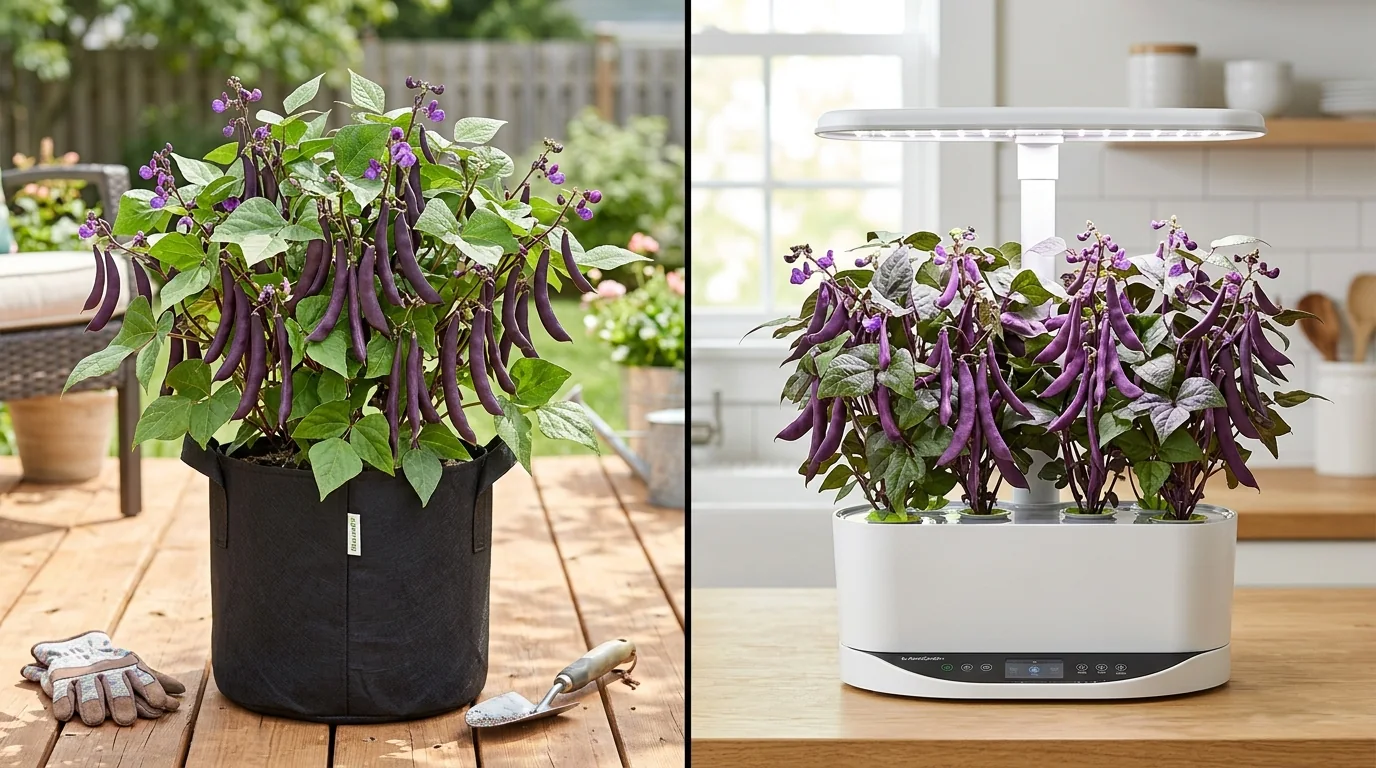
To grow Royal Burgundy bush beans outdoors on a patio, balcony, or deck, choose containers that meet these volume criteria:
- Standard 5-Gallon Grow Bag: A standard 5-gallon container (or 5-gallon fabric aeration grow bag) accommodates 2 to 3 plants comfortably, providing sufficient root depth and moisture retention.
- Window Boxes & Trough Planters: A rectangular deck planter at least 8 to 10 inches deep and 24 to 36 inches long holds 4 to 6 plants spaced 6 inches apart.
- Drainage Non-Negotiable: The container must possess at least 4 drainage holes. Never allow bean pots to sit in stagnant runoff saucers, which induces anaerobic root suffocation.
Container Substrate: Fill pots with a loose, well-draining soilless mix composed of 60 percent blonde peat moss or washed coconut coir, 25 percent coarse horticultural perlite, and 15 percent screened aged compost. This delivers 20 percent air-filled porosity, allowing heavy summer watering without suffocating roots.
Can you grow Royal Burgundy bush beans indoors in an AeroGarden or under grow lights?
Yes, Royal Burgundy bush beans grow exceptionally well indoors under full-spectrum LED grow lights and in countertop hydroponic systems such as the AeroGarden (as outlined in our comprehensive indoor hydroponic gardening guide) (particularly the Bounty and Farm models). Their compact 15 to 20-inch height fits neatly under adjustable LED lighting hoods.
However, germinating bean seeds directly in water-saturated hydroponic sponge plugs presents a high risk of seed rot. To succeed indoors, follow this proven protocol:
- The Paper Towel Pre-Sprout Method: Do not drop dry bean seeds directly into soaking wet hydroponic sponges. Instead, place seeds inside a damp paper towel sealed in a plastic zip bag at 70°F for 4 to 6 days. Once seeds crack and produce a 1/2-inch white radicle root, carefully insert the sprouted seedling into the sponge pod.
- Photoperiod and Light Intensity: Provide 14 to 16 hours of daily light with a full-spectrum LED fixture delivering a Photosynthetic Photon Flux Density (PPFD) between 300 and 450 micromoles per square meter per second.
- Nutrient Strength & EC Level: Maintain electrical conductivity (EC) between 1.2 and 1.6 mS/cm and water pH between 6.0 and 6.5. Use a nutrient solution formulated with lower nitrogen and higher potassium and phosphorus once flowering begins.
- Mechanical Pollination Vibration: Royal Burgundy bean flowers are self-pollinating and do not require bees. However, indoors in still air, gently shake the main stem or brush flower clusters with your fingertips once daily at midday to loosen pollen inside the floral keel.
Section 7: Integrated Pest Management (IPM) and Disease Biosecurity
Royal Burgundy possesses built-in botanical defenses against several common garden pests that routinely destroy green bean crops.
Are Royal Burgundy beans resistant to Mexican bean beetles, pests, and diseases?
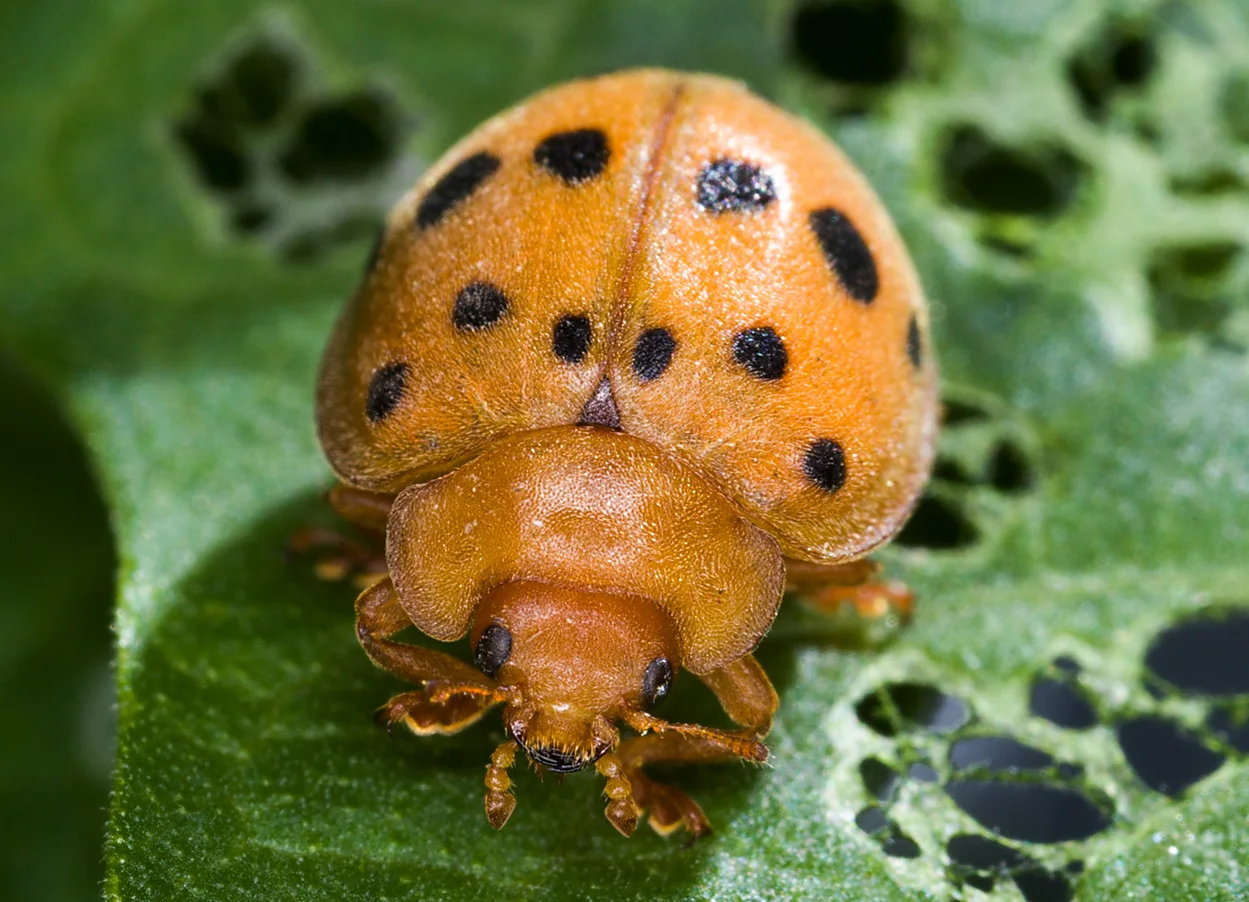
Yes, Royal Burgundy exhibits documented resistance to one of the most destructive legume pests in North America: the Mexican Bean Beetle (Epilachna varivestis). Mexican bean beetles and their spiny yellow larvae feed voraciously on the undersides of bean leaves, skeletonizing foliage until only a lace-like network of veins remains.
The Anthocyanin Deterrent Mechanism: Research reveals that the high concentration of anthocyanins and phenolic compounds present in Royal Burgundy’s stems, leaf petioles, and pod tissues acts as a natural feeding deterrent. Given a choice between standard green beans and Royal Burgundy in the same garden bed, adult beetles and larvae overwhelmingly target the green foliage, leaving purple plants largely undamaged.
Managing Other Pests and Pathogens:
- Aphids & Spider Mites: Tiny sap-sucking insects that cluster on new growth tips and excrete sticky honeydew. Wash colonies away with sharp blasts of cold water from a hose, or spray with certified organic insecticidal soap (potassium salts of fatty acids).
- Common Bean Mosaic Virus (CBMV): Royal Burgundy carries genetic resistance to Common Bean Mosaic Virus (NY 15 strain), preventing the leaf mottling and severe stunting common in older heirlooms.
- Powdery Mildew (Erysiphe diffusa): A fungal pathogen that coats foliage in white, powdery patches during humid, stagnant weather. Prevent powdery mildew by spacing plants 6 inches apart, avoiding overhead sprinkler watering, and spraying with diluted potassium bicarbonate (1 tablespoon per gallon of water) at the first sign of white spots.
- Critical Foliar Handling Rule: Never work among bean plants, weed rows, or harvest pods when leaves are wet from morning dew or rain. Walking through wet foliage transfers fungal spores (such as anthracnose and halo blight) rapidly across the entire planting.
Section 8: Harvesting Science, Anthocyanin Chemistry, and Culinary Gastronomy
The culinary magic of Royal Burgundy lies in its exceptional snap quality and its fascinating biochemical transformation upon cooking.
How many days from seed to harvest (Days to Maturity) do Royal Burgundy beans take?
Royal Burgundy bush beans mature in 51 to 60 days from direct outdoor sowing under standard summer conditions. The initial harvest begins around day 52, when the earliest set of pods reaches prime snap stage. The plant continues flowering and producing successive pods for approximately 18 to 24 days if harvested frequently.
Why do Royal Burgundy purple beans turn green when cooked?
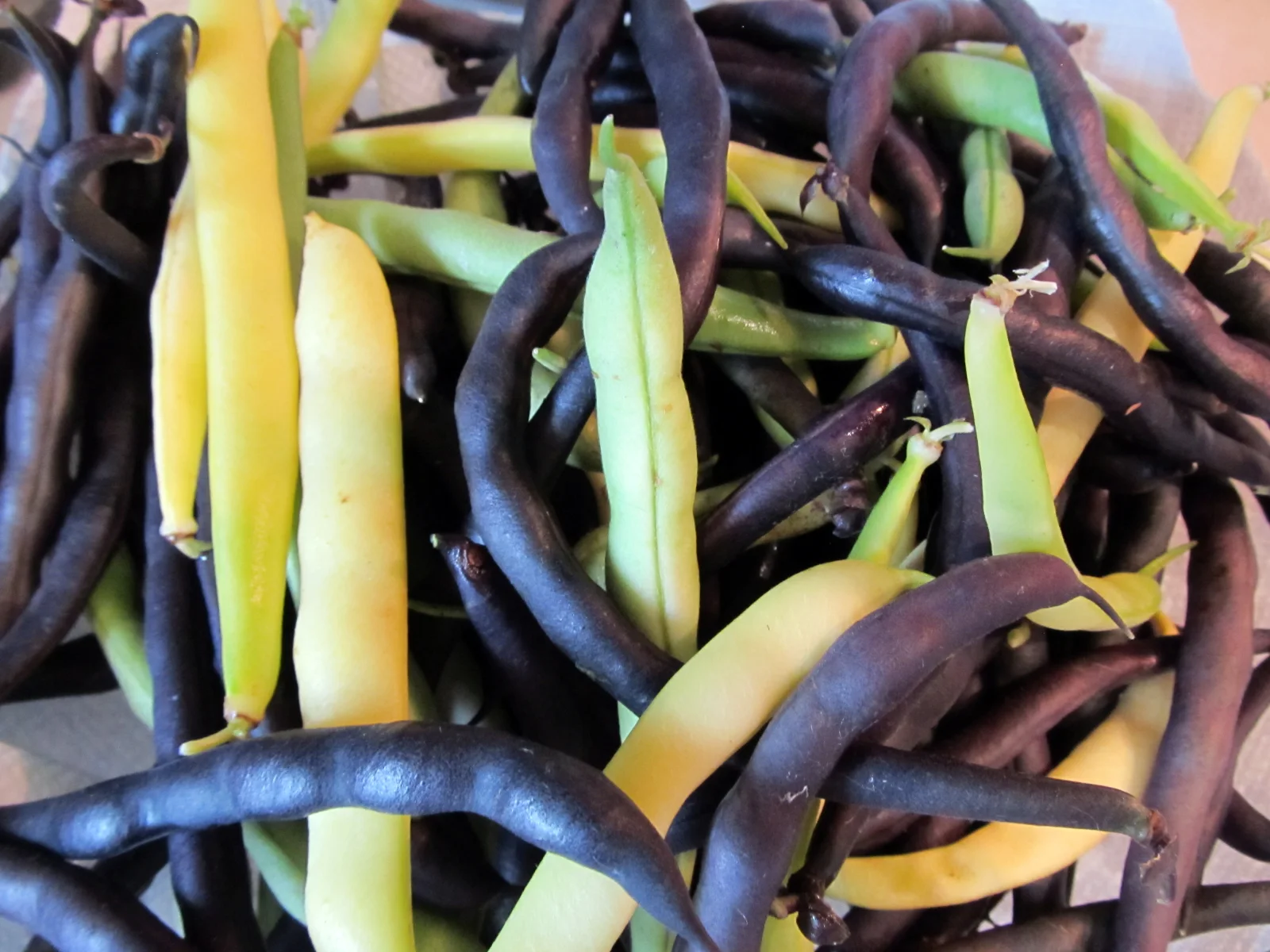
Royal Burgundy beans turn from rich purple to bright emerald green within 60 to 90 seconds of hitting boiling water, steaming racks, or hot sauté pans. This rapid color transformation is governed by anthocyanin pigment chemistry.
The purple coloration is produced by cyanidin-3-glucoside, a water-soluble flavonoid pigment stored within the outer epidermal cell vacuoles of the bean pod wall. Just beneath this purple epidermal layer sits a dense layer of green chlorophyll. Anthocyanin molecules are thermally unstable: when exposed to heat above 160°F (71°C), the molecular bond holding the pigment dissolves and denatures. As the purple anthocyanin breaks down, it unmasks the heat-stable green chlorophyll underneath.
The Built-In Blanching Timer: In culinary gastronomy, this color shift serves as nature’s perfect blanching indicator. When preparing beans for freezing, drop pods into boiling water; the exact second the pods turn bright green (typically 90 to 120 seconds), they are perfectly blanched. Plunge them immediately into an ice-water bath to stop cooking, pat dry, and freeze in vacuum bags.
Can you eat Royal Burgundy beans raw, and what do they taste like?
Yes, Royal Burgundy beans are delicious eaten completely raw. When harvested young and slender, raw pods have a crisp, tender snap with zero tough fibrous strings and a sweet, mildly nutty, grassy flavor. Eating them raw in fresh garden salads or on crudité platters is the best way to showcase their striking violet-purple color, as raw pods retain 100 percent of their purple hue.
How do you harvest Royal Burgundy beans for maximum yield and quality?
Follow these practical harvesting benchmarks:
- Optimal Pod Size: Harvest pods when they are 5 to 6 inches long and about the thickness of a pencil. The pod walls should feel smooth, crisp, and velvety, before the internal seeds swell and bulge.
- Effortless Harvesting: Because dark purple pods stand out boldly against emerald green foliage, Royal Burgundy is vastly easier and faster to harvest than green beans. You will never accidentally leave hidden overgrown pods behind.
- The Two-Hand Technique: Always pick beans using two hands. Hold the main plant stem with one hand and snap the pod stem upward cleanly with the other. Pulling pods with one hand often tears lateral branches or uproots the shallow root crown.
- Harvest Frequency: Pick the patch every 2 to 3 days. Frequent picking removes developing seeds, signaling the plant to continue producing new flower clusters and extending your harvest window.
Section 9: Seed Saving Biosecurity and Genetic Purity Preservation
Because Royal Burgundy is an open-pollinated heirloom cultivar, home gardeners can easily harvest and save seeds that breed 100 percent true to type year after year.
How do you save pure Royal Burgundy bean seeds for next season?
Bean flowers (Phaseolus vulgaris) are cleistogamous, meaning self-pollination takes place inside the closed flower petal keel before the blossom ever opens to outside insects. As a result, natural cross-pollination between different bean varieties is relatively low (typically under 3 to 5 percent).
Follow this step-by-step seed saving protocol:
- Isolation Distance: To guarantee complete genetic purity, separate Royal Burgundy plants from other Phaseolus vulgaris varieties by a distance of 10 to 20 feet, or plant a tall flowering barrier crop (such as sunflowers or sweet corn) between varieties.
- Dedicate Seed Plants: Designate 4 to 6 vigorous plants exclusively for seed saving. Do not pick snap beans from these plants; allow every pod to mature fully on the vine.
- Vine Dry-Down: Allow pods to hang on the plant until they lose their purple color, turn dry, brittle, and light straw-brown, and seeds rattle inside when shaken (typically 80 to 95 days from sowing).
- Pod Shelling: Pick dry pods on a sunny afternoon. Hand-shell the pods to extract the oval seeds. Pure Royal Burgundy seeds display a distinctive, uniform light buff-tan to golden-brown seed coat.
- Curing and Storage: Spread shelled seeds across paper towels in a dry, ventilated room for 10 to 14 days to cure completely. Test dryness by pressing a fingernail into a seed: if it leaves an indent, continue drying. Once rock-hard, store seeds in airtight glass Mason jars with a food-safe silica gel desiccant packet in a dark, cool pantry (50°F to 60°F). Stored properly, Royal Burgundy seeds remain viable for 3 to 5 years.
Section 10: Cultivar Comparison Matrix: Purple vs. Green vs. Yellow Bush Beans
Compare Royal Burgundy against other celebrated bush snap bean cultivars to plan your garden beds effectively:
How do Royal Burgundy beans compare to other purple beans like Purple Queen and Cherokee Purple?
Royal Burgundy is earlier and significantly more cold-soil tolerant than Purple Queen (an Italian variety that prefers warm summer weather) and Royalty Purple Pod (a closely related line). Unlike stringy pole heirlooms, Royal Burgundy produces completely stringless pods with a tender snap.
| Cultivar Name | Pod Color & Texture | Days to Maturity (DTM) | Cold Soil Tolerance | Key Agronomic Strengths |
|---|---|---|---|---|
| Royal Burgundy | Deep velvety violet; round, stringless | 51 to 58 days | Outstanding (down to 55°F / 13°C) | Heirloom bred by Meader; beetle resistant; effortless high-contrast harvesting |
| Provider | Medium green; straight, cylindrical | 50 to 54 days | Moderate (down to 60°F / 15.5°C) | Standard commercial green bush bean; heavy early yields but pods blend into leaves |
| Cherokee Wax | Bright buttery yellow; flat-oval | 52 to 58 days | Moderate | Classic heirloom wax bean; excellent disease tolerance; crisp nutty flavor |
| Purple Queen | Dark glossy purple; slender French filet | 55 to 62 days | Low (prefers 68°F+ warm soils) | Italian specialty cultivar; exquisite tender pods but sensitive to spring cold |
| Dragon Tongue | Creamy yellow with purple stripes | 58 to 65 days | Moderate | Dutch heirloom wax type; dual-purpose for fresh snap eating or dry shelling |
Section 11: Troubleshooting Common Growing Problems
Quickly diagnose and correct cultural mistakes using this comprehensive botanical troubleshooting matrix:
| Observed Garden Symptom | Underlying Cause | Plant Tissue State | Corrective Action Protocol |
|---|---|---|---|
| Seeds rot in soil or fail to emerge | Soil temperature below 52°F or overwatered heavy clay | Seeds soft, mushy, colonized by fungus | Wait until soil reaches 55°F; plant 0.75 inch deep; improve drainage |
| Lush giant green leaves, zero flowers or pods | Excess nitrogen fertilizer application | Overly leafy canopy, thick green stems | Halt nitrogen feeds; top-dress with bone meal (phosphorus) and wood ash (potassium) |
| Blossoms drop off without setting pods | Midday heat above 90°F or severe water stress during bloom | Flower stems yellow and detach at pedicel joint | Keep soil evenly moist; erect 30 percent shade cloth during heatwaves |
| Tough, fibrous pods with bulging seeds | Pods left on the plant past prime snap stage | Pod skin rough and leathery, seeds large | Harvest every 2 to 3 days when pods are pencil-thick; use tough pods for dry seed |
| Plants collapse and rot at soil line | Pythium or Rhizoctonia root rot from waterlogged soil | Stem collar brown, soft, and water-soaked | Never overwater; allow top 2 inches of soil to dry; avoid planting in low depressions |