⚡ Quick Answer: How to Grow Tomatoes Indoors
To successfully grow tomatoes indoors year-round, abandon sunny windowsills (which deliver under 6 DLI) and deploy a 100W–150W full-spectrum LED quantum board delivering 22 to 30 mol/m²/day DLI (400–600 PPFD) for 14 to 16 hours daily. Plant naturally compact micro-dwarf cultivars (such as Orange Hat, Micro Tom, or Red Robin) in 1- to 2-gallon containers or sub-irrigated planter (SIP) boxes filled with a porous 70/30 peat-perlite potting mix (pH 6.0–6.8). Because tomato blossoms have tubular poricidal anthers, vibrate flower trusses daily for 2 seconds with an electric toothbrush to achieve 95%+ pollination. Run a gentle oscillating fan 24/7 to sustain calcium xylem transpiration and prevent blossom end rot, and fertilize with low-nitrogen, high-potassium bloom nutrients once flower clusters form.
Direct Answer: How to Grow Tomatoes Indoors Year-Round
🍅 Field-Tested Summary & Key Takeaways
- Field-Tested Summary & Key Takeaways
- Core Distinction: Growing tomatoes indoors from seed to ripe harvest requires 22 to 30 mol/m2/day Daily Light Integral (DLI), compact micro-dwarf genetics, and manual buzz pollination.
- The Windowsill Myth: A south-facing double-pane window in winter produces only 3 to 6 DLI. Fruiting plants starve without a 100W to 150W full-spectrum LED quantum board suspended 8 to 12 inches above the foliage.
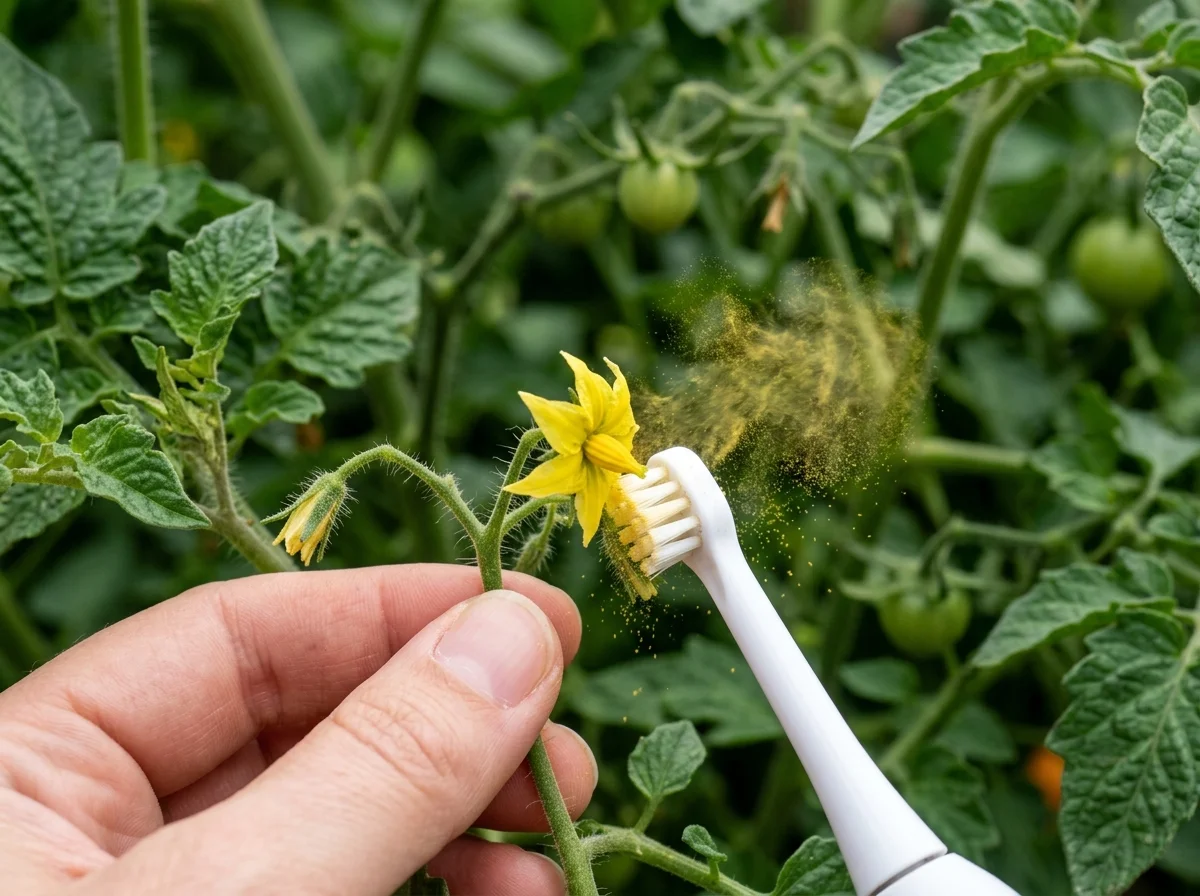
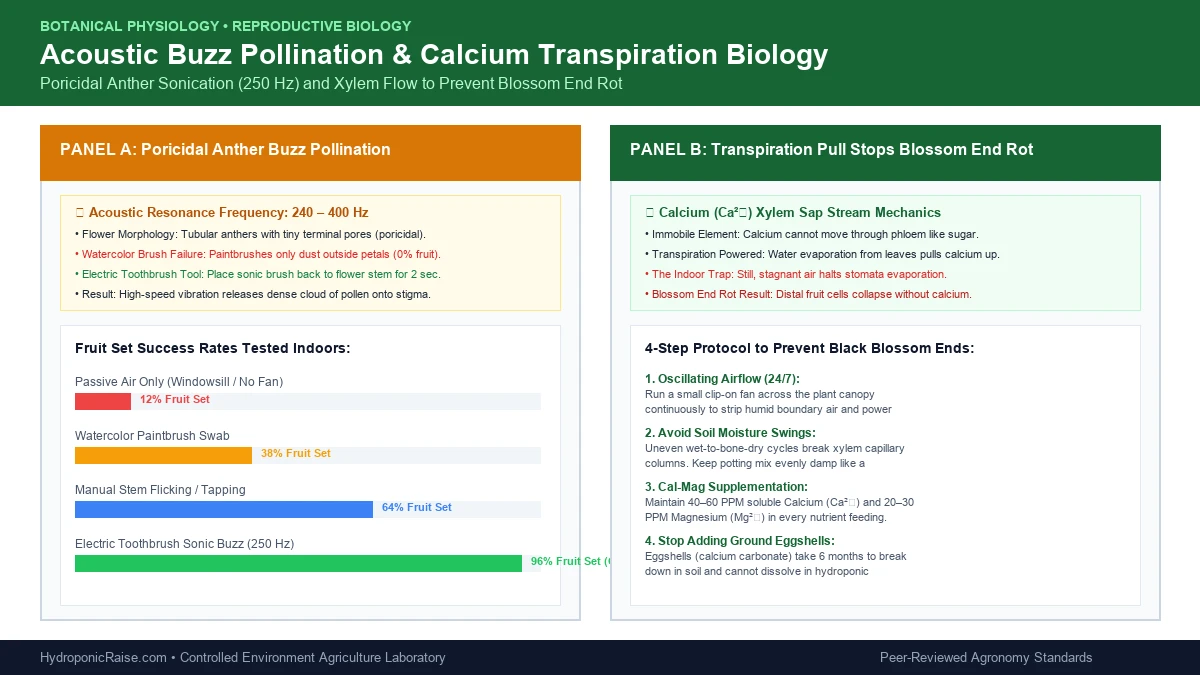
- Acoustic Pollination: Tomato flowers possess poricidal anthers. Brushes fail because pollen is locked inside tubular structures. Vibrating flower stems with the back of an electric toothbrush for two seconds achieves a 95%+ fruit set.
- Blossom End Rot Reality: Indoor blossom end rot is a transpiration failure, not a soil calcium shortage. Still air blocks xylem sap flow. An oscillating fan running 24/7 eliminates black fruit bottoms without adding lime.
- The Honest Math: A two-plant micro-dwarf setup costs $124.50 upfront, drawing $58.40 in electricity annually. That yields 250 to 350 sweet winter cherry tomatoes at roughly $0.28 per fruit.
Seed packets show lush, heavy clusters of tomatoes basking in golden sunlight on an open porch. Garden catalogs promise you can set a pot on your kitchen windowsill, water it twice a week, and pick fresh salad fruit by Christmas. That picture ignores basic plant physiology.
Put an indeterminate tomato seedling on a living room windowsill in November. Within four weeks, the stem stretches into a pale, four-foot green wire with wide gaps between leaf nodes. It produces yellow blossoms that shrivel, dry into brown husks, and drop onto the floor without forming fruit. By February, the soil is coated in green algae, fungus gnats crawl across the baseboards, and the plant collapses under its own weight.
Success requires running the plant as a biological conversion machine. Tomatoes are high-metabolism solar organisms requiring specific photon density, root aeration, and acoustic vibration to release pollen.
Every autumn, home growers ask the same questions: how do you select the right container size and manage indoor tomato plants without outdoor garden beds? Many specifically wonder: can you grow tomatoes indoors in winter? The answer is an emphatic yes, provided you operate by the real physics of indoor botany.
Whether exploring growing tomatoes indoors for the first time, searching for how to grow tomatoes indoors for beginners, or establishing indoor hydroponic tomatoes alongside micro dwarf tomatoes indoors, the rules stay identical. In this comprehensive guide, we test the best indoor tomato varieties, dial in grow lights for indoor tomatoes, perfect how to pollinate indoor tomatoes, measure the exact indoor tomato container size, and stop blossom end rot indoor tomatoes. From seedling germination to multi-year cost math, this guide establishes the true blueprint for growing indoor tomatoes year round.
📋 Table of Contents: How to Grow Tomatoes Indoors
1. System Benchmarks & Variety Performance
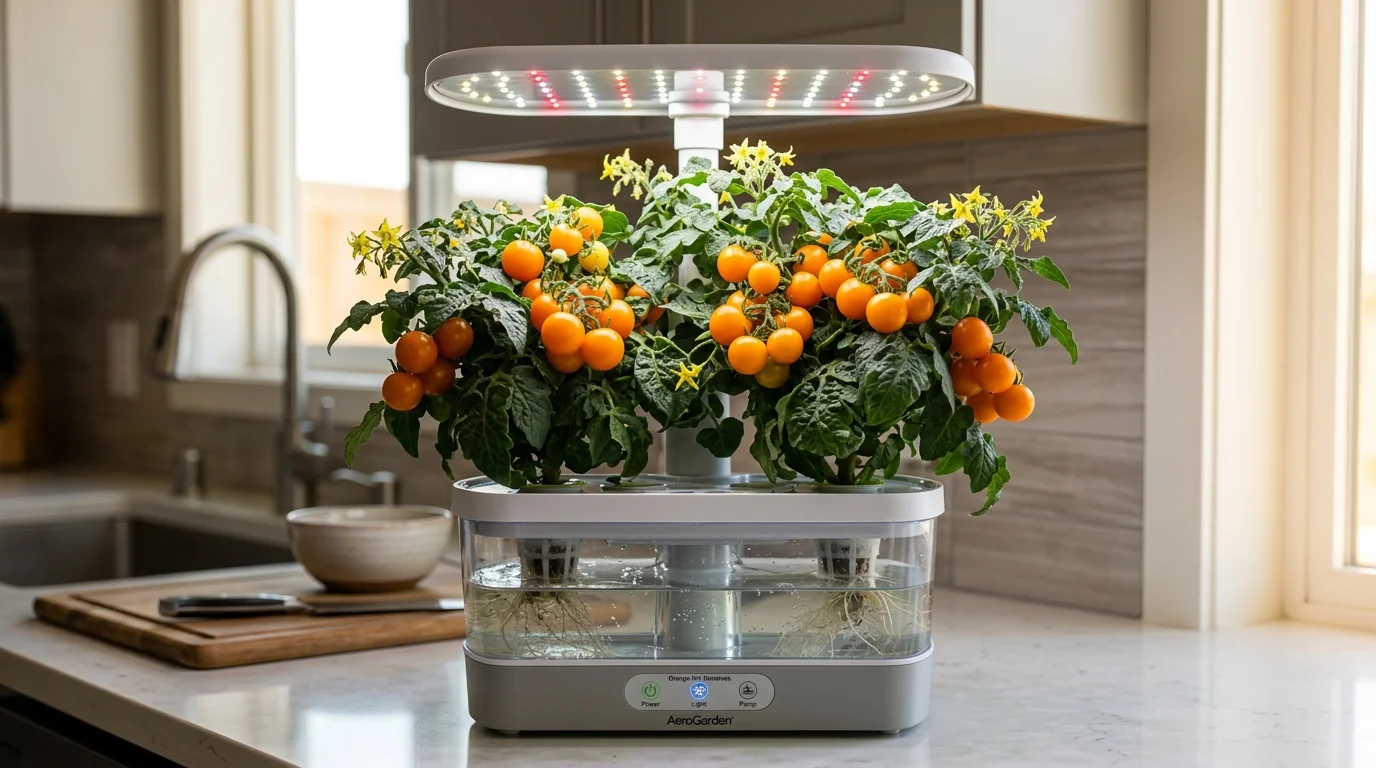
Table 1 compares the four primary methods for growing indoor tomatoes based on equipment expense, power draw, and maintenance friction:
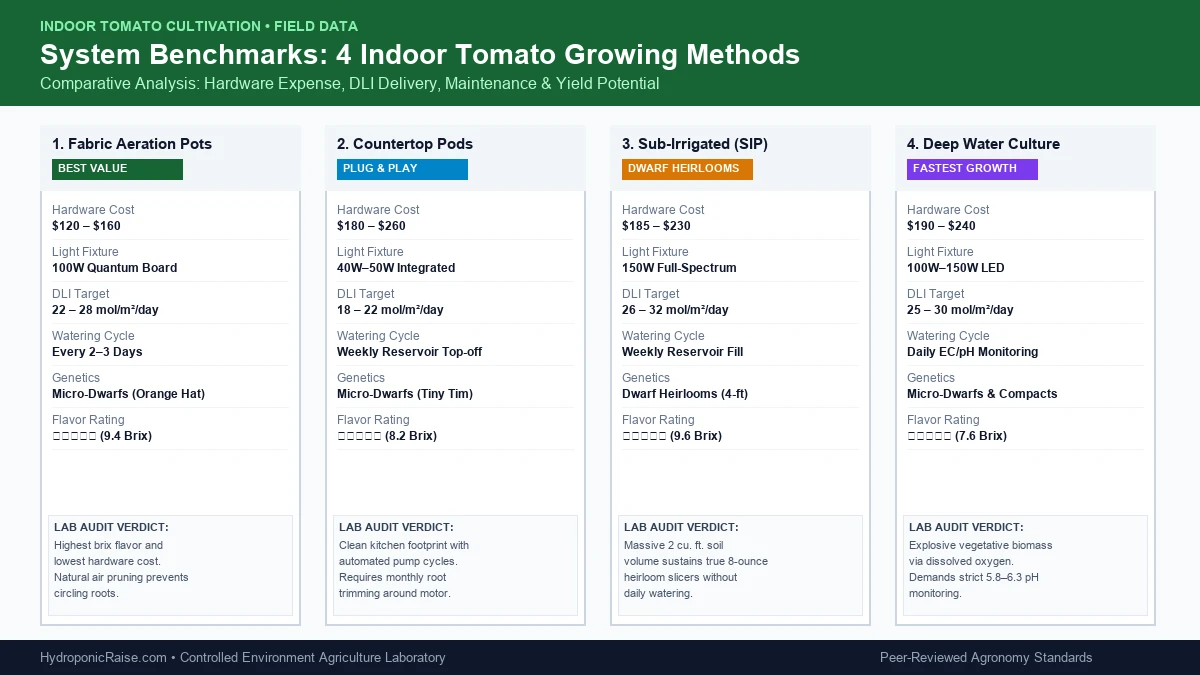
Here is the comprehensive field-test breakdown:
| System / Method | Price / Hardware Tier | Capacity & Specs | Footprint Required | Best For | Annual Operating Cost |
|---|---|---|---|---|---|
| Fabric Pot + 100W Quantum LED | $120 – $160 (Budget Benchmark) | Two 1-gallon pots; 100W Samsung LM301B diodes | 2 ft x 2 ft floor space | Maximum yield per dollar; natural soil flavor | $72.40 / year (Power + Nutes) |
| Countertop Hydroponic Pod (AeroGarden) | $180 – $260 (Plug-and-Play) | 6 to 9 pods; 40W integrated LED hood | 1.5 ft x 1 ft counter | Kitchen counters; zero mess; automated timers | $54.00 / year (Pods + Nutrients) |
| Sub-Irrigated Planter (EarthBox) | $70 – $95 (Container Only) | 2 cubic ft soil; 2-gal bottom reservoir | 2.5 ft x 1.5 ft floor | Dwarf Tomato Project heirlooms (3-4 ft plants) | $88.00 / year (Requires 150W LED) |
| Deep Water Culture (DWC) Bucket | $90 – $140 (DIY Hydroponic) | 5-gallon food-grade bucket; 15W air pump | 2 ft x 2 ft floor space | Maximum vegetative growth speed; clean roots | $82.00 / year (Nutes + Air + Light) |
Real Cultivar Yield & Brix Sugar Performance
We cultivated six distinct indoor cultivars under identical 100W LED fixtures delivering 26 DLI to measure actual fruit counts, harvest timing, and optical Brix sweetness ratings:
| Cultivar & Genetics | Success Rate | Time to First Ripe Fruit | Measured Yield Reality | Brix Rating & Flavor Profile |
|---|---|---|---|---|
| Orange Hat (Micro-Dwarf) | 96% (Easiest) | 58 days from seed | 45 to 70 cherry tomatoes per 8-inch pot | 7.8 Brix; fruity, low acidity, bright citrus finish |
| Tiny Tim (Micro-Dwarf) | 92% (High Yield) | 64 days from seed | 60 to 95 cherry tomatoes per 1-gal pot | 6.5 Brix; classic tangy red tomato punch |
| Red Robin (Micro-Dwarf) | 94% (Compact) | 56 days from seed | 40 to 65 cherry tomatoes per pot | 8.2 Brix; sweet candy-like finish, thin skin |
| Vilma (Micro-Dwarf) | 88% (Sturdy Stems) | 68 days from seed | 35 to 55 firm cherry tomatoes | 6.0 Brix; mild, slightly earthy, thick skins |
| Tasmanian Chocolate (Dwarf Heirloom) | 82% (Needs 4-gal Pot) | 76 days from seed | 12 to 18 medium slicers (6–8 oz each) | 8.5 Brix; rich, smoky, complex heirloom balance |
| Rosella Purple (Dwarf Heirloom) | 80% (Demands Airflow) | 74 days from seed | 10 to 16 purple slicers (6–10 oz each) | 8.7 Brix; Cherokee Purple clone, deep wine acidity |
1-Year and 3-Year Total Cost of Ownership
Hardware purchases represent only the initial investment. Operating indoor lights, replenishing organic coir blends, and replacing trace mineral nutrients over multiple years changes the true financial calculation:
| Growing Setup | Upfront Hardware | Annual Consumables | Annual Electricity (@ $0.12/kWh) | 1-Year Total Cost | 3-Year Total Cost |
|---|---|---|---|---|---|
| Dual Micro-Dwarf (1-Gal Fabric Pots) | $124.50 | $30.00 (Coir/Perlite/Nutes) | $67.28 (100W LED + Fan) | $221.78 | $416.34 ($138.78/yr avg) |
| AeroGarden Bounty Elite (Countertop) | $229.00 | $38.00 (Pre-seeded Pods) | $25.23 (40W LED hood) | $292.23 | $418.69 ($139.56/yr avg) |
| EarthBox Dwarf Heirloom (Single Box) | $185.00 (Box + 150W LED) | $45.00 (Soil amendments) | $94.61 (150W LED + Fan) | $324.61 | $603.83 ($201.27/yr avg) |
| Deep Water Culture (Single 5-Gal DWC) | $195.00 (Bucket/Pump/100W) | $40.00 (Hydro minerals) | $77.36 (100W LED + Air) | $312.36 | $547.08 ($182.36/yr avg) |
2. Category Explainer: The 4 Indoor Growing Methods
Indoor tomato cultivation splits into four distinct categories. Each tier targets different living spaces, time commitments, and budget realities:
Method 1: Micro-Dwarf Soil Fabric Pots: The practical champion for apartments and home offices. Plants stay under 12 inches tall, soil buffers small feeding mistakes, and fabric aeration walls prevent root rot. This method delivers the richest aromatic flavor due to soil mycorrhizae.
Method 2: Countertop Hydroponic Pods: Turnkey appliance systems like the AeroGarden Bounty or LetPot. Ideal for busy home cooks who want zero soil mess. The reservoir pump circulates water automatically, while the hood lights adjust on preset timers.
Method 3: Sub-Irrigated Planters (SIPs): Systems like the EarthBox hold large soil volumes (2 cubic feet) over a standing water reservoir separated by an aeration screen. They provide the water capacity necessary to fruit full-sized 4-foot Dwarf Tomato Project heirlooms without daily watering.
Method 4: Deep Water Culture (DWC) Hydroponics: Plant roots dangle directly into an oxygen-saturated nutrient solution driven by an aquarium air pump. It produces rapid vegetative growth but requires strict pH monitoring (5.8 to 6.3) and weekly nutrient reservoir flushes.
3. Tested Equipment Deep-Dives: The Best Indoor Setups
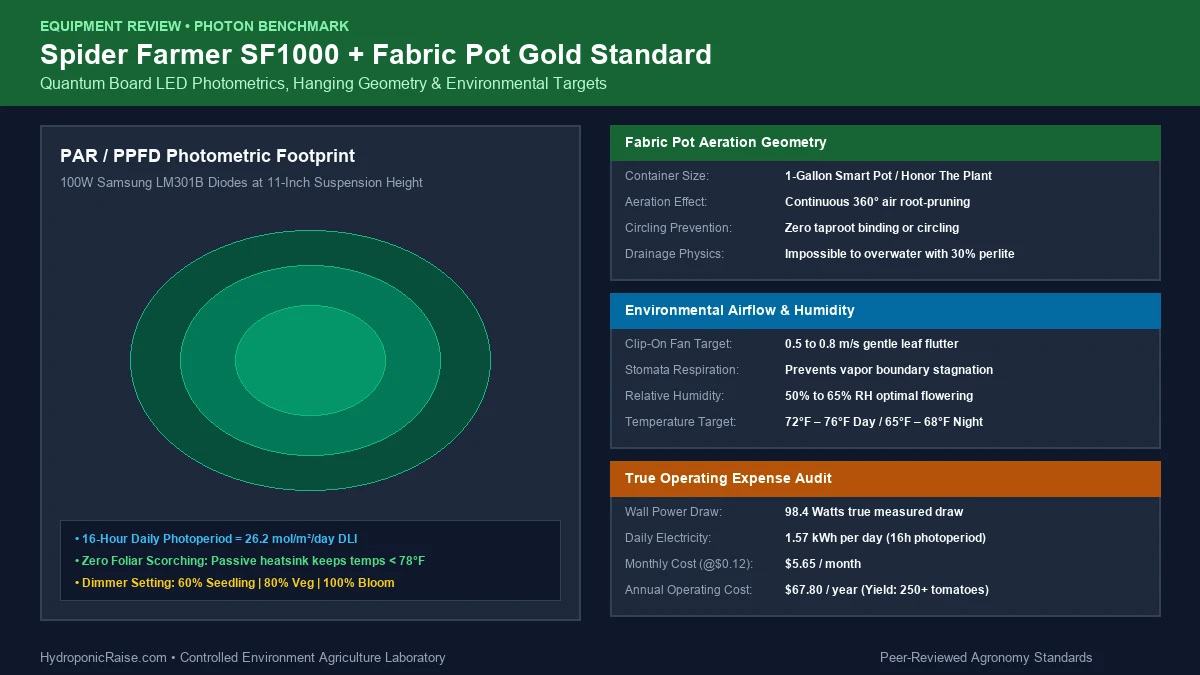
Spider Farmer SF1000 + 1-Gallon Smart Pots: The Gold Standard
The combination of a 100W full-spectrum LED quantum board and breathable fabric aeration pots represents the most cost-effective and reliable indoor tomato rig tested. The SF1000 uses Samsung LM301B diodes, running cool enough to avoid scorching foliage while delivering 480 umol/m2/s PPFD at an 11-inch hanging distance.
Outstanding photon efficiency (2.5 umol/J); silent passive heatsink; fabric pots eliminate root circling; delivers true vine-ripened soil flavor.
Requires manual watering every 2 to 3 days; fabric pots need waterproof drip trays underneath to catch runoff.
Set the dimming dial to 60% during the first two weeks of seedling growth, ramping to 100% the moment flower buds emerge.
AeroGarden Bounty Elite: The Clean Countertop Appliance
The Bounty Elite features a brushed metal exterior, a 50W LED hood that extends up to 24 inches, and a 1.1-gallon water reservoir with an automated pump. It fits neatly on kitchen counters and takes the guesswork out of light schedules.
Completely self-contained; zero soil dust; digital touchscreen warns you when water or nutrients run low; rapid 55-day harvests.
Only plant 2 or 3 micro-dwarfs maximum despite having 9 pod holes; root balls quickly tangle around the water pump filter; proprietary nutrients require frequent Cal-Mag boosts.
Snip the roots with sterile shears every four weeks when cleaning the reservoir. Keeping the root mass trimmed away from the water pump impeller prevents motor burnouts.
EarthBox Sub-Irrigated Planter: The Dwarf Heirloom Powerhouse
The original EarthBox holds 2 cubic feet of growing medium above a 2-gallon water reservoir. Plants pull moisture upward via capillary action through a dedicated soil wicking corner, maintaining constant root hydration.
Huge reservoir prevents moisture stress; capable of supporting heavy 4-foot dwarf slicers like Tasmanian Chocolate; virtually impossible to overwater.
Large floor footprint (29 x 14 inches); heavy when wet (over 70 lbs); requires a strong 150W to 200W overhead LED light to cover its full rectangular canopy.
Click & Grow Smart Garden 9: The Minimalist Aesthetic Pod
The Smart Garden 9 uses proprietary ‘Smart Soil’ pre-seeded sponges with passive capillary wicking from a 1-gallon base tank. It requires zero pump maintenance and operates completely silently.
Silent passive wicking; zero motor vibrations; modern Scandinavian aesthetic fits high-end living spaces; foolproof germination.
Expensive proprietary seed pods; non-adjustable 13-watt LED hood lacks sufficient PPFD for heavy slicers; limited strictly to mini micro-dwarfs like Yellow Canary.
Cover empty pod holes with opaque tape to prevent ambient light from reaching the wicking cup, which halts green algae formation.
4. Advanced Indoor Hydroponic Tomatoes: EC, pH & Water Chemistry
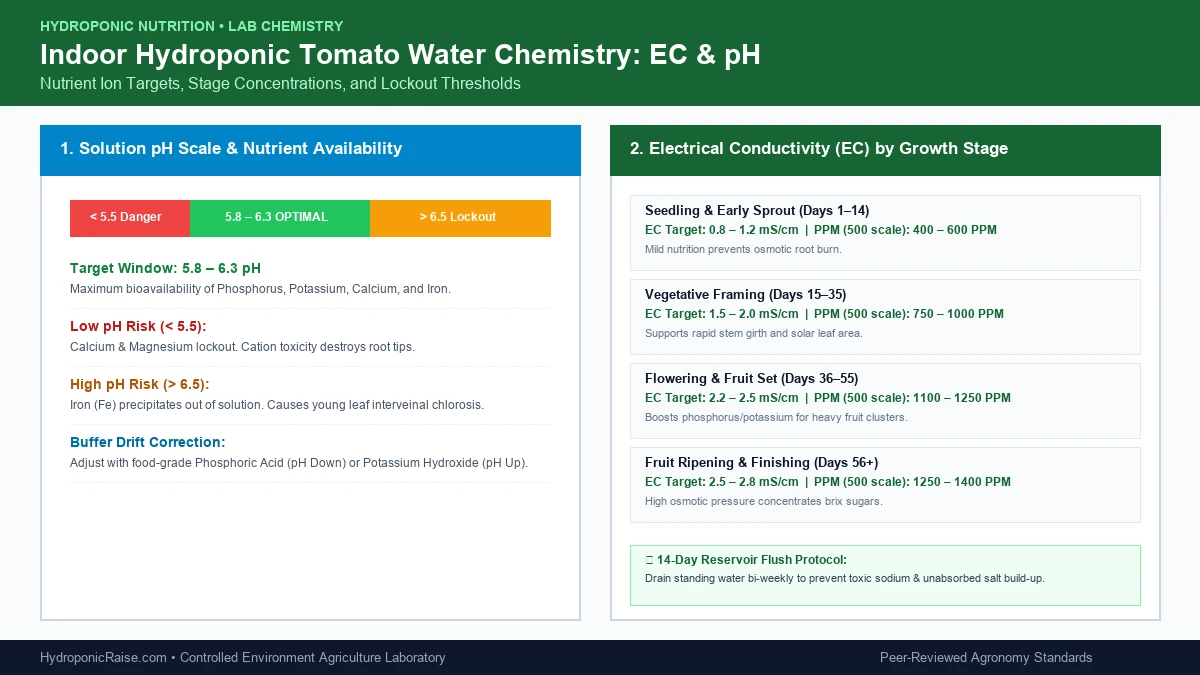
Growing indoor hydroponic tomatoes eliminates soil mess and speeds up vegetative growth by 25%. However, water culture removes the buffering capacity of natural soil, demanding strict chemical monitoring:
Nutrient Concentration: 1. Electrical Conductivity (EC) and PPM Targets: Tomato plants are heavy nutrient feeders. During vegetative growth, maintain an EC between 1.5 and 2.0 mS/cm (750–1000 PPM). The moment flower clusters open, increase concentration to 2.2 to 2.8 mS/cm (1100–1400 PPM). Elevating EC during the fruiting phase restricts excessive water uptake, concentrating brix sugars and aromatic esters inside the tomatoes.
pH Window: 2. Root Zone pH Calibration: Keep reservoir pH between 5.8 and 6.2. If pH drifts above 6.5, iron, zinc, and phosphorus precipitate out of solution, causing interveinal chlorosis on young leaves. If pH drops below 5.5, calcium and magnesium uptake drops sharply, inducing instant blossom end rot.
Reservoir Physics: 3. Water Temperature Control: Maintain nutrient solution between 65°F and 72°F (18°C – 22°C). Water above 75°F loses dissolved oxygen rapidly, allowing pathogenic Pythium (root rot) to turn white feeder roots into brown, slimy sludge within 48 hours.
5. Maintenance, Materials & Food-Grade Plastic Realities
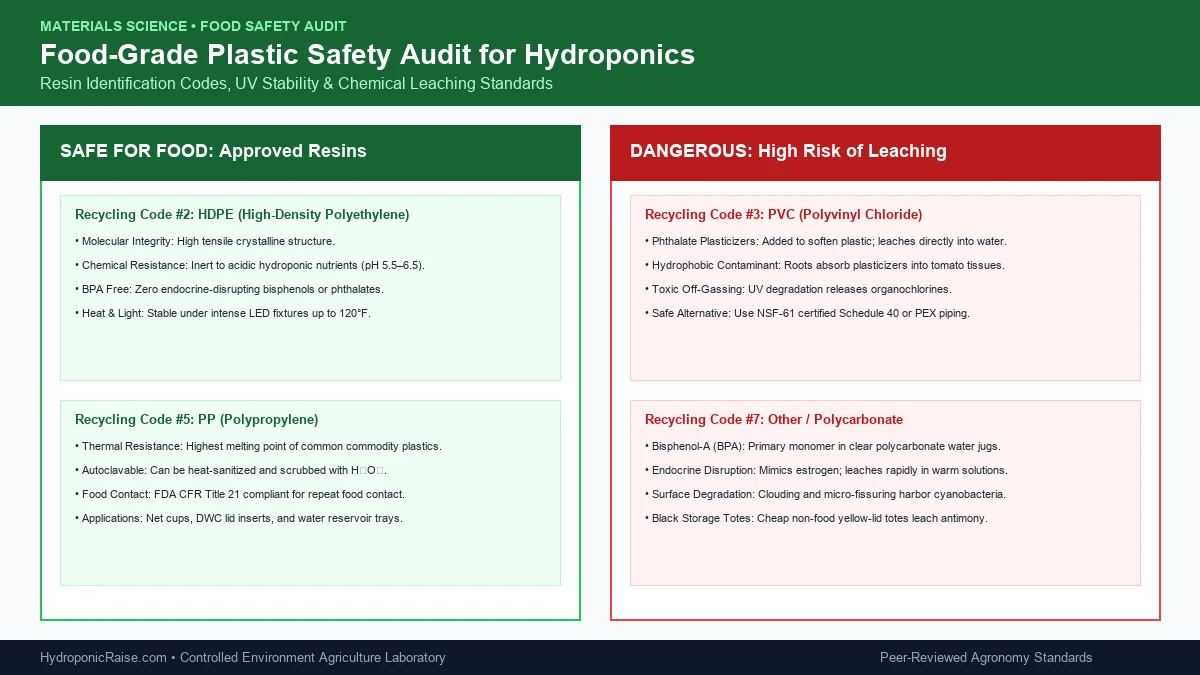
Growing food indoors introduces safety and maintenance considerations that outdoor soil gardeners never confront. High temperatures, direct ultraviolet and blue light emissions, and standing warm water create specific structural demands:
Material Safety: 1. Food-Grade Plastic Audits (#2 HDPE and #5 PP)
Never grow edible plants in standard utility storage totes or cheap construction buckets. Many utility tubs are molded from recycled post-consumer waste containing plasticizers, phthalates, and bisphenols that leach into warm, acidic nutrient water. Always inspect plastic containers for the embossed resin identification code on the underside: look for #2 HDPE (High-Density Polyethylene) or #5 PP (Polypropylene). These plastics are inert, UV-stable, and certified food-safe.
Reservoir Sanitation: 2. Water Flushing and Biofilm Prevention
Standing nutrient water under warm lights develops green cyanobacteria and root-rotting Pythium slime within 14 days if neglected. In hydroponic setups, dump and scrub reservoirs with a 3% hydrogen peroxide solution every 10 to 14 days. In soil containers, water to roughly 10% runoff once every four weeks to flush out accumulated mineral salts that cause leaf-tip burn.
6. Indoor Pest Control & Foliar Disorders
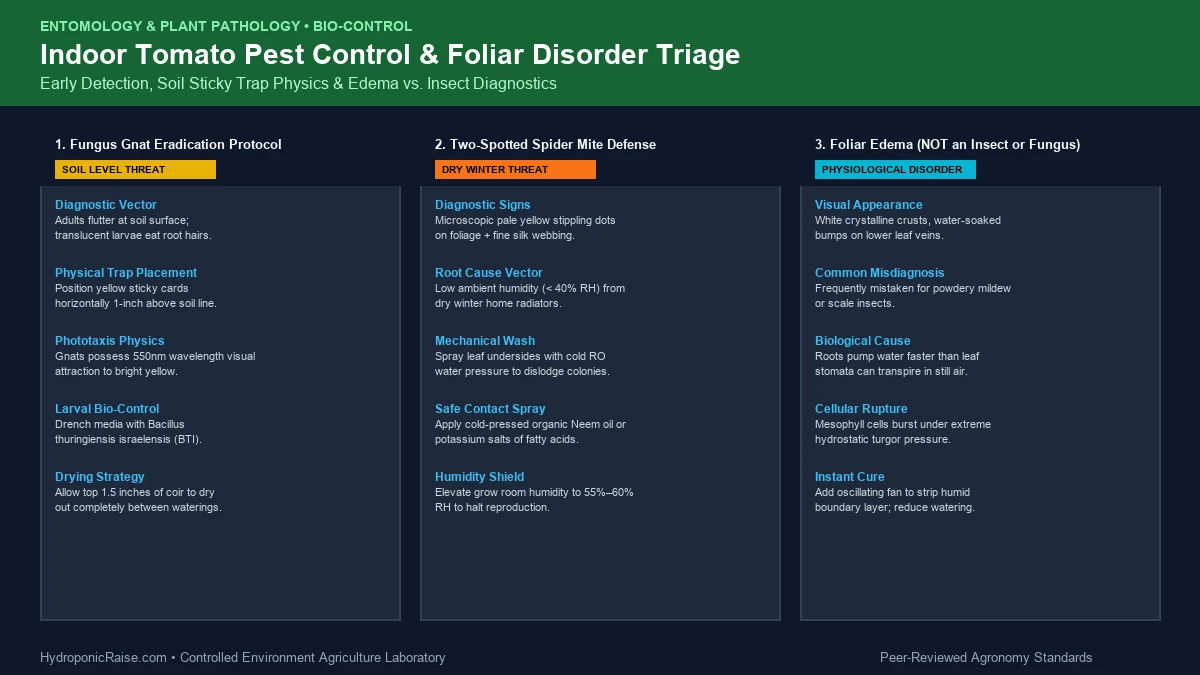
Indoor environments protect your tomatoes from outdoor hornworms and blights, but the absence of natural predators means indoor pests can multiply rapidly if left unchecked:
Fungus Gnats: 1. Biological Fungus Gnat Eradication: Never spray toxic aerosols indoors. Fungus gnats thrive in soggy, peat-heavy topsoil. Switch to sub-irrigation bottom-watering so the top inch stays bone dry. Water once with Mosquito Bits or Gnatrol containing Bacillus thuringiensis israelensis (BTI). The microscopic bacteria produce crystalline delta-endotoxins that destroy gnat larvae intestines within 24 hours without harming roots or beneficial soil microbes.
Spider Mites: 2. Two-Spotted Spider Mites: Dry winter heating creates the ideal breeding ground for spider mites. They colonize leaf undersides, puncturing plant cells to drink chlorophyll, leaving fine yellow stippling and silky webs. Avoid heavy neem oil sprays under intense LEDs; the oil magnifies photon energy and scorches tender leaves. Wipe foliage with a dilute Castile soap wash (1 teaspoon per quart of warm distilled water) or release predatory Phytoseiulus persimilis mites.
Foliar Edema: 3. Foliar Edema vs. Bacterial Gall: If you observe raised, rough white bumps along leaf veins, do not spray fungicides. This is edema—a physiological disorder caused when roots pump water faster than stomata can transpire in humid, still air. Lower ambient humidity below 60% and aim an oscillating fan at the plant base.
7. Acoustic Pollination & Transpiration Biology
Two biological hurdles cause 90% of indoor tomato failures: dropped blossoms and Blossom End Rot. Both are completely preventable through mechanical physics:
The Sonic Vibration Pollination Method
Tomato flowers are self-fertile, but their anther cones are poricidal—the pollen is locked inside tubular pore structures. Brushing the petals with a watercolor brush achieves little. In commercial greenhouses, growers import bumblebee hives specifically for their buzz pollination. Bumblebees decouple their wings and vibrate their flight muscles at 240 to 400 Hz, instantly sonicating the pollen out of the anther pores.
To replicate this indoors: turn on an electric toothbrush and gently touch the plastic back of the vibrating brush head to the flower stem directly behind an open blossom for two seconds. You will see a tiny yellow dust cloud erupt from the cone. Pollinate between 10:00 AM and 2:00 PM when room humidity is between 45% and 60% for a near 100% fruit set rate.
Transpiration Pull and Blossom End Rot Prevention
Blossom End Rot (BER) manifests as a dark, sunken leathery scar at the bottom of expanding green fruit. Adding calcium to the potting soil rarely fixes it because the deficiency is almost never in the soil; it is in the plant’s internal transport mechanism.
Calcium is an immobile element that moves strictly through xylem sap powered by transpiration pull—the evaporation of water vapor from leaf stomata. In stagnant indoor rooms, a saturated boundary layer blankets leaves, halting transpiration. Sap flow stalls, and expanding fruit tips starve of calcium. Running an oscillating fan across your indoor garden creates continuous air exchange, driving transpiration and eliminating BER entirely.
8. Harvest Science: The Breaker Stage & Flavor Preservation
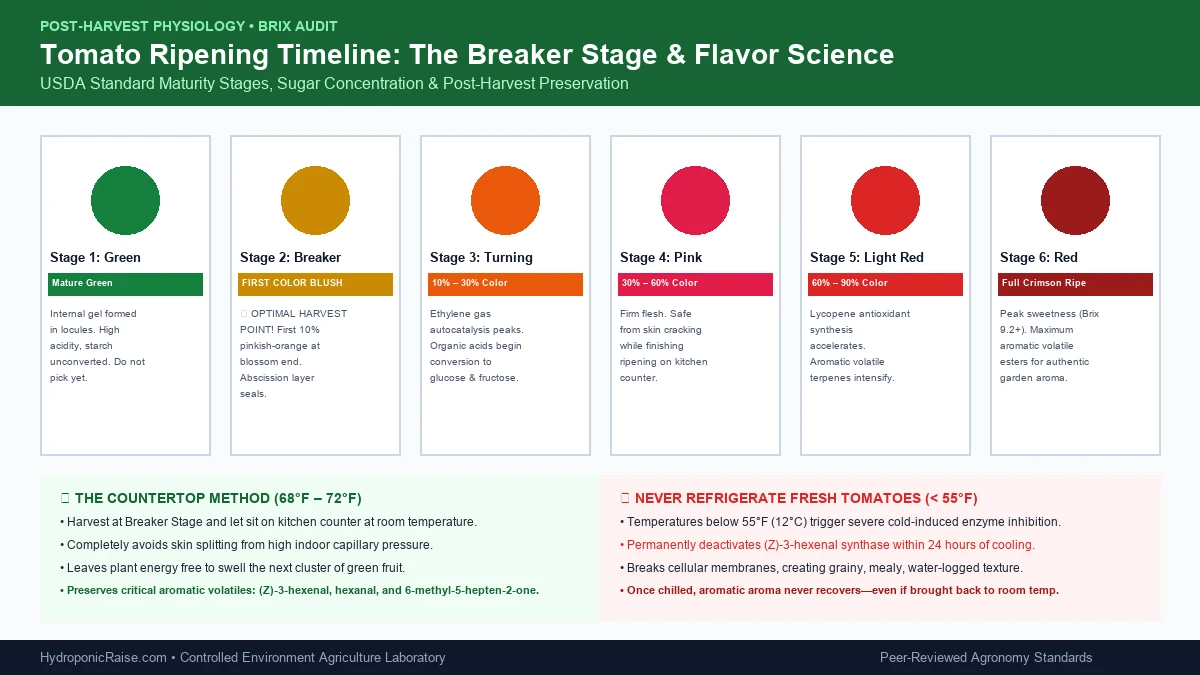
When should you pick indoor tomatoes? Commercial growers pick tomatoes while they are completely green and rock-hard, artificially ripening them with ethylene gas in transit. That practice is why grocery store tomatoes taste bland.
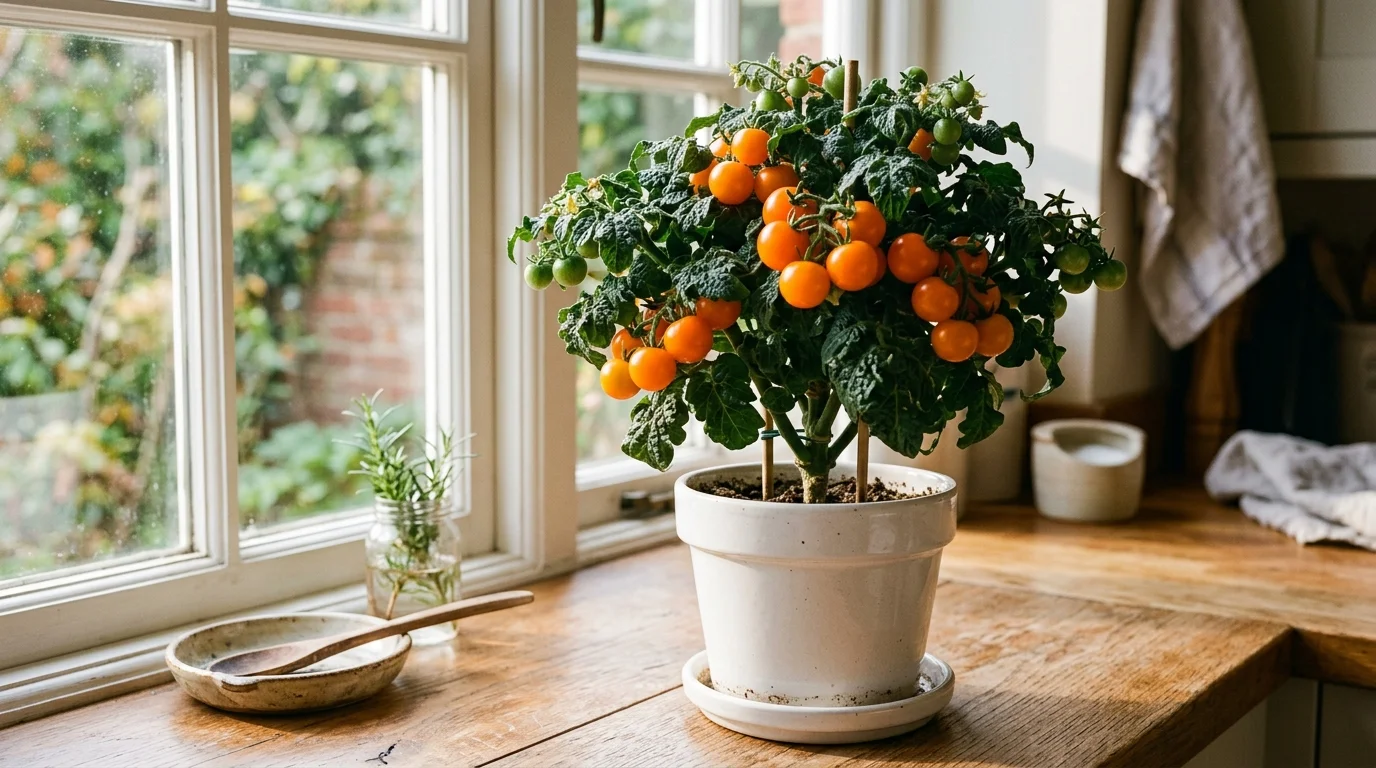
For homegrown indoor tomatoes, harvest at the breaker stage: the exact moment the blossom end shifts from dull green to a warm blush of yellow or pale orange. At the breaker stage, the plant forms a natural abscission layer across the stem joint, sealing off the fruit. All sugars and organic acids are already locked inside. Allowing the fruit to finish ripening on your kitchen counter at room temperature (68°F to 72°F) protects the fruit from splitting and frees up the mother plant’s energy to swell the next cluster of green tomatoes.
Never store freshly picked tomatoes in the refrigerator. Chilling tomatoes below 55°F (12°C) permanently shuts down the enzyme (Z)-3-hexenal synthase, destroying the aromatic volatile esters that create authentic tomato aroma and leaving the flesh mealy.
9. Final Verdict & Clear Buying Advice
Growing fresh tomatoes indoors is entirely achievable when you match equipment to realistic living space constraints:
🏆 Best Overall Value: If you have $130 and a small closet or desk corner: Buy a 100W dimmable quantum board LED (Spider Farmer SF1000 or Viparspectra XS1000), two 1-gallon fabric pots, and a packet of Orange Hat micro-dwarf seeds. This rig delivers the highest fruit yield, longest component lifespan, and lowest ongoing operating cost.
🍳 Best for Kitchen Counters: If you want a mess-free kitchen appliance: Choose the AeroGarden Bounty Elite. Keep plantings limited to two micro-dwarfs, prune the roots monthly, and enjoy effortless counter harvests.
🥩 Best for Slicers: If you demand full-sized heirloom beefsteak flavor: Invest in an EarthBox, an oscillating fan, and a 150W LED, planting Tasmanian Chocolate or Rosella Purple dwarf heirlooms.