⚡ Quick Answer: How to Grow Hydroponic Strawberries
Growing hydroponic strawberries at home yields sweeter, cleaner dessert-grade fruit up to 40% faster than outdoor garden soil. To succeed with hydroponic strawberries, avoid deep water culture (DWC) submersion; instead, deploy a substrate drip gutter system (50/50 coco-perlite) or sloped Nutrient Film Technique (NFT). Seat dormant bare-root crowns precisely at the substrate line without burying the crown collar. Maintain reservoir electrical conductivity (EC) between 1.2 and 1.8 mS/cm, hold pH at 5.5 to 6.2, provide 18–25 mol/m²/day DLI under full-spectrum LEDs, and buzz open flowers with an electric toothbrush daily to ensure perfect fruit symmetry.
Growing hydroponic strawberries at home is the holy grail of controlled environment agriculture. Unlike leafy greens and herbs that forgive wide environmental swings, strawberries demand precise root oxygenation, strict electrical conductivity (EC) staging, and active flower pollination. Yet when dialed in, a home strawberry hydroponic system delivers yields up to 40% higher than soil beds, eliminates soil-borne Verticillium wilt and Botrytis gray mold, and produces clean, unblemished dessert-grade berries right through the dead of winter.
Commercial hydroponic berry operations in California, the Netherlands, and Japan have perfected the science of hydroponics strawberries. Unfortunately, most online home guides recycle generic countertop herb advice that leads home growers straight into the dreaded “strawberry drowning trap.” Beginners place bare-root plants directly into deep water culture (DWC) bubblers or pre-packaged vertical towers, only to watch their roots turn brown and rot from pythium within twenty days. As covered in our comprehensive guide to growing strawberries indoors, strawberry root architecture requires constant aerated drainage rather than stagnant water immersion.
Strawberries have uniquely sensitive, high-oxygen root architecture. They cannot tolerate submerged, stagnant water. This master manual breaks down the exact closed-loop engineering, day-neutral cultivar selection, nutrient salt formulation, and acoustic pollination mechanics required to harvest sweet, commercial-caliber hydroponically grown strawberries in your basement, garage, or living room.
🔑 Key Takeaways: High-Yield Hydroponic Strawberry Rules
- Avoid Deep Water Culture (DWC) submergence: Strawberry roots demand continuous dissolved oxygen (>7 mg/L). Submerging crowns in standing DWC water causes rapid pythium root rot. The two most reliable home systems are Gutter Drip Systems (coco-perlite slabs) and Nutrient Film Technique (NFT) with sloped PVC channels.
- The millimeter crown elevation rule: The central crown must sit precisely at the top edge of your net pot or substrate surface. Submerging the crown below the hydroton or coco line rots the growing tip in 10 days; elevating it too high desiccates feeder roots.
- Maintain low, staged electrical conductivity (EC): Strawberries are salt-sensitive. Start vegetative plants at 1.0 to 1.2 mS/cm (500–600 ppm). Ramp EC up to 1.6 to 1.8 mS/cm (800–900 ppm) during flowering and fruiting. Never exceed 2.0 EC, or tip burn and calcium lockout will destroy your crop.
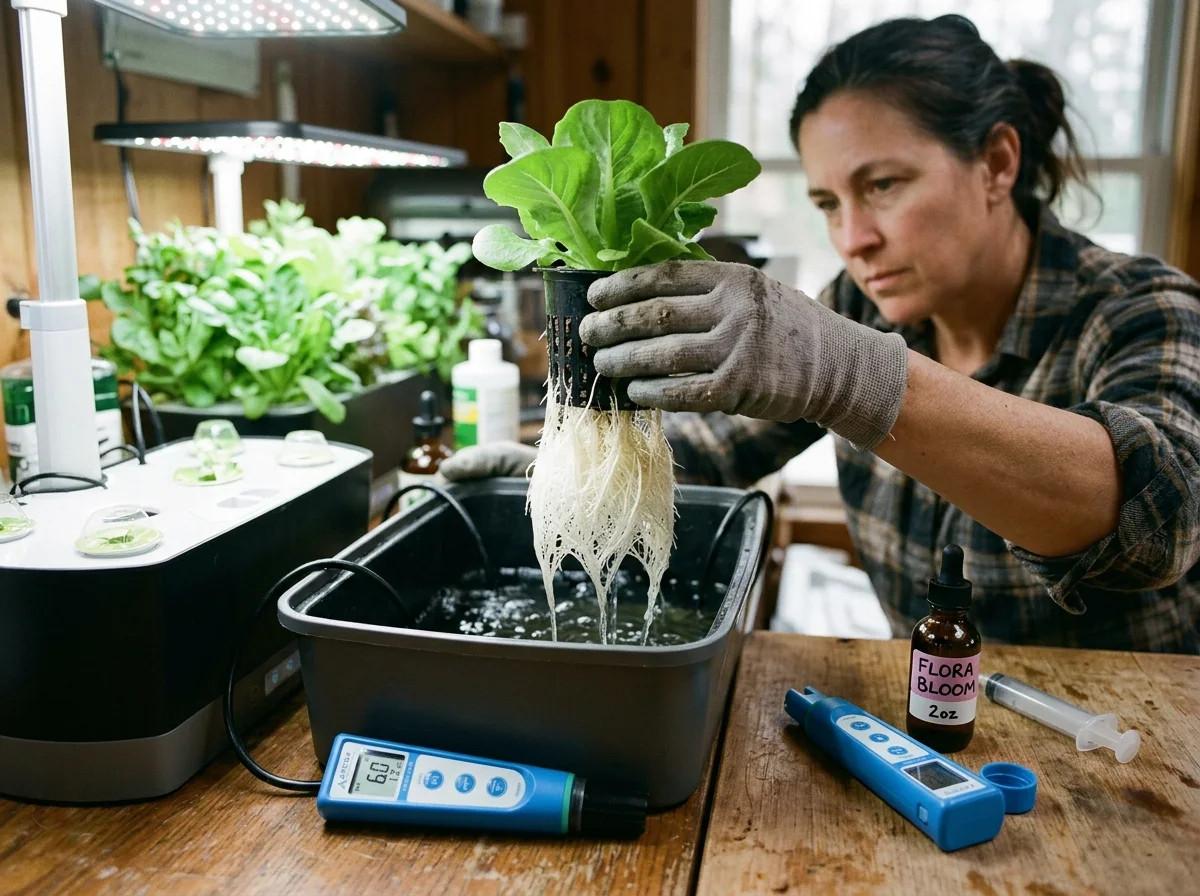
- Strict pH target: 5.5 to 6.2: A pH above 6.5 locks out iron and zinc, causing immediate interveinal chlorosis (bright yellow new leaves with green veins). Check reservoir pH every 48 hours using a reliable digital meter.
- Acoustic flower vibration stops cat-faced fruit: Strawberries require 200+ individual pistils to be fertilized to form a symmetrical berry. In still indoor air, vibrate the back of flower clusters for 2 seconds with an electric toothbrush between 11 AM and 2 PM.
1. Strawberry Hydroponics vs. Soil Gardening: The True Yield & Flavor Reality
Transitioning to strawberry hydroponics solves the fundamental ergonomic and biological hurdles of outdoor in-ground berry patches. In traditional outdoor soil, strawberries are vulnerable to soil-dwelling fungal pathogens like Verticillium dahliae, Phytophthora cactorum (leather rot), and Rhizoctonia crown rot. Furthermore, outdoor fruit rests directly on damp mulch, inviting slugs, pill bugs, and fungal spores.
Hydroponically grown strawberries hang suspended in clean air, never touching wet soil. Harvest cleanliness is absolute, and water consumption drops by up to 85% compared to overhead garden irrigation because closed-loop reservoirs recirculate all unused moisture. When you compare this to container gardening methods explored in our container gardening guides and grow bag root aeration tutorials, controlled hydroponics offers unprecedented mastery over root-zone oxygenation and mineral uptake.
The Flavor Debate: A persistent misconception on internet forums is that hydroponic strawberries taste watery. While commercially rushed grocery store hydro berries picked under-ripe can taste bland, home hydroponic fruit grown under intense full-spectrum LED light with a nighttime temperature drop (55°F–60°F / 13°C–16°C) develops a sugar concentration of 11° to 13° Brix—far sweeter than supermarket berries.
2. Choosing the Right Strawberry Hydroponic System: NFT vs. Drip Gutters vs. DWC
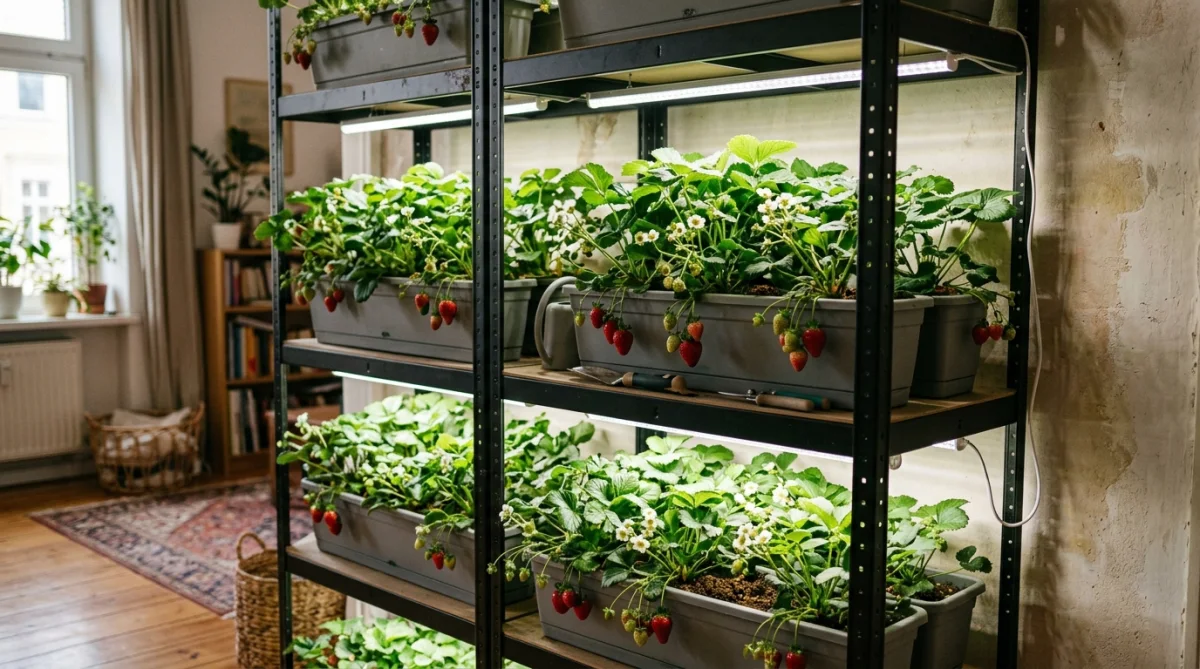
If you are new to water chemistry, first review the foundational concepts in our guide to indoor hydroponics for beginners and our guide to growing fruit indoors. Selecting the right strawberry hydroponic system architecture dictates whether your home berry project thrives or succumbs to catastrophic root rot within its first month. Different hydroponic configurations deliver drastically different root-zone oxygenation profiles:
| Hydroponic System | Substrate & Hardware | Root Oxygenation | System Risk Level | Yield Potential | Home Growing Assessment |
|---|---|---|---|---|---|
| Substrate Drip Gutter | 50/50 Coco Coir & Perlite Slabs in Vinyl Gutters | Exceptional (Air-rich porous media) | Very Low (Buffer against outages) | Highest (0.8–1.2 lbs/plant) | Top recommendation for home basements & garages |
| Nutrient Film Technique (NFT) | Sloped Recirculating PVC Gully (1:30 to 1:40 slope) | High (Constant thin moving film) | Moderate (Pump failure kills roots in 3 hrs) | Very High (0.7–1.0 lbs/plant) | Ideal for clean, automated indoor shelving units |
| Dutch / Bato Buckets | Dual 2-Gallon Buckets with Perlite & Siphon Elbow | Excellent (Deep drainage & aeration) | Low (Perlite holds moisture during off-cycles) | High (0.8–1.1 lbs/plant) | Great for small spaces with 4 to 8 heavy mother plants |
| Ebb & Flow (Flood & Drain) | Shallow Flood Table with Net Pots in Expanded Clay | Moderate to High (Cyclic flooding) | Moderate (Requires float switches) | Moderate to High (0.6–0.9 lbs/plant) | Reliable, but requires careful cycle timing to avoid crown wetness |
| Deep Water Culture (DWC) | Submerged Net Pots in Aerated Water Reservoir | POOR (High risk of anoxic root rot) | Extreme (Pythium outbreaks common above 70°F) | Low (Stunted roots; prone to failure) | NOT RECOMMENDED: Strawberry roots suffocate in standing water |
📐 Technical Infographic: DIY Vinyl Gutter Drip System Architecture
CLOSED-LOOP DRAIN-TO-RECIRCULATE250–400 GPH pump inside 20-gal reservoir pushes solution up via 1/2″ poly mainline.
1/4″ feed tubes with 0.5 GPH pressure-compensating emitters deliver pulses to coco-perlite substrate.
Vinyl rain gutters sloped at 1/4″ per foot ensure rapid gravity runoff with zero root pooling.
1″ PVC drop line splashes runoff back into tank, creating passive aeration and maintaining >7 mg/L DO.
3. Best Cultivars for Hydroponics: Day-Neutral Masterclass
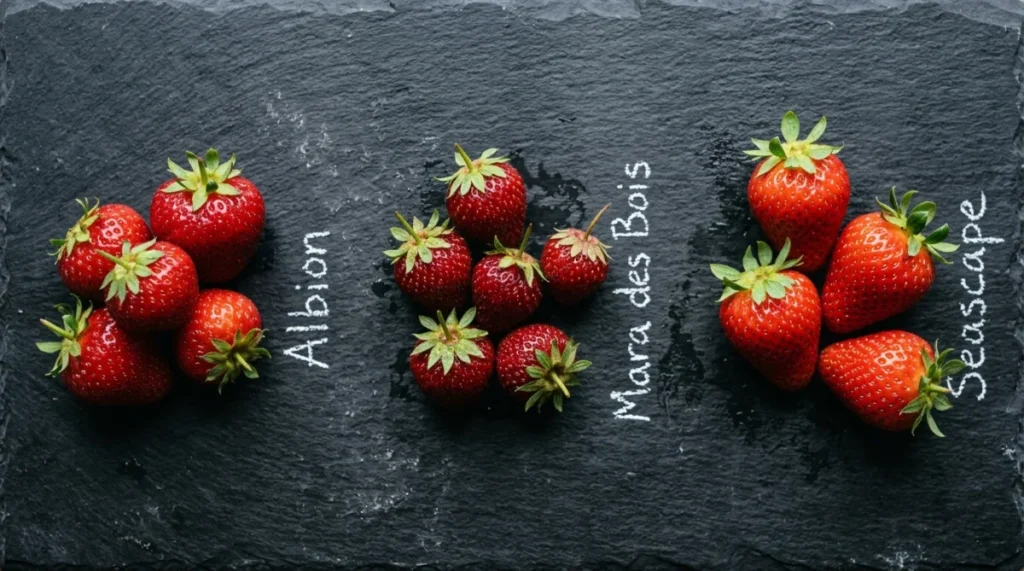
Never attempt hydroponics for strawberries using standard June-bearing varieties (such as Chandler or Allstar). June-bearing cultivars demand extensive chilling hours outdoors in winter and yield only a single brief harvest flush. For continuous year-round production in a hydroponic strawberry setup, choose true Day-Neutral cultivars:
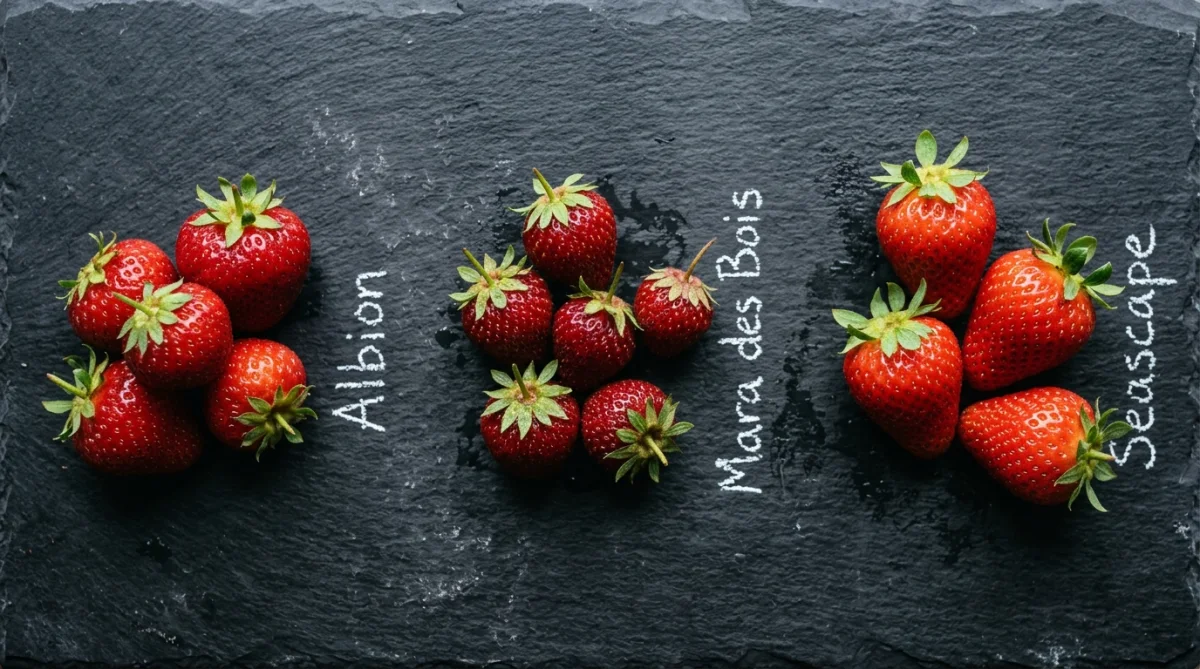
- Albion: The undisputed commercial benchmark. Produces firm, conical, glossy dark-red fruit with outstanding sugar-acid balance. Demonstrates high structural resistance to crown rot and powdery mildew in indoor NFT channels.
- Mara des Bois: A gourmet French hybrid combining day-neutral productivity with the intoxicating musk aroma of wild alpine strawberries (Fragaria vesca). Berries are slightly softer; requires careful handling but yields the highest culinary flavor rating.
- Seascape: A vigorous, heavy-yielding cultivar that tolerates slightly higher ambient room temperatures (up to 78°F / 25°C) without aborting flower buds. Excellent for home growers managing fluctuating summer room conditions.
- San Andreas: Early to flower and fruit with a compact, manageable vegetative canopy, making it ideal for tight vertical hydroponic towers and compact NFT shelving. Similar to the compact cultivars discussed in our indoor pepper cultivation guide, selecting compact genetics is essential for indoor CEA efficiency.
4. Sourcing & Sterilizing Bare-Root Crowns for Hydroponics
Starting from seed is impractical for fruiting hydroponics; seeds take 5 to 6 months to bear fruit and show high genetic variability. Instead, commercial hydro growers purchase dormant bare-root crowns. However, introducing field-grown bare roots directly into clean hydroponic channels without sterilization introduces soil fungi and parasitic nematodes.
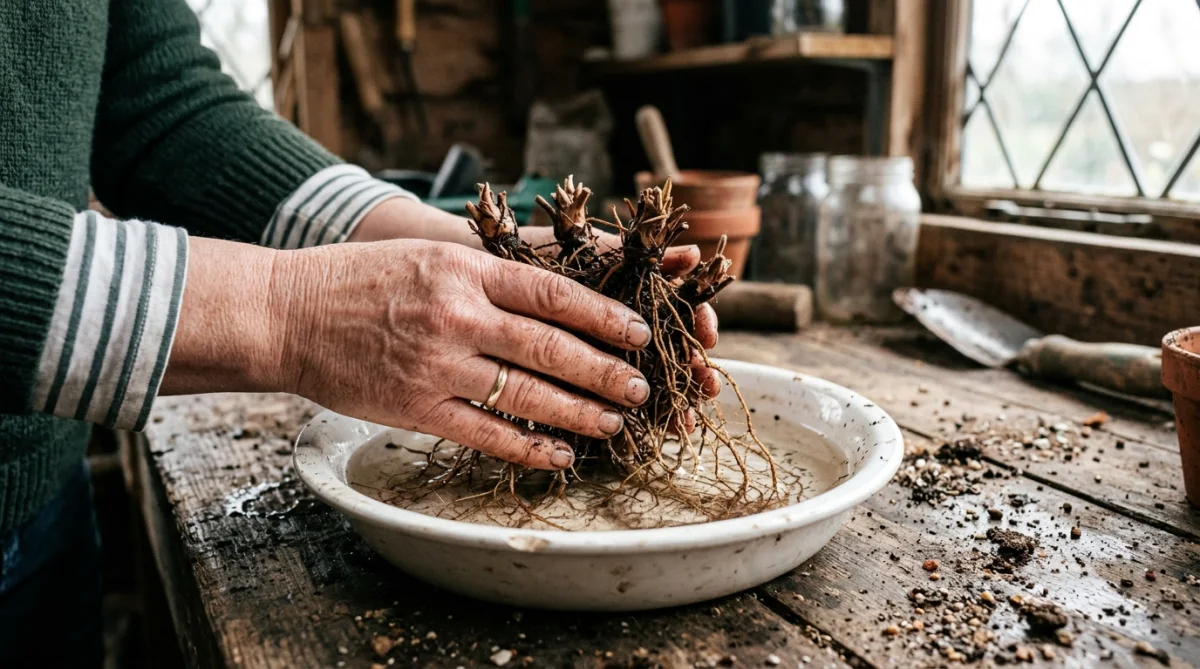
- Step 1: Thorough Soil Wash: Submerge dormant bare-root crowns in a bucket of room-temperature tap water. Gently tease away every particle of field mud and nursery dirt from the root hairs using your fingers.
- Step 2: Root Trim & Pruning: Trim excessive roots back to 4 to 5 inches using sterilized bypass shears. Remove any blackened, slimy root strands and peel away dead brown petioles clinging to the crown collar.
- Step 3: Sterilization Dip: Submerge the washed roots and crown for 60 seconds in a mild 3% hydrogen peroxide solution (diluted 1 part 3% H2O2 to 4 parts water) or a biological fungicide bath (Bacillus subtilis). This eliminates surface pythium and botrytis spores.
- Step 4: Substrate Insertion & Net Pot Setup: Place the crown into a 2-inch or 3-inch net cup filled with pre-rinsed expanded clay pebbles (Hydroton) or a 50/50 coco-perlite blend. Spread roots downward through the net cup slits.
- Step 5: The Critical Crown Height Verification: Inspect crown positioning: the brown woody base of the crown must sit completely above the wet substrate line, with only the white fibrous root hairs submerged in the moisture zone.
5. Hydroponic Strawberry Nutrient Formulation: Staged EC, PPM & pH Control
Nutrient chemistry separates professional berry producers from disappointed hobbyists. Strawberries have a fragile root membrane that burns under high salt concentrations. Running heavy tomato or pepper nutrient solutions (EC 2.5–3.0) will cause severe marginal leaf necrosis and total flower abortion within two weeks. To keep salts perfectly measured, growers rely on laboratory-grade digital instruments such as the Bluelab Combo Meter for EC and pH.
🧪 Phased Nutrient Staging Matrix for Hydroponic Strawberries
500 PPM SCALELow ionic strength; prioritize phosphorus & kelp extracts to establish white feeder roots without salt stress.
Balanced N-P-K; build 6 to 8 dark green trifoliate leaves; supply 120 ppm chelated Calcium to prevent tip burn.
Reduce Nitrogen by 25%; boost Potassium & Phosphorus; supply 50 ppm Magnesium for active chlorophyll synthesis.
Maintain high Potassium ratio (N:K of 1:2.2) to drive sucrose accumulation, berry firmness, and intense red coloration.
Preventing Tip Burn & Calcium Lockout: Tip burn (black, curled margins on developing young leaves) is the most widespread nutrient disorder in hydroponic strawberries. It is not caused by lack of calcium in the reservoir; it is caused by low transpirational airflow. Calcium only moves to leaf tips when plants actively transpire water. Running an oscillating fan across your canopy 24/7 ensures constant transpiration, completely eliminating tip burn.
6. Lighting & Photoperiod: DLI Targets for Maximum Sugar Accumulation
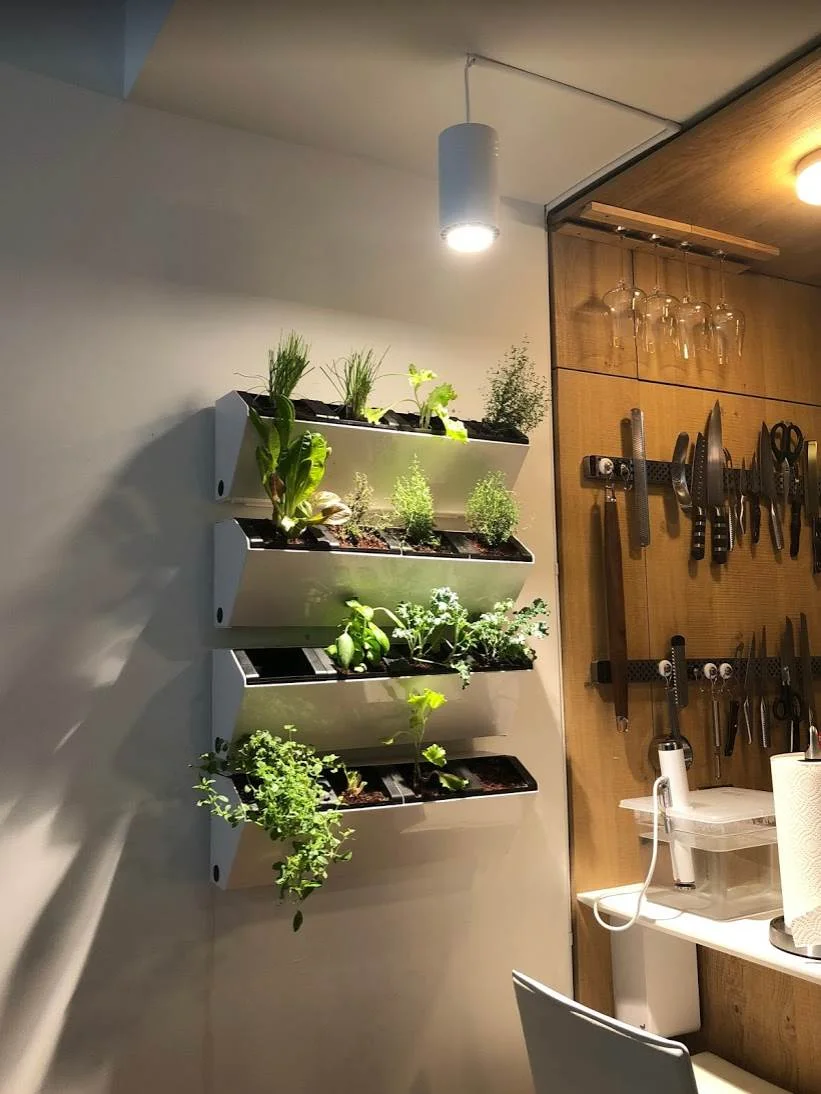
To achieve dense sugar concentration, indoor hydroponic strawberries demand a Daily Light Integral (DLI) between 18 and 25 mol/m²/day. A standard home window provides barely 4 to 6 mol/m²/day in winter, leading to spindly petioles and tiny, tasteless berries.
- Target PPFD: Maintain 300 to 400 µmol/m²/s Photosynthetic Photon Flux Density across the top of the canopy using a high-efficiency horticultural fixture like the Spider Farmer SF1000 Full Spectrum LED Grow Light.
- Daily Photoperiod: Run LED fixtures for 14 to 16 hours daily on an automated digital timer. Running 18+ hours is counterproductive; strawberries require an uninterrupted dark respiration window to transport synthesized sugars into expanding fruit receptacles.
- Spectral Profile: Deploy full-spectrum white LEDs (3500K to 4000K) supplemented with 660nm deep red diodes to promote robust floral branching.
7. Temperature Differentials & Dissolved Oxygen: The Brix Equation
The difference between store-bought supermarket cardboard and mouthwatering gourmet strawberries lies in the diurnal temperature shift:
- Daytime Canopy Temp: 68°F to 74°F (20°C to 23°C) while grow lights are on. This optimizes Rubisco enzyme activity for rapid carbohydrate synthesis.
- Nighttime Canopy Temp: 55°F to 60°F (13°C to 16°C) when lights shut off. In cold rooms, plant respiration drops drastically, preventing the plant from burning up stored glucose overnight and trapping high sugar content in the fruit. Check your room levels using a wireless Govee Bluetooth Digital Hygrometer-Thermometer.
- Reservoir Water Temp: 64°F to 68°F (18°C to 20°C). Water temperatures above 72°F (22°C) cannot hold adequate dissolved oxygen (DO drops below 6.5 mg/L), triggering explosive pythium root rot. Run an oversized aquarium air pump with ceramic micro-diffuser air stones to maintain DO levels above 8 mg/L.
8. Hand Pollination & Canopy Pruning for Symmetrical Fruit
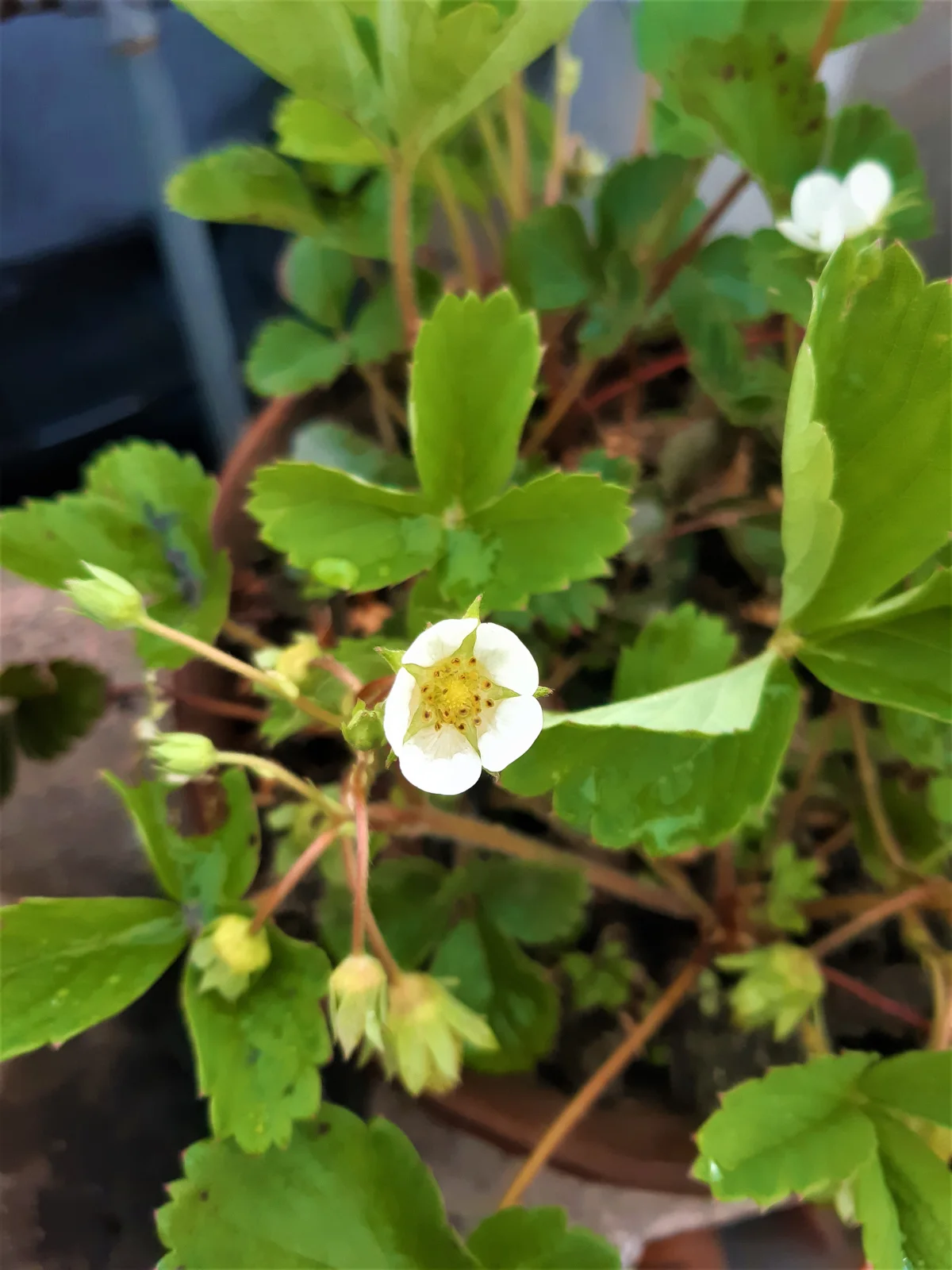
Without wind or bumblebees, indoor strawberry flowers require human intervention. A strawberry is an aggregate accessory fruit with 200+ individual pistils. Every single pistil that is fertilized produces an achene (seed) that secretes auxin, signaling the underlying fruit flesh to swell. Unfertilized pistils fail to swell, resulting in puckered, misshapen, ‘cat-faced’ fruit.
⚡ Acoustic Buzz Pollination Protocol (300Hz Vibration)
PREVENTS CAT-FACINGPollinate between 11:00 AM and 2:00 PM when relative humidity drops and anther dehiscence reaches peak dryness.
Touch the back of an electric vibrating toothbrush head to the base of the flower truss for 2 seconds.
Acoustic resonance throws a golden cloud of pollen across all 200+ pistils on the central receptacle.
Every fertilized seed releases natural auxin hormones, guaranteeing uniform conical swelling and 100% grade-A berries.
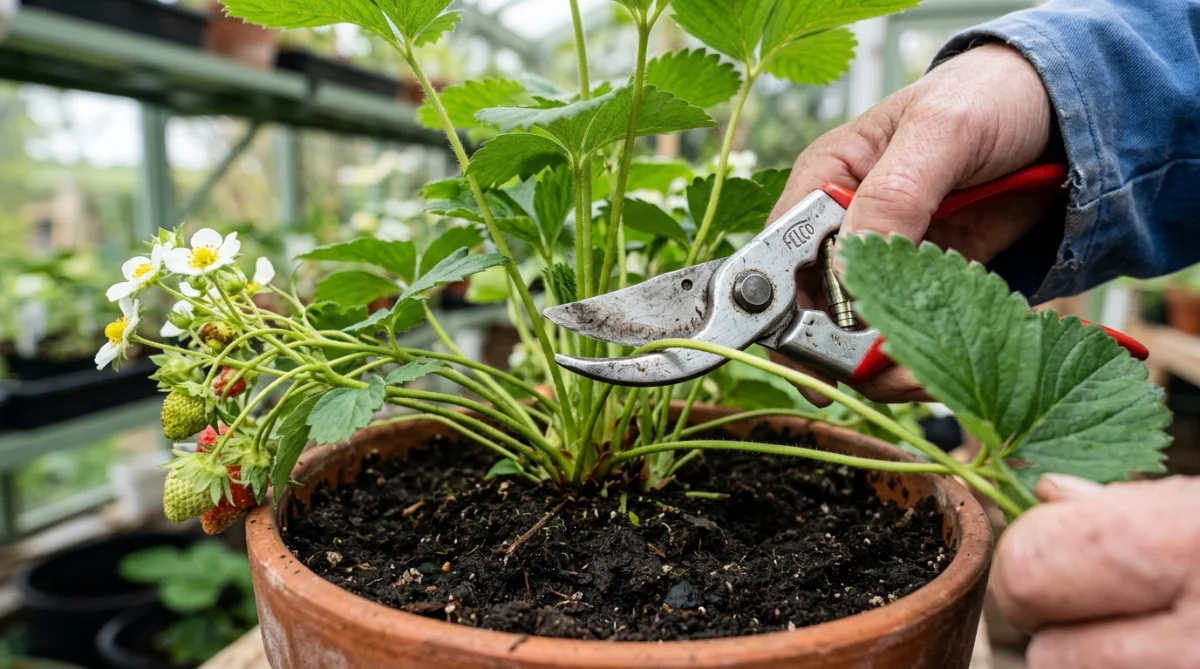
Aggressive Runner Removal: Strawberry plants continuously send out stolons (runners). Snip them off with clean shears the moment they appear. Allowing runners to grow cuts fruit yields by up to 35% because the crown diverts sugars away from expanding fruit trusses into daughter clone development.
Old Leaf Sanitation: Remove dying, brown lower leaves immediately. Pruning yellowing outer leaves increases airflow around the crown and prevents Botrytis mold from colonizing dead tissue. For sanitation principles across other indoor crops, review our guide to preventing indoor plant pests.
9. Troubleshooting Hydroponic Strawberry Diseases & Pest Control
Preventative maintenance is essential in closed-loop hydroponics. Diagnose and treat common issues before they spread through recirculating water lines:
| Disorder | Visual Diagnostic Symptoms | Root Cause | Actionable Solution |
|---|---|---|---|
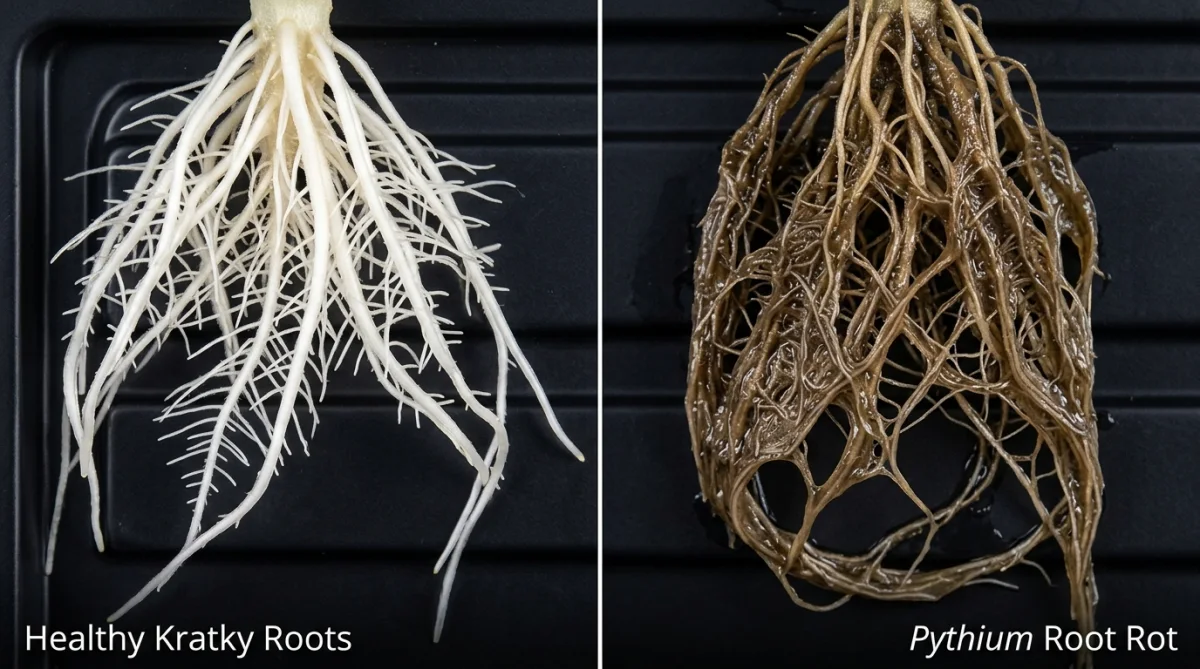
| Pythium Root Rot | Roots turn brown, slimy, and stringy; foul swamp odor; sudden wilting | Reservoir water temp >72°F or poor dissolved oxygen (<6 mg/L) | Lower water temp to 66°F; dose reservoir with beneficial Bacillus amyloliquefaciens (Botanicare Hydroguard); increase aeration. |
| Tip Burn (Calcium Deficiency) | Black, scorched margins on emerging young leaves; puckered new growth | Low transpiration due to stagnant, humid air; high nutrient EC | Aim oscillating fans directly at the crown; reduce EC to 1.4 mS/cm; ensure relative humidity is below 65%. |
| Two-Spotted Spider Mites | Fine silken webbing under leaves; yellow stippling across foliage | Dry indoor air (<40% RH); introduced via contaminated outdoor plants | Release predatory mites (Phytoseiulus persimilis); spray cold-pressed neem oil or insecticidal soap during lights-off. |
| Powdery Mildew | White powdery fungal dust on leaf surfaces and flower petals | High humidity spikes (>75% RH) combined with poor airflow | Improve canopy air circulation; apply bio-fungicide (Bacillus subtilis) or potassium bicarbonate foliar spray. |
📅 Master Annual Care Calendar & Routine Checklist
YEAR-ROUND HARVEST CYCLE- Sanitize system lines with 3% hydrogen peroxide.
- Seat crowns at exact substrate surface.
- Set EC to 1.0 mS/cm and lights to 14 hrs daily.
- Pinch early flower buds to prioritize root mass.
- Ramp nutrient EC to 1.6 mS/cm; pH 5.6–5.8.
- Vibrate open flowers daily between 11 AM–2 PM.
- Snip off all emerging vegetative stolons.
- Keep oscillating air circulation on 24/7.
- Drop night temperatures to 55°F–60°F for high Brix.
- Pick fruit when 100% glossy crimson red.
- Dump and replace reservoir water every 14 days.
- Prune yellowing senescent foliage at crown base.
10. Frequently Asked Questions About Hydroponic Strawberries
Are hydroponically grown strawberries safe to eat?
Yes, 100%. Hydroponically grown strawberries are nourished with pure, food-grade mineral salts (nitrogen, phosphorus, potassium, calcium, magnesium) in purified water. They contain zero synthetic pesticides, zero heavy metal soil contamination, and zero manure-borne E. coli pathogens.
Do hydroponic strawberries taste different from garden strawberries?
When grown under full-spectrum LEDs with proper daytime/nighttime temperature drops (70°F day / 58°F night), hydroponic strawberries develop sugar levels of 11° to 13° Brix—making them sweeter, juicier, and more intensely aromatic than commercial field berries.
What type of fertilizer should I use for strawberry hydroponics?
Use a specialized, water-soluble hydroponic strawberry fertilizer formula (such as Masterblend 9-12-36 Strawberry Formula or Jack’s 8-12-32) paired with calcium nitrate (15.5-0-0) and magnesium sulfate (Epsom salt). Maintain an EC between 1.4 and 1.8 mS/cm.
How long does it take for hydroponic strawberries to produce fruit?
Dormant bare-root crowns establish roots within 10 days, begin flowering within 30 to 45 days, and yield their first ripe red strawberries in 60 to 75 days. Starting from seed requires 5 to 6 months.
Can you grow hydroponic strawberries for profit at home?
Yes, in niche gourmet and local restaurant markets. High-end restaurants and specialty pastry chefs pay premium prices ($15 to $25 per pound) for year-round, locally harvested, pesticide-free cultivars like Mara des Bois and Albion delivered fresh on the stem.