⚡ Quick Answer: Growing Hot Peppers Indoors
To master growing hot peppers indoors and successfully harvest fiery Jalapeños, Habaneros, or superhot Ghost Peppers year-round, you must provide intense bottom heat and high photonic energy. Germinate seeds using a seedling heat mat set strictly to 82°F–86°F (28°C–30°C) to break Capsicum chinense dormancy within 10–14 days. Hang a full-spectrum LED grow light delivering 500 to 700 PPFD (20 to 25 DLI) for 14–16 hours daily over well-draining potting mix in 2- to 3-gallon fabric pots (pH 6.0–6.8). Because indoor superhots frequently drop blossoms without natural pollinators, vibrate flowering stems daily for 2 seconds with an electric toothbrush between 10 AM and 2 PM. In the final 10–14 days of fruit ripening, lightly stress plants with controlled deficit irrigation to spike defensive capsaicin synthesis by up to 25%.
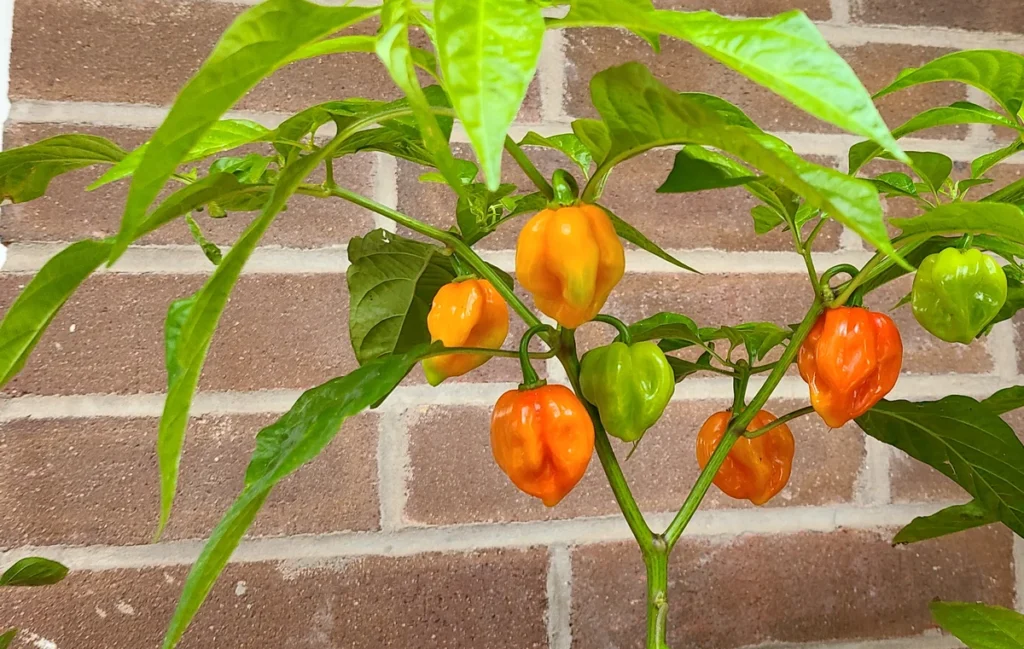
Growing hot peppers indoors is one of the most rewarding branches of indoor horticulture. Unlike bulky outdoor sweet bell peppers, hot pepper varieties—spanning fiery Jalapeños, citrusy Habaneros, smoky Ghost Peppers (Bhut Jolokia), and blistering Carolina Reapers—produce smaller fruit volume packed with immense capsaicinoid density. A single vigorous two-gallon indoor chili plant can supply a fiery household with hundreds of pods throughout the dead of winter.
However, cultivating hot peppers indoors, particularly superhot members of the species Capsicum chinense, introduces unique physiological hurdles that trip up growers accustomed to simple culinary herbs. Chinense cultivars demand protracted germination windows (up to 25 days), exceptionally warm root-zone temperatures (82°F to 86°F), intense photonic energy, and specialized pollination stimulation to set fruit under artificial lights.
Furthermore, indoor chili growers hold an unfair advantage over outdoor gardeners: complete control over water stress. By selectively withholding irrigation during the late fruit-ripening phase, indoor growers can induce controlled cellular stress that triggers plants to hyper-synthesize capsaicin, yielding pods significantly hotter than outdoor counterparts. This guide breaks down the biological protocols to grow, pollinate, heat-maximize, and overwinter chili peppers indoors.
🌶️ Key Takeaways: Indoor Chili Cultivation Rules
- Key Takeaways: Indoor Chili Cultivation Rules
- Superhot seed dormancy requires 85°F heat: Capsicum chinense seeds (Habanero, Ghost, Reaper) refuse to germinate in cool room temperatures. An electric seedling heat mat set to 84°F–86°F (29°C) is mandatory to break dormancy in under 14 days.
- Species dictate indoor behavior: Capsicum annuum (Jalapeño, Cayenne) fruits quickly in 75–85 days. Capsicum chinense requires 120 to 150 days of high PAR lighting and warm nights to ripen.
- Acoustic sonication is required for fruit set: Superhot flowers frequently drop unopened if pollen isn’t actively vibrated. Agitate stems with an electric toothbrush or direct fan breeze between 10 AM and 2 PM.
- Controlled drought concentrates capsaicin: In the final 10 days of ripening, allow soil to dry until foliage slightly wilts before watering lightly. This drought stress signals defensive pathways, spiking Scoville heat units by up to 25%.
- Chilis are perennial bonsai candidates: Never discard a chili plant after harvest. Cut the canopy back, prune the root block, and pot into a compact bonsai container (‘Bonchi’) to create an ornamental, multi-year producer.
1. Growing Hot Peppers Indoors: Capsicum Species & Heat Biology
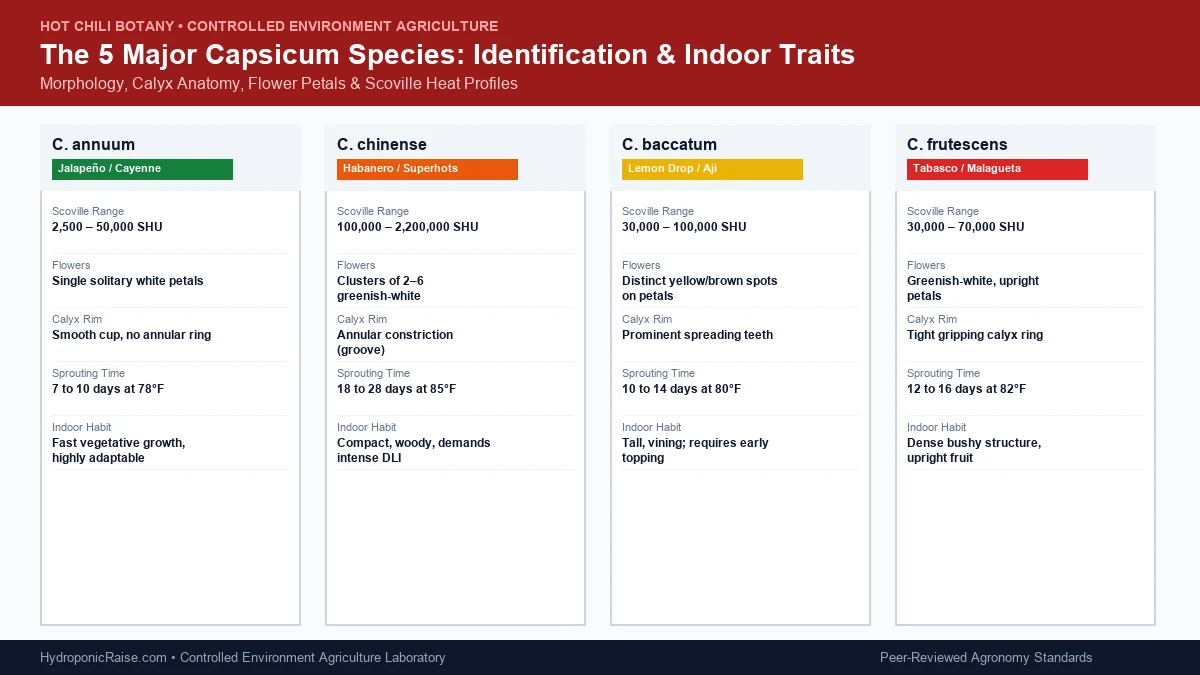
When growing chili peppers indoors, success starts with recognizing that ‘hot pepper’ is not a single botanical plant. Domesticated chili peppers span five distinct species within the genus Capsicum, each possessing radically different timelines, growth architectures, and environmental thresholds:
• Capsicum annuum (Jalapeño, Serrano, Cayenne, Poblano): The fastest, most adaptable indoor performers. They reach maturity in 70 to 90 days, tolerate fluctuating household temperatures, and fruit reliably under modest 300 to 450 PPFD grow lights.
• Capsicum chinense (Habanero, Scotch Bonnet, Ghost Pepper, Trinidad Moruga Scorpion, Carolina Reaper): Native to the humid Amazonian basin. They require long 120- to 150-day seasons, sustained 80°F+ temperatures, intense 500 to 650 PPFD lighting, and are highly prone to physiological edema if canopy air remains stagnant.
• Capsicum frutescens (Tabasco, Malagueta): Characterized by dense, brushy structures and small, intensely pungent upright pods. Naturally compact, making them outstanding apartment window and grow-rack choices.
• Capsicum baccatum (Lemon Drop, Aji Amarillo): Known for crisp, citrusy flavor profiles and distinctive yellow-green flower corollas. Tend to grow tall and sprawling; indoor cultivation requires aggressive early pinching and pruning.
2. Best Indoor Chili Varieties: From Jalapeños to Superhots
Indoor space is inherently restricted. Choose varieties that deliver maximum pod numbers per square foot of illuminated canopy:
| Cultivar | Species | Indoor Height | Scoville (SHU) | Pot Size | Cultivation Assessment |
|---|---|---|---|---|---|
| Early Jalapeño | C. annuum | 14 to 18 Inches | 3,500 to 8,000 SHU | 1.5 to 2 Gallons | Fastest setting; compact bush; exceptional for fresh salsa and slicing |
| Apache F1 | C. annuum | 12 to 14 Inches | 70,000 to 80,000 SHU | 1 Gallon | Bred specifically for indoor windowsill pots; sets 100+ fiery chilis |
| Orange Habanero | C. chinense | 18 to 24 Inches | 200,000 to 350,000 SHU | 2 to 3 Gallons | Citrusy tropical burn; requires 80°F heat and high PAR to ripen |
| Paper Lantern | C. chinense | 16 to 20 Inches | 250,000 to 400,000 SHU | 2 Gallons | Earlier maturing than standard habaneros; massive fruit clusters |
| Prairie Fire | C. annuum | 8 to 10 Inches | 70,000 to 80,000 SHU | 0.75 to 1 Gallon | True micro-dwarf; tiny upright pods change from purple to cream, orange, and scarlet |
| Carolina Reaper | C. chinense | 24 to 30 Inches | 1,500,000 to 2,200,000 SHU | 3 Gallons | The ultimate heat challenge; requires 130+ days of dedicated LED power and manual pollination |
3. High-Heat Germination: Overcoming the 3-Week Chinense Sprouting Delay
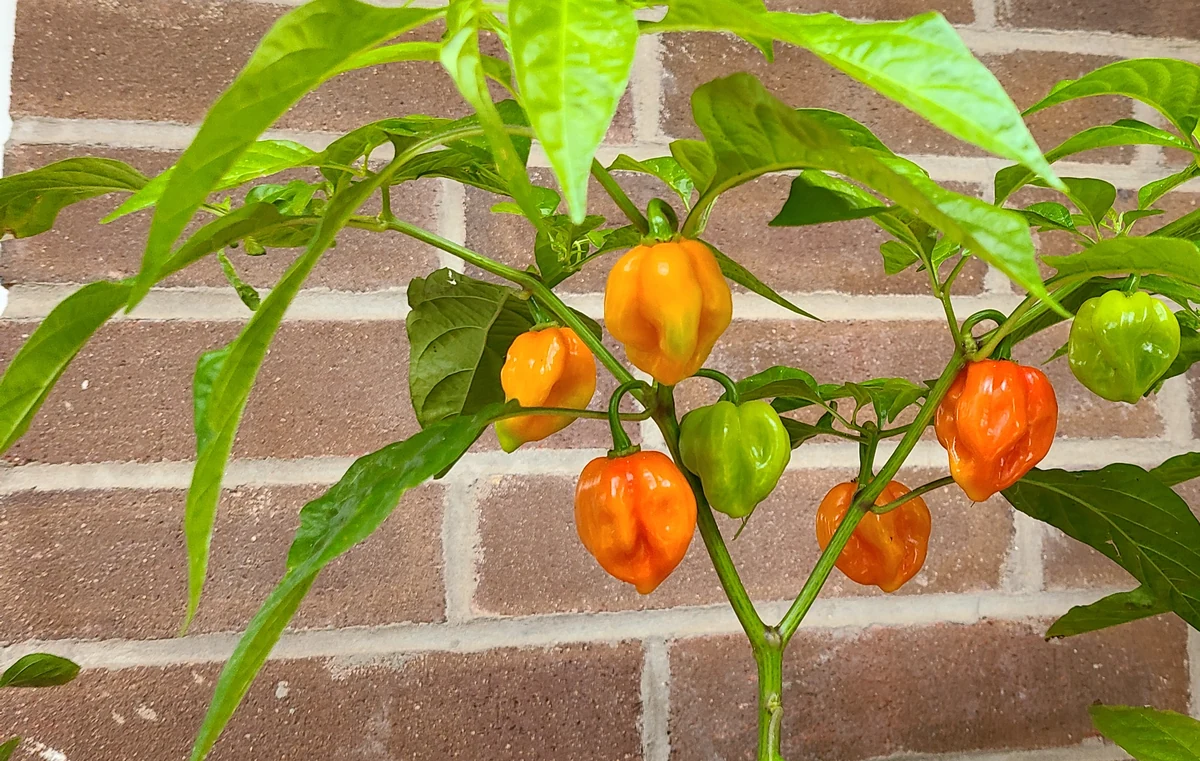
Superhot chili seeds are notorious for erratic germination. In ambient 68°F (20°C) living room dirt, Ghost Peppers and Reapers can sit dormant for four weeks or rot. To achieve 90%+ germination in 8 to 12 days, execute the controlled heat protocol:
• Potassium Nitrate or Black Tea Soak: Soak seeds for 12 hours in weak, warm black tea. The mild astringent tannins break down hard exterior waxes, mimicking the enzymatic digestion of wild birds that disperse wild chilis.
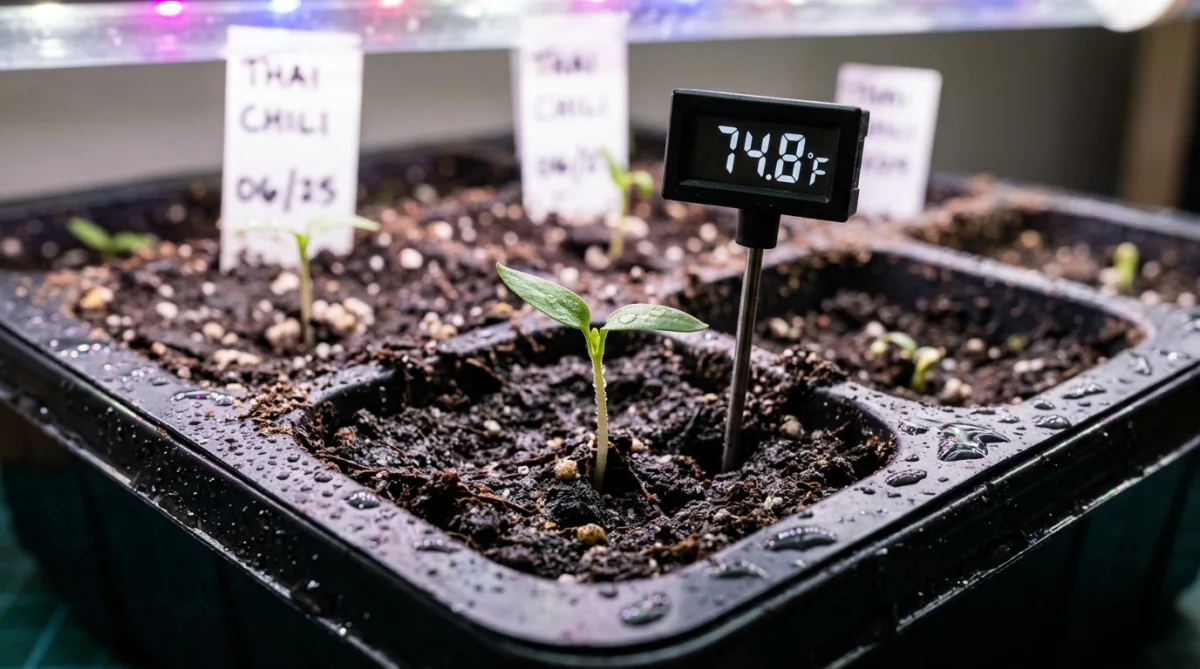
• 84°F to 86°F Substrate Temperature: Deploy an electric seedling heat mat controlled by an accurate digital probe thermostat placed directly in the soil mix. Do not guess root temperature. Chinense seeds sprout with rapid vigor when held continuously at 85°F (29.5°C).
• Moisture Management (Not Soaking Wet): Keep seedling plugs moist like a wrung-out sponge, never waterlogged. Saturated, airless peat at 85°F fosters Pythium root rot.
4. Light Intensity & Spectrum for Maximum Capsaicin Synthesis
Capsaicinoid synthesis is directly linked to photosynthetic sugar availability. Under weak lighting, even genetically scorching superhots produce watery, mildly spicy pods. To unlock true blister-inducing heat indoors, supply high photonic energy:
• Target 500 to 650 µmol/m²/s PPFD during the flowering and fruiting phase.
• Photoperiod: Run lights for 14 to 16 hours daily. Unlike cannabis or poinsettias, peppers are day-neutral plants; they do not require a 12/12 dark shift to flower. Extending the photoperiod to 16 hours maximizes daily carbon accumulation.
• Far-Red and UV Inclusion: Modern LED fixtures incorporating deep red (660nm) and trace UVA (385–400nm) stimulate secondary plant defense mechanisms, boosting essential oil production and capsaicin gland density in placenta walls.
5. Soil Mix, Container Sizing & Moisture Stressing for Pungency
Hot peppers thrive in porous, highly aerated soils. In nature, wild chilis grow in rocky limestone gravel and volcanic soils where water drains instantly away from roots.
• Formulate 40% Coir/Peat, 30% Coarse Perlite or Pumice, 20% Worm Castings, and 10% Horticultural Sand.
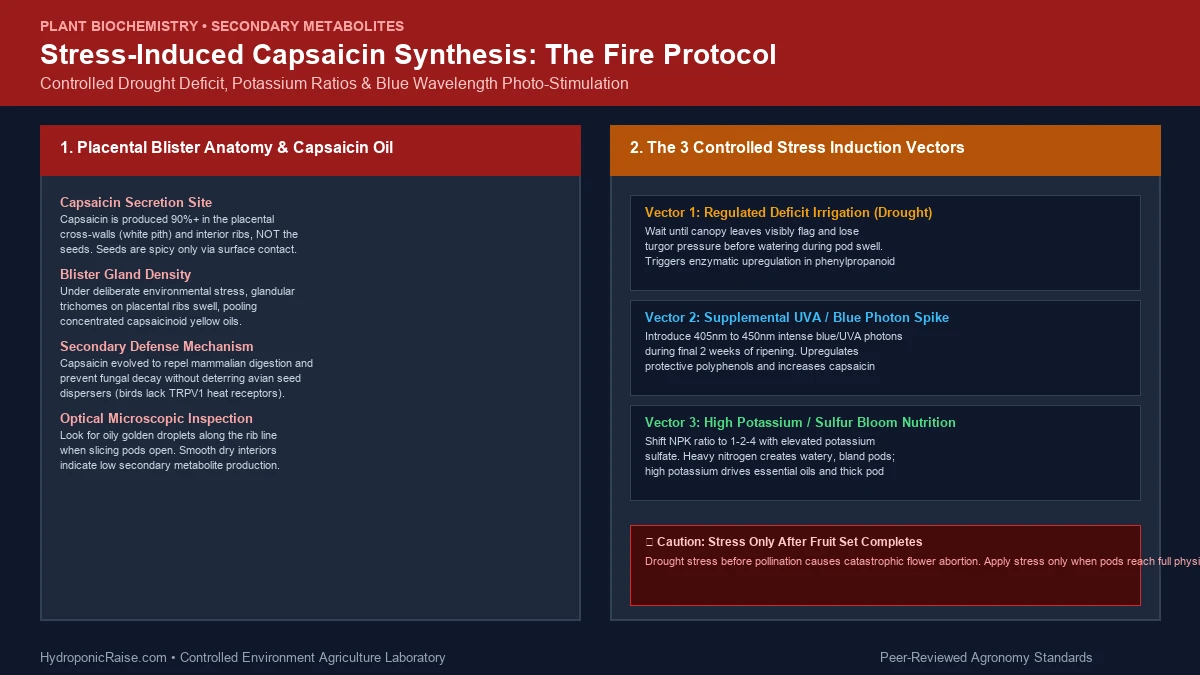
• The Controlled Drought Technique for Supercharged Heat: In the final two weeks of fruit ripening (when pods transition from green to deep orange/red), implement controlled drought stress. Allow the potting soil to dry out until the top leaves show the very first hint of daytime droop before watering lightly. Agricultural university trials confirm that mild, controlled water deficit during ripening triggers plants to synthesize up to 25% higher capsaicin levels in the placental tissue.
6. Manual Pollination & Fruit-Set for Reluctant Superhots
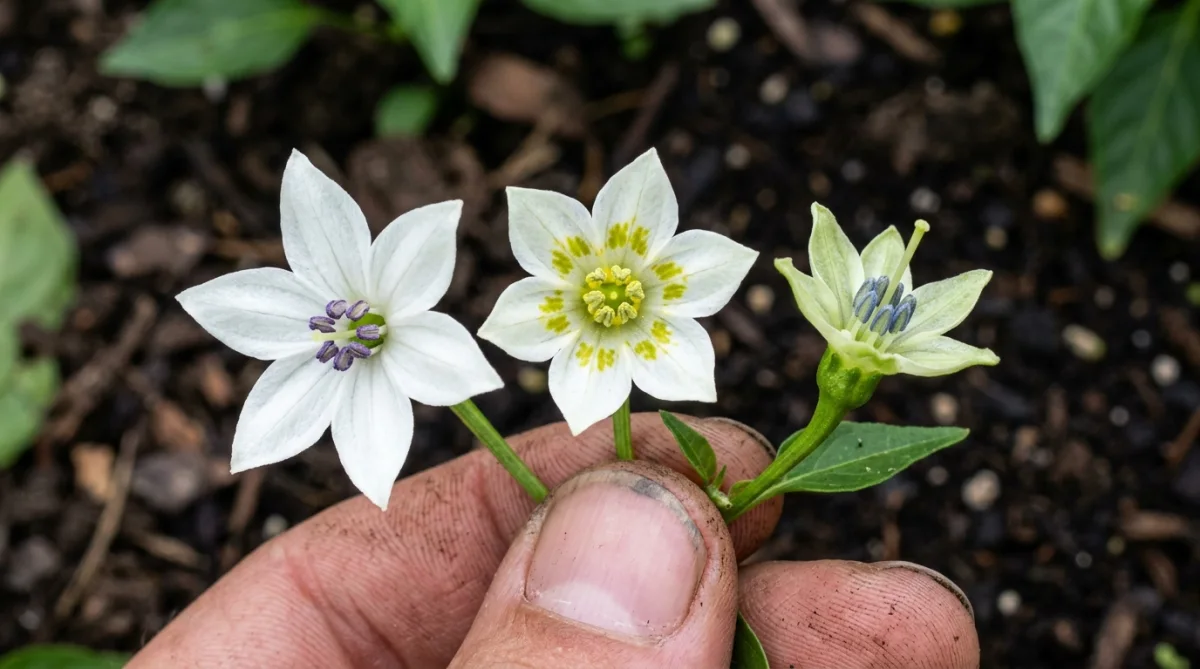
Superhot peppers (Capsicum chinense) are notoriously stubborn about setting fruit indoors. Their flowers are smaller, delicate, and hold tighter anther pores than common jalapeños. If air is stagnant, 100% of flowers will drop unfertilized.
• The Sonic Toothbrush Protocol: Turn on an electric toothbrush and lightly touch the back of the brush head to the flower pedicel or branch junction for 2 seconds. The high-frequency vibration instantly discharges a visible dust cloud of golden pollen onto the receptive central stigma.
• Humidity Timing: Execute pollination between 10:00 AM and 1:00 PM, when indoor grow lights have driven ambient room humidity down to 50%–60%. If humidity is above 75%, pollen clumps like wet chalk and fails to transfer.
7. Preventing Edema, Leaf Drop & Indoor Pests on Chili Plants
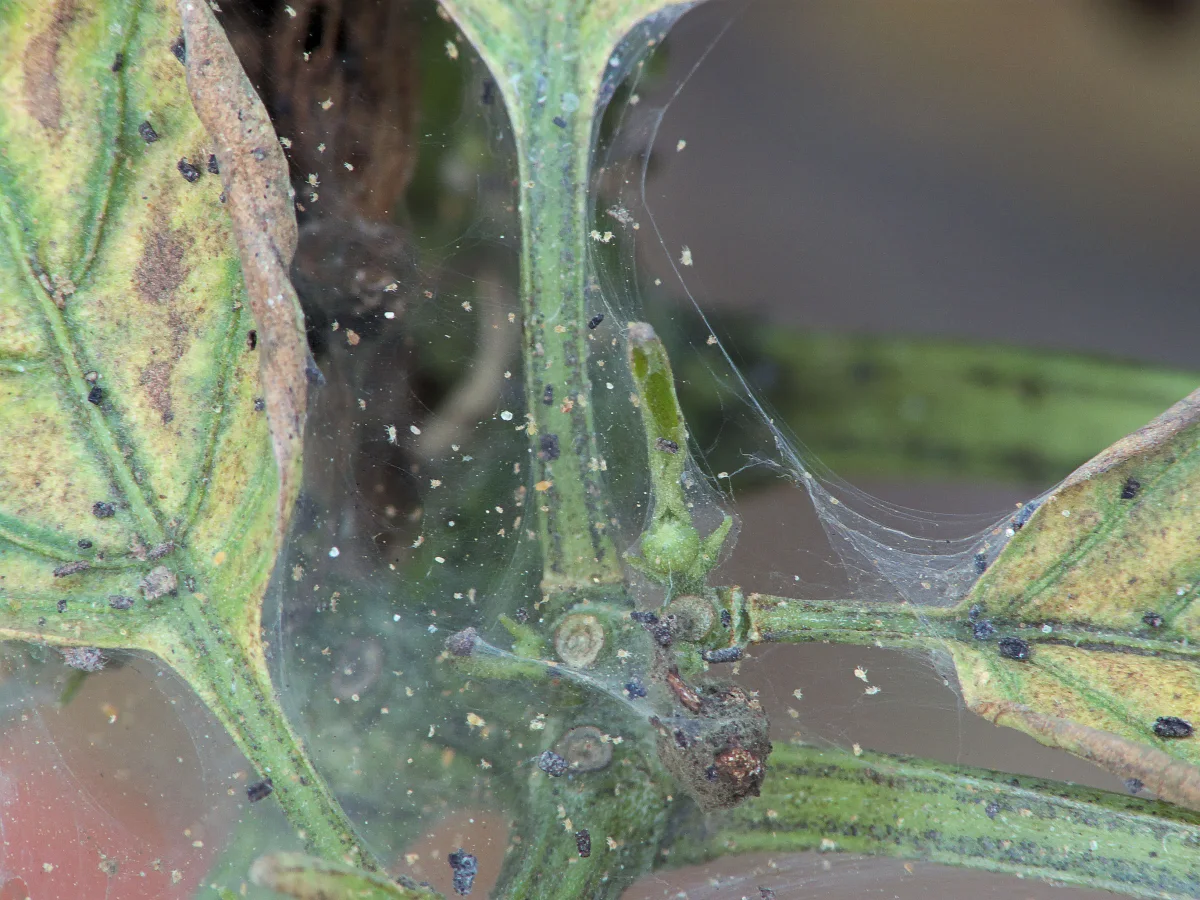
Chinense cultivars are uniquely hypersensitive to still air. When grown under bright lights without adequate ventilation, their leaf undersides rapidly develop gritty, crystalline pimples. This is cellular edema—not an insect infestation. Never spray soap or neem oil on edema blisters; doing so clogs stomata and causes entire branches to defoliate.
• The Cure for Edema: Install an oscillating fan that sweeps directly across the plant canopy 24 hours a day, and reduce watering frequency so the top 2 inches of soil dry between cycles.
• Eradicating Indoor Aphids: If aphids appear, do not spray harsh chemical pesticides indoors. Introduce predatory green lacewing larvae (Chrysoperla carnea) or wipe leaves manually with a 1% Castile soap and warm water wipe-down, followed by an immediate clean water rinse.
8. The ‘Bonchi’ Masterclass: Turning Indoor Chilis into Perennial Bonsai
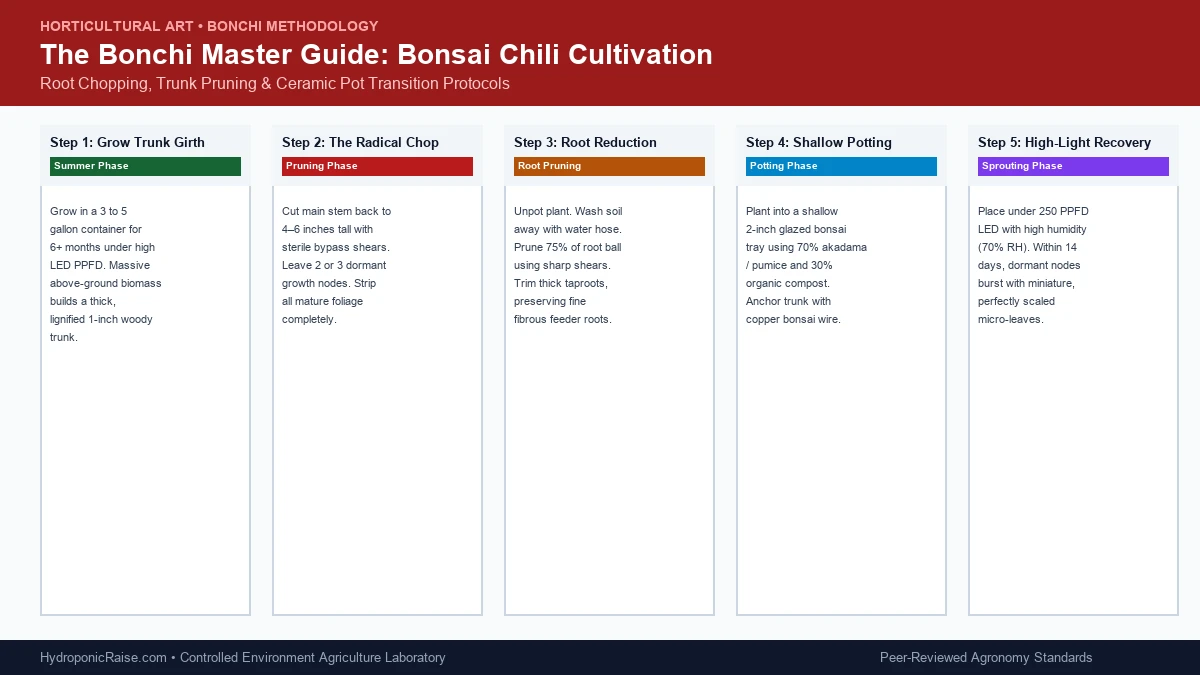
At the end of a long fruiting flush, beginner gardeners make the mistake of pulling up and composting their chili plants. Experienced growers do the opposite: they transform the mature plant into a ‘Bonchi’ (Bonsai Chili). Because peppers develop thick, gnarly woody trunks after their first year, they make spectacular, fast-growing living bonsai that fruit continuously for years.
• Step 1: Harvest & Defoliate: Strip all mature and immature pods from the plant. Using sharp, sterilized bypass shears, cut the main central trunk down to 4 to 6 inches in height, leaving 2 to 3 dormant branch nodes.
• Step 2: Excavate and Root-Prune: Remove the plant from its container. Use a root rake or your fingers to comb out old soil. Using shears, prune the root ball by 50% to 65%, trimming thick taproots while preserving fine feeder roots.
• Step 3: Repot into Shallow Bonsai Pottery: Plant the pruned root ball into a shallow ceramic bonsai tray filled with 50% akadama/pumice and 50% organic potting mix. Secure the plant with bonsai wire if necessary.
• Step 4: Regrowth & Miniaturization: Place under moderate LED light (250 PPFD) with gentle warmth. Within 14 days, dormant nodes burst with dense clusters of miniature green leaves. The resulting plant looks like a century-old gnarled tree bearing full-heat, miniature chilis.
9. The Indoor Hot Pepper Master Seasonal Timeline
Follow this step-by-step 150-day developmental timeline to coordinate temperature, lighting intensity, nutrient ratios, and pollination intervals from seed to harvest:
Heat-Driven Germination
- Seed Pre-Soak: Soak seeds for 12 hours in weak, warm black tea or 0.2% potassium nitrate to soften the tough C. chinense outer seed coat.
- Sterile Sowing: Sow seeds 1/4-inch deep in sterile pre-moistened peat pellets or Rockwool plugs.
- Strict Thermal Control: Place seed trays on a thermostatically controlled seedling heat mat maintained strictly at 85°F (29.5°C) under a clear humidity dome. Maintain 90%+ relative humidity until radicles emerge.
Seedling Canopy Establishment
- Dome Removal: Remove the humidity dome immediately upon the emergence of the first green cotyledons to prevent damping-off fungi.
- Photoperiod Calibration: Position a full-spectrum LED light 10–12 inches above the seedlings, delivering 250 µmol/m²/s PPFD for 16 hours daily.
- Continuous Airflow: Run a gentle oscillating clip-on fan 24/7 across the seedlings to stimulate stem thickening through thigmomorphogenesis.
- First Potting Up: Once seedlings show 3 to 4 true leaves, transplant into 2-gallon or 3-gallon breathable fabric aeration pots filled with an aerated soilless coir-perlite blend.
Vegetative Framing & Topping
- Apical Topping: When the central stem reaches 6 inches tall, pinch off the apical tip above the fourth node to break apical dominance and double lateral fruiting branches.
- Vegetative Nutrition: Feed a high-nitrogen, balanced liquid organic formula (3-1-2 ratio) at 1.4 to 1.8 mS/cm EC to fuel lush solar foliage and strong structural stems.
- Environment: Maintain daytime ambient temperatures between 75°F and 80°F, dipping to 68°F at night. Inspect leaf undersides weekly for crystalline edema deposits.
Flowering & Vibration Pollination
- Photon Boost: Ramp LED grow light intensity to 500–650 µmol/m²/s PPFD (achieving 28–32 mol/m²/day DLI) to support energy-dense flower trusses.
- Bloom Nutrient Shift: Transition to low-nitrogen, high-phosphorus/potassium bloom food (1-2-4 ratio) with chelated Cal-Mag (40 PPM Ca / 20 PPM Mg).
- Acoustic Pollination: Vibrate open flower clusters daily using the back of an electric toothbrush or a soft artist brush between 10:00 AM and 1:00 PM for a 95%+ pod set rate.
Fruit Swelling, Controlled Stress & Harvest
- Canopy Staking: Support heavily weighted lateral branches with soft garden ties or small bamboo stakes to prevent snapping under fruit load.
- The Fire Protocol (Drought Stress): Once pods reach full physical size, apply Regulated Deficit Irrigation by letting leaves visibly flag between waterings to spike capsaicinoid concentration.
- Harvest & Bonchi Transition: Clip fully colored, glossy pods with sterile shears leaving a 1/2-inch stem. After the final flush, radically prune back branches and roots for multi-year indoor Bonchi bonsai culture.