⚡ Quick Answer
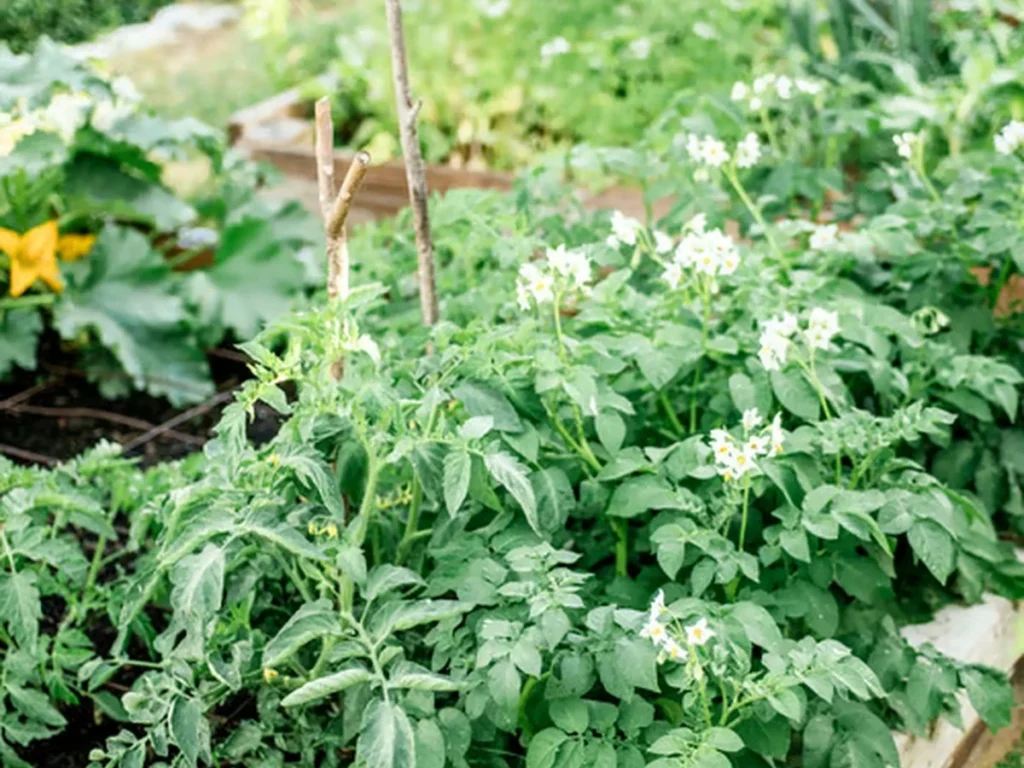
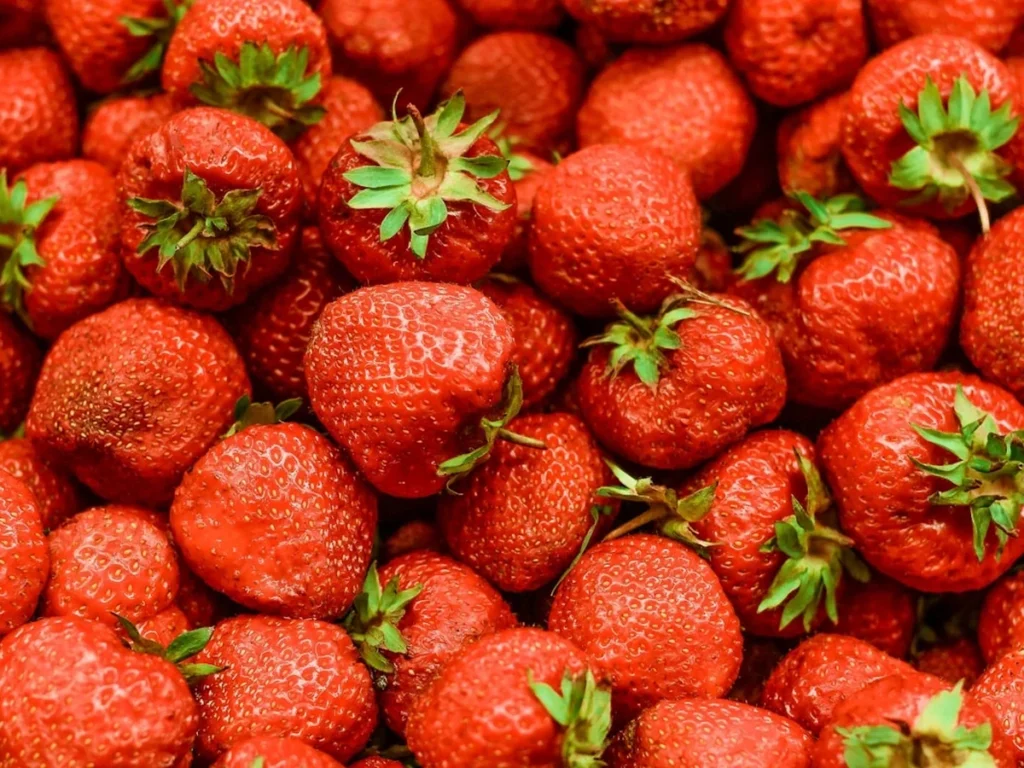
Strawberries, dwarf citrus, figs, and cherry tomatoes all fruit successfully indoors with proper grow lighting. Strawberries are the easiest — they produce within 4–6 weeks of transplanting in hydroponic systems. All fruiting crops need 14–16 hours of light daily, hand pollination, and a bloom fertilizer with higher phosphorus and potassium.
Introduction
According to pomology research from the UC Davis Postharvest & Fruit Center, day-neutral strawberry cultivars flower and fruit continuously indoors under 14 to 16 hours of daily photosynthetically active radiation when night temperatures remain below 68°F (20°C).
It is mid-January. Outside, your garden beds sit buried under four inches of frozen slush. Inside your living room, you reach beneath a bank of warm LED fixtures, gently cup a deep crimson Albion strawberry between your thumb and forefinger, and snap the stem. It is sun-warm, aromatic, and sweet all the way through to the core. A few inches away on the same shelf, a miniature Orange Hat tomato bush carries twenty golden cherry tomatoes ripening in tight clusters.
That scene sounds like a glossy seed catalog fantasy, but it happens on real indoor shelves every winter. It also happens to be where most beginners hit a brick wall. Industry data and home grow logs reveal a brutal reality: more than 70% of indoor gardeners who transition from easy leafy greens to fruiting crops fail on their very first attempt. They watch their strawberry crowns rot into black slime, or their tomato vines grow into seven-foot green monsters that drop every single flower before setting a solitary berry.
That failure is not bad luck. It happens because fruiting plants operate on a completely different biological playbook than basil and lettuce. A head of butterhead lettuce asks for gentle light, steady moisture, and basic nitrogen. A fruiting plant is an intensive metabolic engine: it demands intense photosynthetic energy to build complex fruit sugars, specialized flowering nutrients, and a physical trigger to pollinate every single blossom.
This guide is the master bridge from keeping houseplants alive to harvesting fresh fruit in your home all year long. You will learn how to choose your first fruiting crop, dial in the exact photon intensity your plants require, balance flowering nutrients, and take over the role of the bee without spending thousands of dollars on commercial farm gear.
Key Takeaways
- The photon gap is real: Fruiting plants require three to four times the photosynthetic light energy of leafy greens. Weak lighting is the number one cause of blossom drop and flavorless fruit.
- Strawberries are the smartest starting point: Day-neutral strawberries occupy less than one square foot of space, stay under eight inches tall, and produce continuous harvests without trellising or heavy pruning.
- You are the pollinator: Indoor air is dead calm. Without insect vibration or wind buffeting, tomato blossoms drop off unfertilized and strawberries produce deformed, leathery buttons.
- Vegetative feeding starves fruit: High nitrogen produces giant green canopies and zero flowers. Once buds appear, you must cut nitrogen and increase phosphorus and potassium.
- Genetics determine your ceiling: Commercial field varieties fail indoors. You must plant compact day-neutral strawberries and determinate micro-dwarf tomatoes bred specifically for restricted containers.
Why Fruiting Plants Are a Different Game
If your entire indoor gardening experience comes from growing mint on a windowsill or harvesting loose-leaf lettuce from a countertop pod, you have been set up to fail with fruit. Foliar crops produce leaves. Fruiting crops must build leaves, develop flower trusses, synthesize viable pollen, fertilize ovaries, swell complex cellular tissue, and pack those tissues with synthesized sucrose and fructose.
That biological leap breaks three core assumptions of indoor growing:
1. The Light Intensity Deficit
Leafy greens thrive under low light levels of 100 to 200 µmol/m²/s (PPFD). Hang that same light over a fruiting plant, and the plant will grow spindly, stretch toward the fixture, and abort every single flower bud it attempts to form. Fruiting crops require a massive photon flood: 400 to 600 PPFD during vegetative growth, scaling up to 600 to 1,000 PPFD once fruit begins to swell. If you do not deliver that energy, your plant will starve in plain sight.
2. The Pollination Barrier
Outdoors, a single gust of wind or a foraging bumblebee shakes pollen loose from anthers to stigmas. Indoors, your living room air is completely stagnant. A tomato flower cannot pollinate itself in dead air, even though it contains both male and female organs. A strawberry flower with fifty separate pistils requires pollen distributed evenly across its central dome. If you do not actively step in and perform that physical task, your flowers will turn yellow at the elbow joint and fall to the floor.
3. The Biphasic Nutrient Shift
A single bottle of all-purpose houseplant fertilizer works fine for pothos or kale. Feed that same nitrogen-heavy diet to a flowering tomato, and you will get a gorgeous, dark green jungle of foliage with zero fruit. Fruiting crops are biphasic: they demand nitrogen early to build structural scaffolding, then require a hard pivot toward high phosphorus (P) and potassium (K) the moment flower clusters form. Potassium acts as the vascular pump that drives water and sugars into ripening fruit cells.
Expert Tip: Before spending a single dollar on seeds or containers, download a calibrated PAR meter smartphone app (like Photone) and measure the light at plant height in your proposed growing area. If your space cannot deliver at least 400 PPFD across a 14-hour cycle, stop shopping for fertilizer. You need a dedicated grow light fixture before anything else.
Choosing Your First Indoor Fruit Crop: The Decision Framework
Do not pick an indoor fruit crop based on what you like to order at a restaurant. Pick your crop based on available ceiling height, how much daily attention you can provide, and the footprint of your growing area.
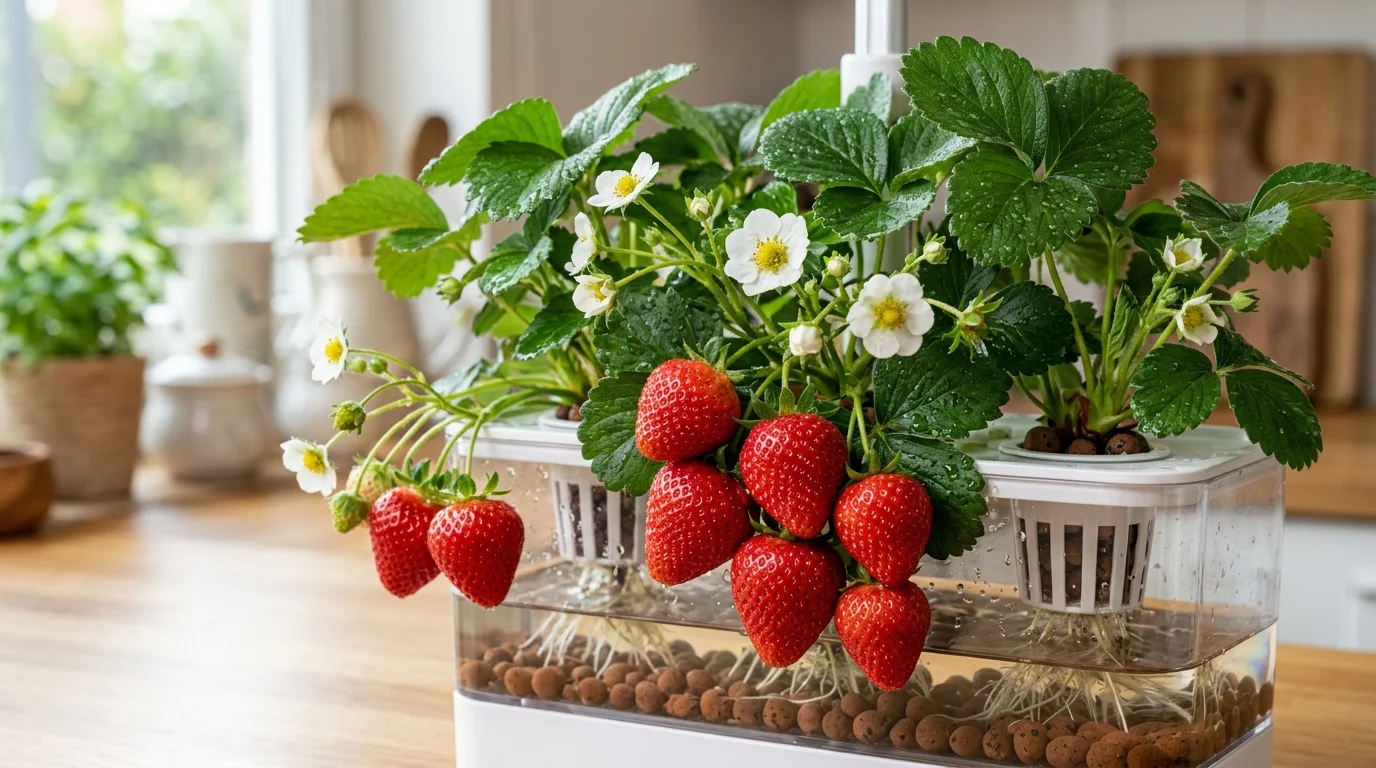
If you have never harvested an indoor fruit crop, start with strawberries. They stay under eight inches tall, root shallowly in six to eight inches of medium, and require zero trellising, staking, or suckering. Their light demands (400 to 600 PPFD) are significantly lower than tomatoes, meaning you can grow them under budget-friendly LED fixtures without scorching leaves.
For a complete step-by-step potting and setup breakdown, see our master guide on growing strawberries indoors. If you prefer high-oxygen, soilless recirculating channels, consult our master manual on hydroponic strawberries.
You must choose day-neutral cultivars. June-bearing varieties only produce fruit after experiencing cold winter photoperiod triggers, which fail indoors. Day-neutral varieties like Albion and Seascape flower and fruit continuously throughout the calendar year as long as ambient temperatures remain between 65°F and 75°F. For a step-by-step masterclass on bare-root planting and crown depth, read our guide to growing strawberries indoors.
If you prefer a clean, soil-free hydroponic system, explore growing strawberries hydroponically to master closed-loop nutrient circulation.
Tomatoes: The High-Yield Challenge
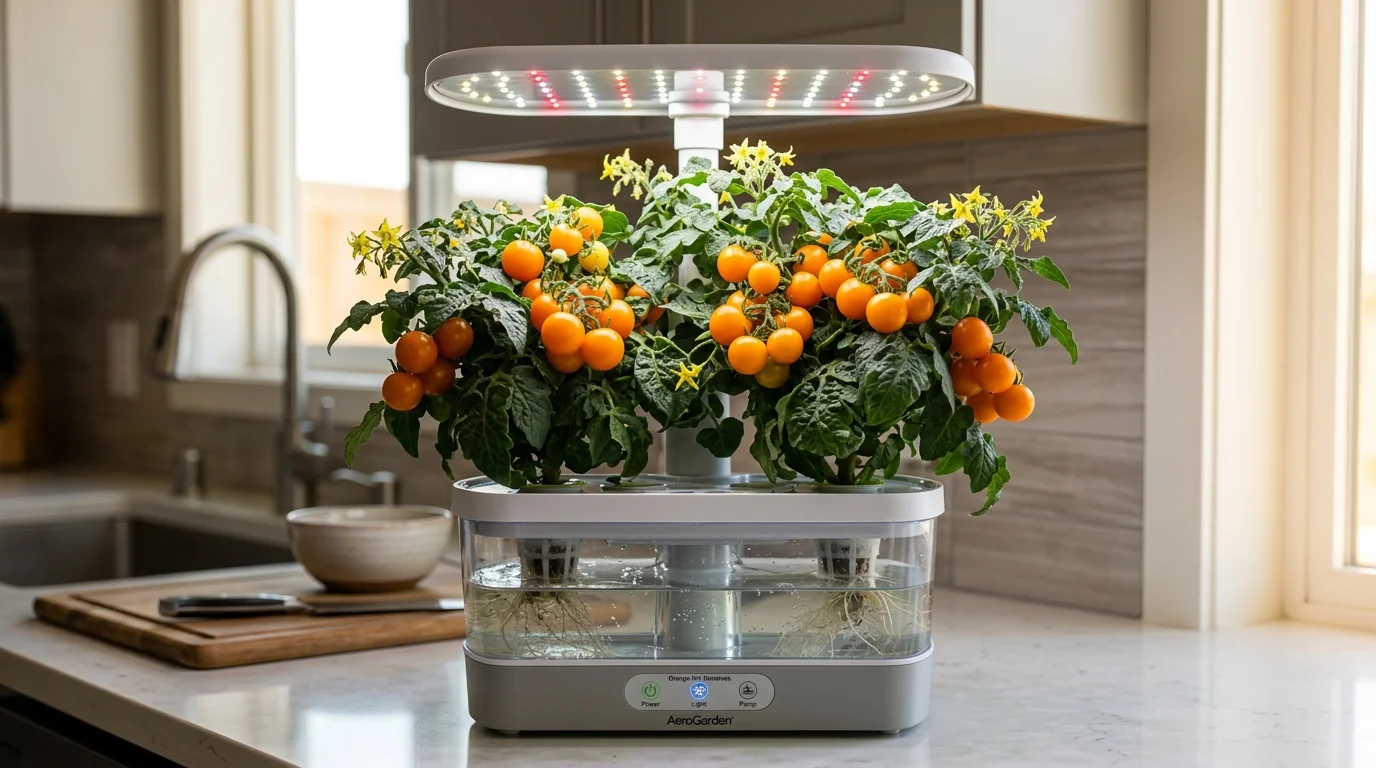
Tomatoes are the undisputed champions of flavor, but they demand respect. Standard garden tomatoes are indeterminate vines: they will climb past your ceiling, swallow grow lights, and drink a gallon of water every single day. Growing an indeterminate slicer indoors is a recipe for frustration.
The only sensible choice for home indoor growers is determinate micro-dwarf genetics. Modern cultivars like Orange Hat, Red Robin, and Micro Tom stay under 10 to 12 inches in height. They form sturdy, tree-like miniature stems and pack dozens of sweet cherry tomatoes into a two-square-foot footprint. For a full breakdown of lighting and pot sizing, see our complete guide to growing tomatoes indoors and our dedicated variety profile on Orange Hat tomatoes.
Other Crops to Consider
Once you master strawberries and dwarf tomatoes, the same environmental setup supports compact bush peppers (such as Shishito or Jalapeño) and miniature parthenocarpic snack cucumbers. Parthenocarpic cucumbers set fruit without any pollination whatsoever, making them exceptionally productive under indoor grow lights.
Product Recommendation: For your first strawberry grow, a simple 2-gallon plastic or fabric planter filled with 70% buffered coco coir and 30% coarse perlite delivers foolproof drainage without the plumbing risks of active water pumps. For tomatoes, a 3-gallon fabric pot equipped with a bottom-watering sub-irrigated tray gives roots steady access to water without saturating the stem collar.
Essential Equipment for Indoor Fruiting
Do not buy equipment in alphabetical order. Buy it in priority order. Your grow light determines whether you harvest fruit; your container medium determines whether your roots breathe; your environmental controls determine whether mold destroys your crop.
1. Grow Lights: Your Core Investment
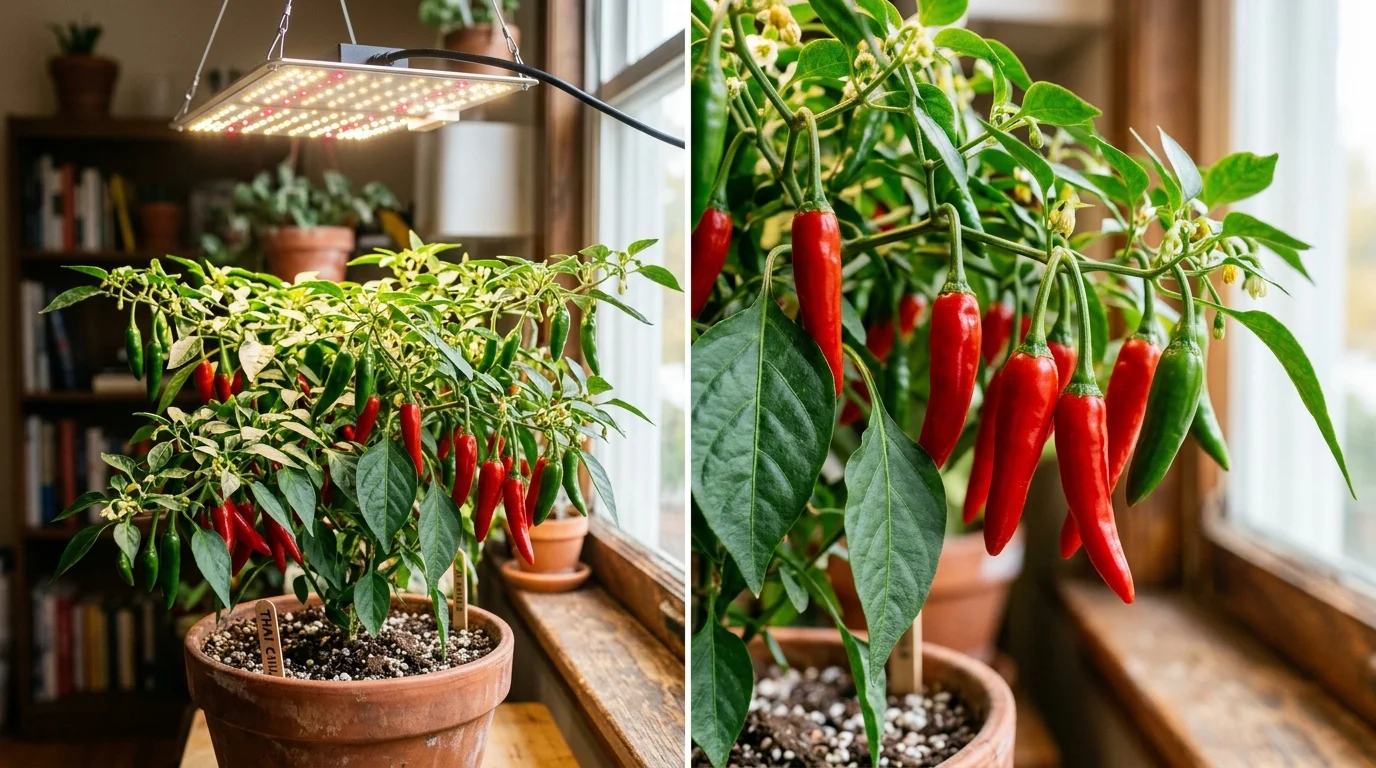
Cheap pink-and-blue “blurple” LED lights purchased from discount marketplaces do not work for fruiting crops. They lack the full-spectrum spectral warmth and photon penetration required to mature fruit sugars. Look for a fixture featuring genuine full-spectrum diodes (like Samsung LM301B or Bridgelux) with an added 660nm deep-red spike. Expect your grow light to represent 60% of your total initial equipment budget.
For a 2×2 foot growing footprint, invest in a 100W to 150W quantum board with a dimming dial. A dimmable driver allows you to dial down intensity to 40% when seedlings are young, then crank power to 100% when heavy fruit clusters begin to demand maximum photons.
2. Growing Media: Soil vs. Hydroponics
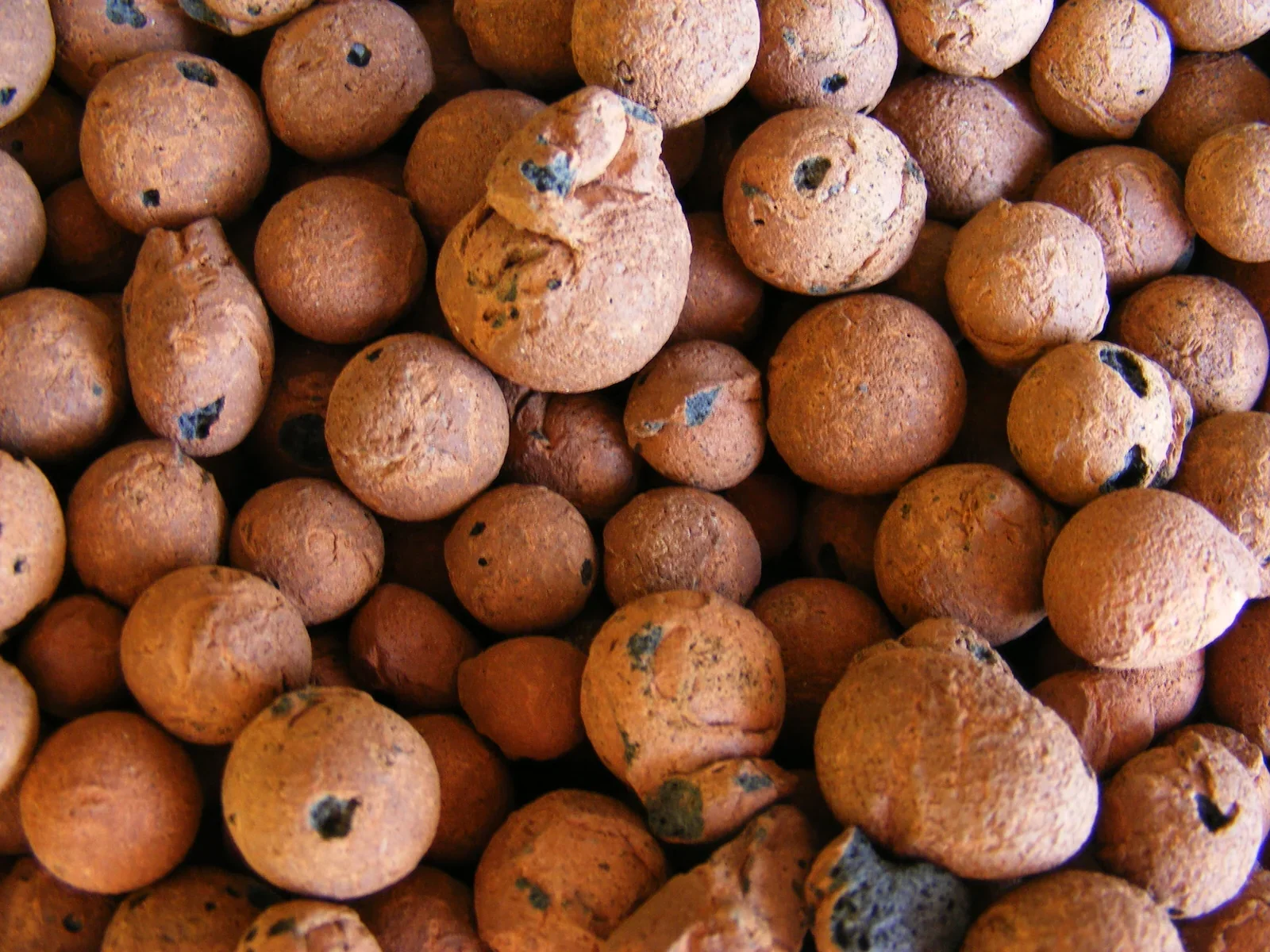
Standard dense potting soils from big-box garden centers compact severely after two months of regular indoor watering. They form a thick, soggy crust that suffocates strawberry feeder roots and encourages fungus gnat infestations.
Use an airy, high-drainage soilless mix: 60% rinsed, buffered coco coir, 30% coarse perlite or volcanic pumice, and 10% screened organic worm castings. This medium holds water while maintaining 25% air porosity, making root rot nearly impossible.
3. Air Circulation: Defeating Stagnant Pockets
Stagnant air inside a heated room kills indoor fruit grows. Without air movement, a thin boundary layer of humid, oxygen-depleted air forms directly beneath the leaves, halting transpiration and inviting powdery mildew. Mount a small six-inch clip-on oscillating fan to keep a gentle, barely perceptible flutter across your canopy.
Expert Tip: Do not blast your plants with high-speed wind 24 hours a day. Constant wind stress dries out delicate strawberry flower pistils and causes tomato leaves to cup upwards (tacoing). Plug your fan into a simple mechanical timer set to run 15 minutes on, 45 minutes off during daylight hours.
Lighting Physics: PPFD, DLI, and Fruit Sugar Synthesis
Lighting is the single factor that makes or breaks indoor fruit production. Leafy greens can scrape by on dim photons because you only harvest vegetative tissue. A strawberry or tomato plant, however, must generate enough excess carbohydrates through photosynthesis to pump dense sugars into every developing berry.
Translating PPFD and DLI into Plain English
Forget lumens and lux; those units measure how bright light appears to human eyes, not how plants absorb photons. Indoor growers use two precise metrics:
- PPFD (Photosynthetic Photon Flux Density): Measures how many usable photons hit a one-square-meter area of your plant canopy each second (measured in µmol/m²/s). Think of PPFD as the flow rate of water pouring from a hose.
- DLI (Daily Light Integral): Measures the total volume of photons delivered to that canopy over an entire day (measured in mol/m²/day). Think of DLI as the total gallons of water collected in a bucket at the end of the day.
According to controlled indoor trials published by agricultural researchers at MDPI and university extension labs, strawberries and dwarf tomatoes require a minimum DLI of 17 to 22 mol/m²/day to produce firm, sweet fruit with high Brix ratings. To hit that DLI, you must run an LED delivering 500 to 700 PPFD at canopy height for 14 to 16 hours daily.
Reading Your Canopy’s Light Signals
Your plant will communicate light problems long before it dies. If leaf stems become long, weak, and stretch upward toward the fixture while leaf color fades to pale chartreuse, your light is too weak or mounted too high. If the top leaves directly under the fixture curl their edges upward, turn crisp, or display bleached white patches between leaf veins, the light is too close. For most 100W fixtures, maintain a clearance distance of 10 to 14 inches above the top leaves.
Nutrients: Feeding the Fruit, Not Just the Leaves
Feeding a fruiting plant is a two-act play. If you keep feeding vegetative formulas during flowering, you will harvest zero fruit.
Phase 1: Vegetative Canopy Building (Weeks 1 to 4)
When young plants or bare-root crowns establish, they need nitrogen (N) to synthesize chlorophyll, drive cell division, and establish a dense leaf canopy. Use a balanced, high-nitrogen liquid base formula (such as a 3-1-2 or 5-2-4 NPK ratio) diluted to half-strength. Feed once every ten to fourteen days in soil, or maintain an electrical conductivity (EC) of 1.0 to 1.2 mS/cm in hydroponics.
Phase 2: The Bloom & Fruit Ripening Switch (Week 5 Onward)
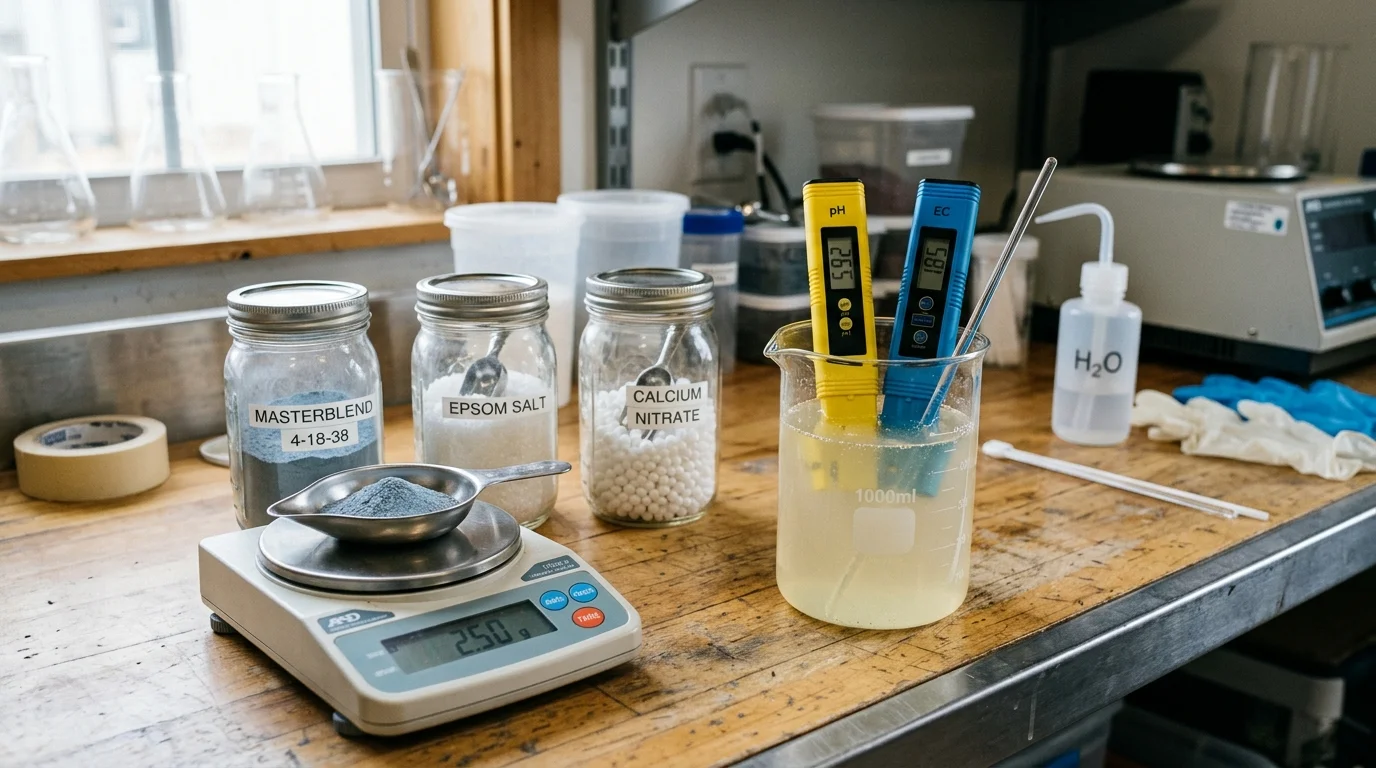
The instant your plant produces its first visible flower cluster, cut your nitrogen ratio in half and double your potassium (K) and phosphorus (P). Phosphorus stimulates flower truss development; potassium controls sugar synthesis and fruit cell enlargement.
Switch to a dedicated bloom formulation (such as a 1-3-4 or 2-4-6 ratio) alongside supplemental Calcium and Magnesium (Coco Cal). High-output LED grow lights accelerate plant transpiration, causing rapid calcium depletion in leaf tips and developing fruit walls. Without supplemental calcium, tomatoes develop leathery black patches on their bottoms (blossom-end rot) and strawberry leaves cup inward with scorched brown edges.
Expert Tip: If your tomato vine is blooming aggressively but the yellow flowers dry up, turn brown at the tiny knuckle joint, and drop off without forming a green nub, do not assume pollination failed. Check your feed. Excessive nitrogen is the number one cause of blossom abortion in healthy indoor crops. Flush your container with clean water and immediately drop your nitrogen levels.
Interactive Tool: Hydroponic Nutrient & pH Calculator
Calculate exact nutrient dosage (in mL or grams) and dial in your target EC, PPM, and pH thresholds for every growth stage.
Pollination: You Are the Bee Now
Indoor fruit gardening requires human intervention during bloom. Unpollinated flowers wither, rot, and fall off.
How to Pollinate Strawberries
A strawberry blossom is hermaphroditic, containing a ring of pollen-producing anthers encircling a raised central dome covered with up to 400 microscopic pistils. To produce a plump, symmetrical berry, nearly every single pistil on that center dome must receive pollen.
Keep a soft size-4 camel-hair watercolor brush beside your grow station. Once yellow flower petals open fully and anthers look dusty, gently roll the brush in a circle across the anther ring, sweeping pollen inward over the central dome. Repeat this simple thirty-second sweep every two days. If you miss one side of the blossom, the unfertilized side stalls while the fertilized side expands, producing a puckered, deformed “cat-faced” button.
How to Pollinate Tomatoes (The Buzz Technique)
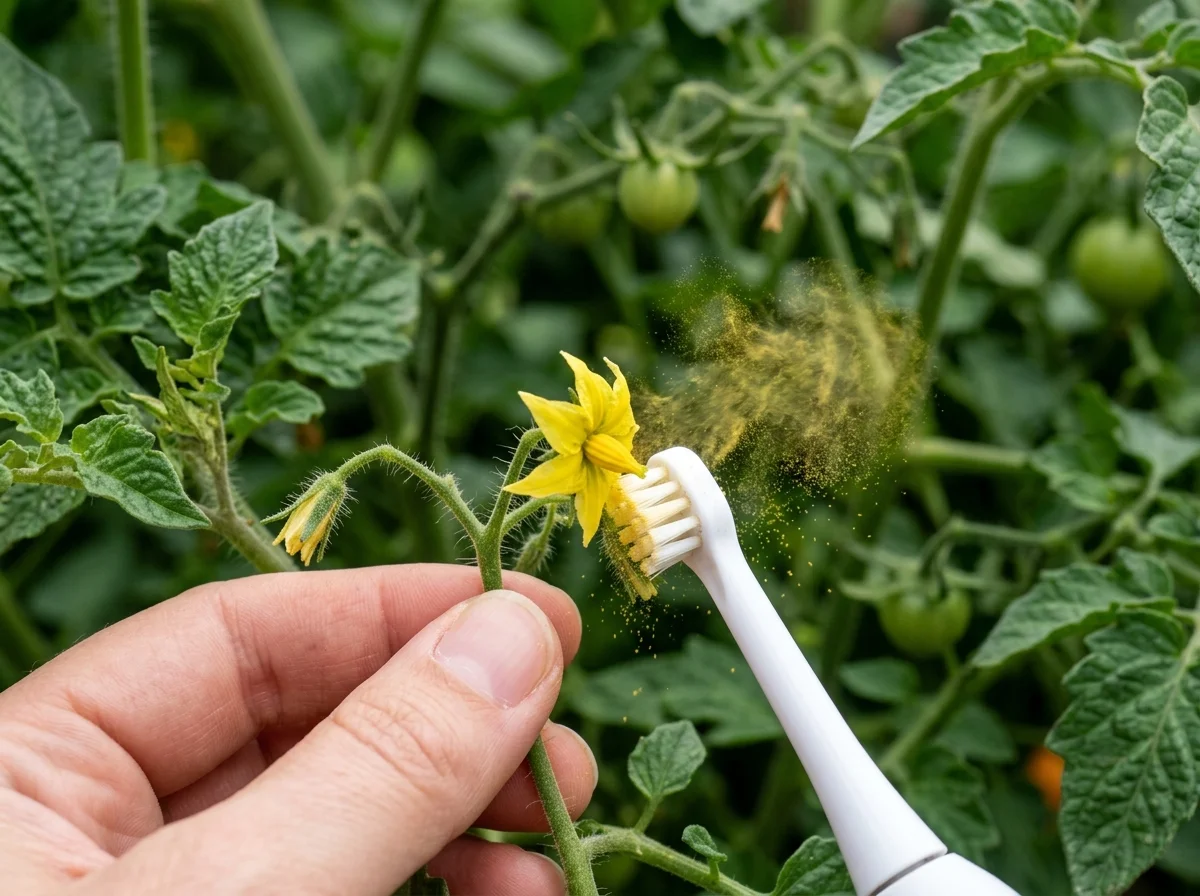
Tomato flowers do not expose their pollen loosely. Their anthers are fused into a tight cone surrounding the female stigma. Wind or bees vibrate the entire flower at a specific acoustic frequency (roughly 300 to 400 Hz), shaking pollen loose through microscopic pores.
You can tap flower trusses with your fingers, but the most effective home tool is an ordinary electric toothbrush. Turn the toothbrush on, rest the vibrating plastic back of the brush head against the stem directly behind the flower cluster for two seconds, and watch closely. Under a bright grow light, you will see a tiny golden cloud of pollen dust shoot downward from the blossom cone. Pollinate at midday, when indoor humidity is lowest and pollen grains flow freely.
The Indoor Pollination Log Template
Track your hand-pollination cycles to diagnose unfertilized clusters before they drop:
Troubleshooting: Diagnosing Common Indoor Failures
Problem 1: Blossoms Dry Up and Drop Off
The Agitation: Your plants look vigorous and produce plenty of flowers, but the tiny green joint snaps and the unfertilized blossoms litter your grow shelf.
The Solution: Run this three-step diagnostic check in order:
- Check Light Intensity: If PPFD is below 400 µmol/m²/s, the plant lacks the carbohydrate energy to support fruit set. Lower your fixture closer to the canopy.
- Flush Out Nitrogen: High nitrogen causes blossom abortion. Flush your medium with plain water and switch to a potassium-heavy bloom formula.
- Verify Pollination Window: If you wait until petals curl brown before pollinating, the stigma has already dried out. Pollinate on day two of blossom opening.
Problem 2: Leaves Turn Yellow, Pale, or Mottled
The Agitation: Healthy green foliage develops yellow blotches, leaf edges crisp up, or entire lower branches turn yellow.
The Solution: Read the plant’s geography to identify the deficiency:
- Lower leaves yellowing uniformly: Nitrogen deficiency. The plant is mobilizing nitrogen from older leaves to feed new growth. Increase base feeding.
- Interveinal yellowing (veins stay green, tissue turns yellow): Magnesium deficiency. Add 1 teaspoon of pharmaceutical-grade Epsom salt per gallon of water.
- Top young leaves yellowing and distorted: Calcium deficiency or iron lockout caused by high pH. Verify water pH is between 5.8 and 6.5.
Problem 3: Two-Spotted Spider Mites Infiltrate
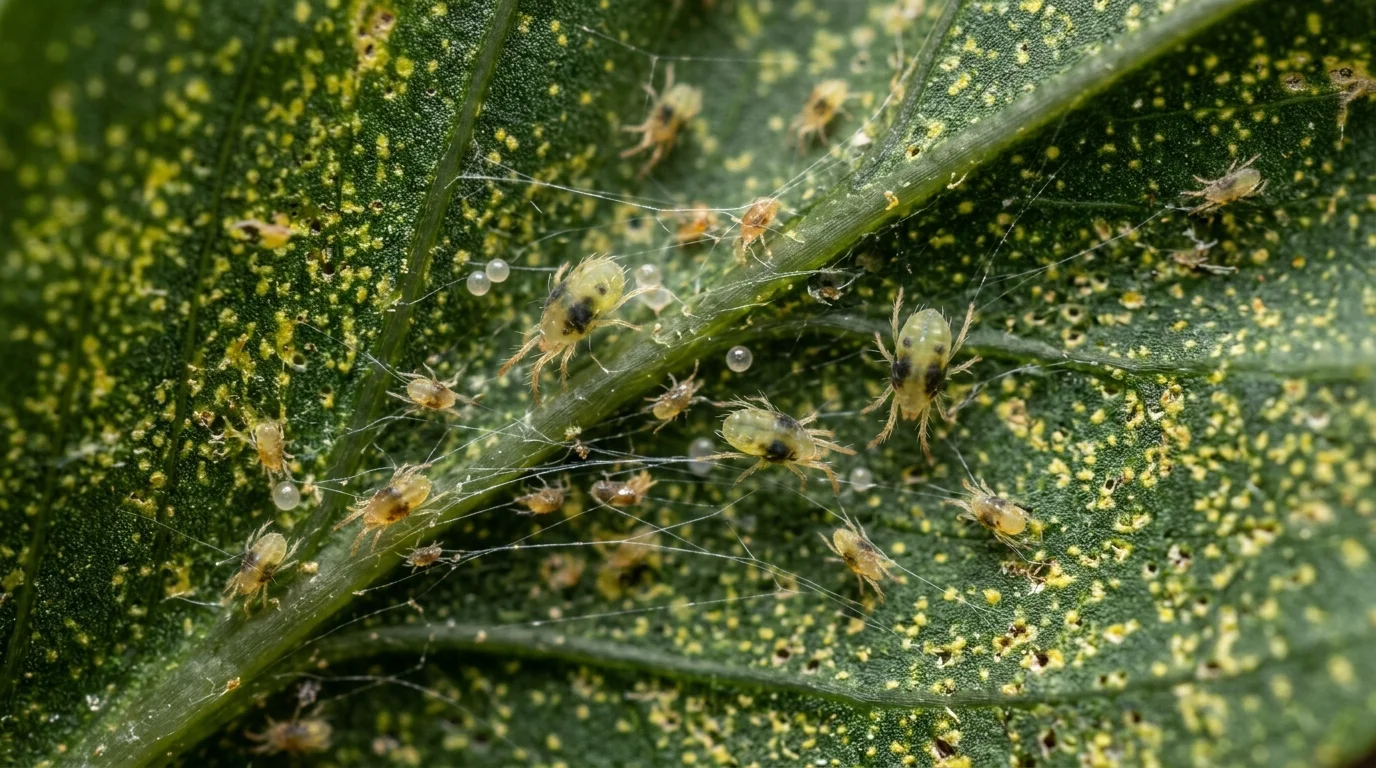
The Agitation: Dry winter apartment air creates the perfect breeding ground for spider mites. Tiny yellow speckles appear on leaves, followed by fine silky webbing around flower stalks.
The Solution: Do not spray synthetic insecticides inside your living room. Wipe down both sides of all leaves with a soft sponge soaked in cold water and cold-pressed neem oil (or insecticidal potassium soap). Run a cool-mist humidifier to keep ambient humidity above 55%, which breaks the mite reproduction cycle.
For more detailed step-by-step diagnostic workflows on strawberry pest and leaf care, read our complete guide to caring for indoor strawberries.
Harvesting: Picking at Peak Brix and Flavor
Harvesting indoor fruit at the wrong moment ruins months of careful growing. Commercial supermarket fruit is bred for shipping durability; it is picked hard and green, then treated with ethylene gas to mimic color ripeness. You are growing for flavor, not shipping containers.
Harvesting Strawberries
Strawberries do not ripen off the vine. The moment you sever the stem, sugar synthesis halts permanently. Do not pick a berry when its shoulder is white or light pink. Wait until the entire fruit turns deep, glossy crimson down to the calyx collar, let it sit on the plant for one additional day to maximize volatile aromatics, and snip the stem with clean shears. Harvest in the morning when fruit tissues are firm and cool.
Harvesting Tomatoes (The Breaker Stage Advantage)
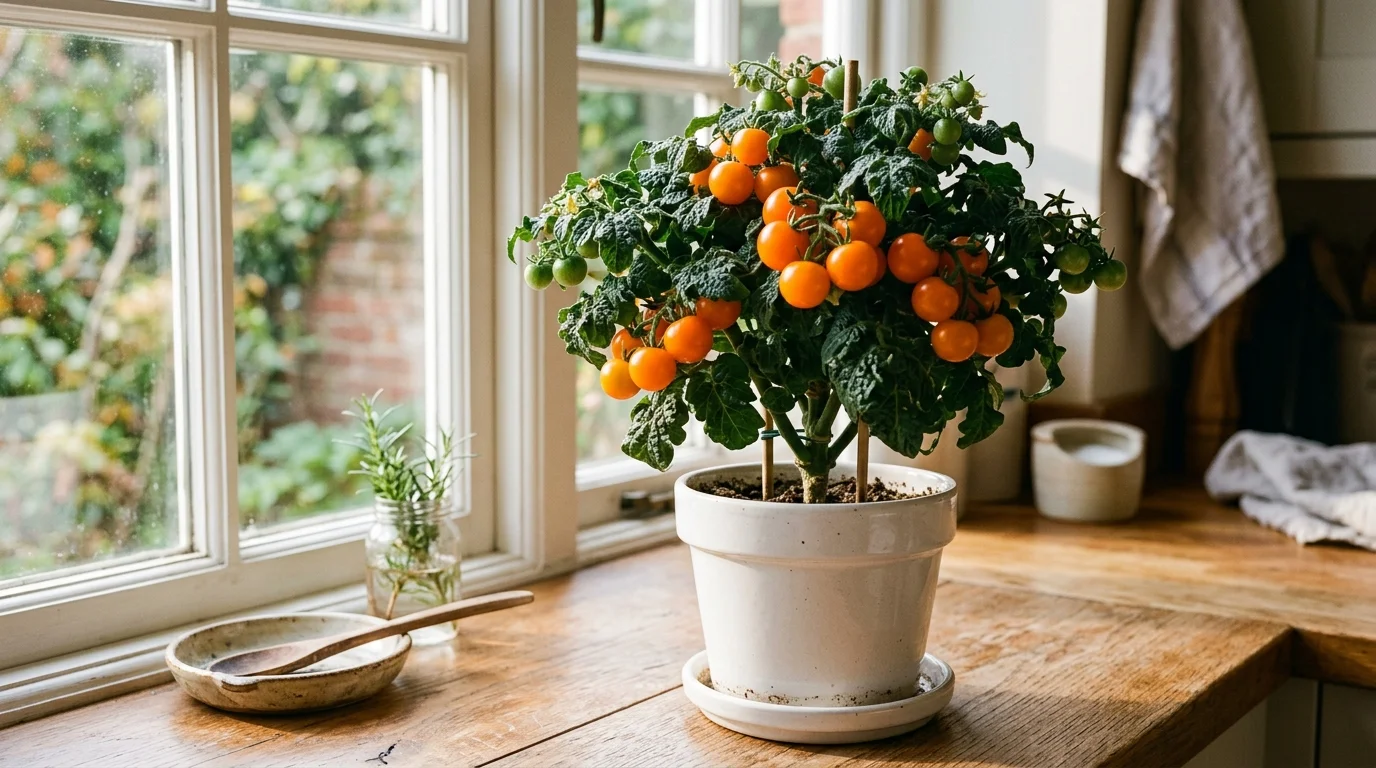
Unlike strawberries, tomatoes synthesize sugars internally and continue ripening off the vine once they reach the breaker stage—the point where the bottom tip of the fruit transitions from glossy green to its first blush of orange or pink.
If you need to free up plant energy for upper trusses, or if indoor pests are threatening your fruit, you can harvest tomatoes at the breaker stage and allow them to finish ripening on a warm kitchen counter out of direct sunlight. They will develop identical sweetness and acidity to vine-ripened fruit without risking split skins.
Custom Milestone Timeline: Indoor Growing Cycle Planner
Track week-by-week milestones from germination to harvest with custom lighting hours, pruning dates, and nutrient schedules for your specific crops.
Scaling Up: Building a Continuous Year-Round System
Once you harvest your first bowl of winter fruit, you will quickly outgrow a single countertop pot. Turning a fun experiment into a reliable, year-round harvest schedule requires continuous management:
- Staggered Succession Planting: A micro-dwarf tomato bears heavily for four to six weeks, then slows down. Start new seeds every four to six weeks so you always have one plant in vegetative growth, one in peak flowering, and one in harvest.
- Runner Propagation for Strawberries: Day-neutral strawberries send out occasional vegetative runners (stolons). Pin those daughter runner tips into small 3-inch starter pots filled with damp coco coir. Once they root (typically ten to fourteen days), snip the umbilical runner stem. You now have a vigorous, free, cloned crown ready for your next production tier.
- The Economic Reality: Be honest about costs. Taking into account lighting electricity, replacement nutrients, and quality potting media, homegrown indoor fruit costs around $12 to $18 a pound to produce. You do not grow fruit indoors to undercut industrial agriculture; you grow it to eat intensely fresh, pesticide-free, sun-warm produce in the dead of winter.
To see how fruiting crops integrate with high-yield salad systems, explore our broader directory of indoor crops in vegetable gardening.
Frequently Asked Questions
Can you really grow strawberries indoors year-round?
Do I need a grow light, or is a sunny windowsill enough?
How do I pollinate indoor tomatoes without bees?
What is the easiest fruit to grow indoors for a beginner?
Why are my indoor tomato flowers dropping off without producing fruit?
How long does it take to get fruit from an indoor strawberry plant?
Indoor Fruiting Crops Nutrition, DLI & Pollination Blueprint
Complete cultivation matrix for indoor container and hydroponic fruit production, covering vegetative vs bloom EC, DLI, and hand pollination.
| Fruiting Crop | Proven Indoor Cultivar | Veg EC | Bloom EC | Target pH | Min DLI (mol/m²/d) | Pollination Mechanism | Time to First Fruit |
|---|---|---|---|---|---|---|---|
| Day-Neutral Strawberry | Albion, Seascape | 1.0 – 1.2 | 1.4 – 1.8 | 5.5 – 6.0 | 15 – 20 | Soft Brush / Fan Vibration | 60 – 75 Days |
| Alpine Strawberry | Alexandria, Yellow Wonder | 0.8 – 1.0 | 1.2 – 1.5 | 5.6 – 6.0 | 14 – 18 | Self-fertile (Gentle Shake) | 80 – 95 Days |
| Micro-Dwarf Tomato | Red Robin, Micro Tom | 1.4 – 1.8 | 2.2 – 2.6 | 6.0 – 6.4 | 22 – 28 | Electric Toothbrush to Truss | 65 – 75 Days |
| Dwarf Citrus | Improved Meyer Lemon | 1.2 – 1.6 | 1.8 – 2.2 | 5.8 – 6.5 | 25 – 30 | Fine Paintbrush Flower-to-Flower | 9 – 12 Months |
| Container Fig | Petite Negra, Little Miss Figgy | 1.2 – 1.6 | 1.6 – 2.0 | 6.0 – 6.8 | 18 – 24 | Parthenocarpic (Zero Pollination) | 6 – 8 Months |