
⚡ Quick Answer
Understanding your plant varieties before you grow them determines your success. Determinate tomatoes stop at a fixed height (great for cages), while indeterminate varieties grow indefinitely (need staking). Pepper heat is measured in Scoville units — jalapeños average 5,000 SHU, while habaneros reach 300,000+ SHU. Knowing these differences before planting prevents surprises at harvest.
Introduction
Horticultural trials conducted by North Carolina State University Extension highlight that pairing determinate micro-dwarf tomatoes with compact container pepper varieties maximizes square-foot yields while minimizing disease transmission in elevated beds.
Every home gardener has stood over a green seedling in June, squinting at a sun-bleached plastic plant tag that turned blank six weeks ago. You bought what you thought was a sweet Italian frying pepper, tucked it into the prime center spot of your raised bed, and watered it diligently. In August, you sliced a crunchy green strip into a fresh salad, took a confident bite, and spent the next twenty minutes leaning over the kitchen sink drinking cold milk because that “sweet fryer” turned out to be a 50,000-Scoville cayenne hybrid.
A mislabeled plant is more than an annoying kitchen shock. It steals a season of space. That compact bush you planned around suddenly stretches into an eight-foot indeterminate jungle that casts dark shade over your neighboring herbs. That hot pepper you babied on the south corner turns out to be an ornamental cultivar bred for purple foliage and bitter, leathery fruit that tastes like wet grass.
This guide fixes that problem before you break ground. You will learn how to read a pepper plant’s leaves, flowers, and pod nodes to narrow it to its biological species in seconds. More importantly, you will learn to select pepper and tomato varieties tailored directly to the physics of your raised bed—balancing micro-dwarfs, heatless aromatics, and heavy-fruiting vines against your actual soil depth and sunlight angles. Stop buying mystery nursery tags and plan a bed around plants you understand.
Key Takeaways
- Identification is a layout decision: Knowing a plant’s species tells you its mature canopy size, water thirst, and days to harvest before it ever sets fruit.
- Flowers do the heavy lifting: You cannot name an exact pepper cultivar from leaf shape alone, but flower petal colors, anther hues, and calyx margins narrow any pepper to its species in thirty seconds.
- Ornamentals require caution: All ornamental peppers are botanically edible, but most are bred for upright color rather than culinary flavor, and their heat is often blistering and harsh.
- Modern genetics save small spaces: Heatless varieties like Habanada deliver pure tropical chinense aroma without the burn, while micro-dwarf tomatoes like Orange Hat produce heavy fruit crops under twelve inches tall.
- The bed dictates the crop: A raised bed rewards deliberate vertical layering; planting a sprawling indeterminate tomato south of a pepper plant inevitably stunts the pepper.
Why Plant Identification Comes First
Most gardeners treat plant identification like a parlour trick. You take a blurry photo of a seedling, post it to a social media group, and wait for strangers to guess whether you have a jalapeño or a ghost pepper. That turns gardening into a gamble.
Unlabeled, mislabeled, or volunteer plants create three distinct problems in a raised bed:
- Heat expectations: Preparing food for a family requires knowing whether a pod brings zero heat or 300,000 Scoville units. A single misplaced habanero ruins a batch of mild salsa.
- Spatial overcrowding: A compact Capsicum annuum bell pepper stays under two feet tall. A Capsicum baccatum lemon drop pepper sprawls five feet wide and demands heavy staking. Planting them with identical spacing chokes out airflow.
- Care and maturity schedules: A standard early jalapeño ripens in 70 days. A super-hot Capsicum chinense takes up to 120 days of blazing summer heat to mature, demanding very different late-season feeding.
Our comprehensive breakdown on identifying pepper plants walks through the exact botanical field marks across all five domesticated species. Use those checks the moment a seedling shows its first flower buds.
Keep your expectations grounded: visual identification has clear limits. A drought-stressed pepper produces smaller, more wrinkled pods with concentrated capsaicin levels, while over-fertilized plants drop their blossoms and blow out with broad, dark green leaves. You can rarely declare an exact cultivar name from looks alone without knowing the seed source, but narrowing the plant to its biological species gives you 90% of the operational data you need to manage your bed.
How to Read a Pepper Plant: Leaves, Flowers, and Fruit
Do not start by inspecting the leaves. Broad, narrow, dark green, and pale foliage can shift dramatically based on nitrogen levels and grow-light intensity. Reading a pepper plant requires a strict order of operations: Habit first, Flower second, Pod third.
Step 1: Check the Stem and Growth Habit
Look closely at how the main stem branches. Is the stem woody, hairless, and upright, or is it covered in a thick, fuzzy down? If the stems and leaves are covered in dense, velvet-like hairs, you are almost certainly looking at Capsicum pubescens (the South American Rocoto family). If the plant branches out into a tight, compact, multi-stem bush with smooth stems, it belongs to the common garden groups.
Step 2: Inspect the Flowers (The Definitive Tell)
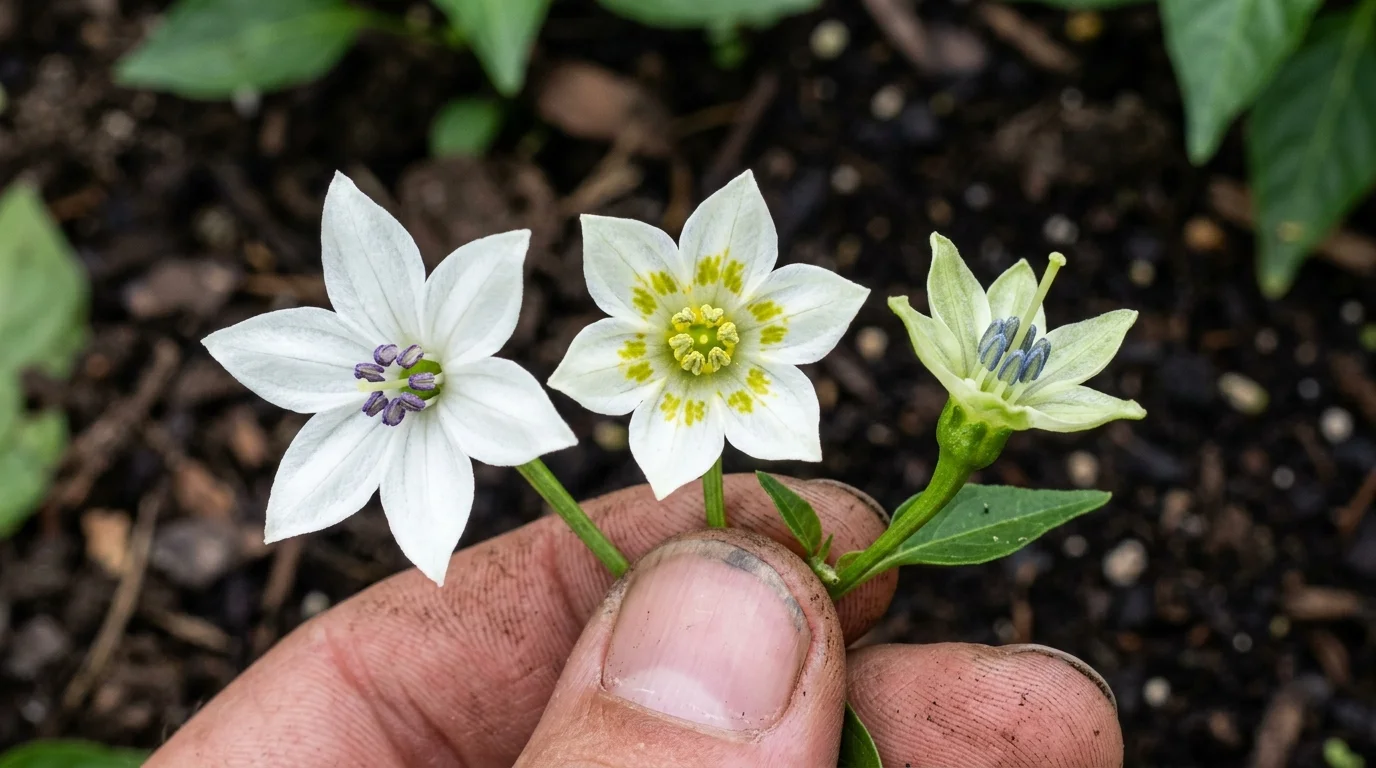
The blossom is the most reliable botanical fingerprint on the plant. Examine three specific flower traits:
- Blossom Count per Node: Does a single flower emerge from each leaf axil, or do blossoms emerge in clusters of two, three, or five? Single blossoms point to C. annuum or C. baccatum. Clustered blossoms indicate C. chinense or C. frutescens.
- Corolla Color and Markings: Pure white or dull dingy-white petals without spots are standard for C. annuum. Petals that show vivid yellow, olive-green, or tan spots on the inside lobes are the unmistakable signature of C. baccatum. Solid, deep purple or violet petals belong to C. pubescens or specific ornamental strains.
- The Calyx Collar: Look at the green cup that anchors the flower petals to the stem. If there is an annular constriction—a distinct raised ring or “neck” between the stem and the base of the calyx—you have a C. chinense.
Step 3: Track Pod Orientation and Seed Color
Notice which way young pods point as they emerge from the spent flower. Do they point straight up toward the sky (erect), or do they hang down toward the soil (pendant)? Capsicum frutescens (like Tabasco) and most ornamental varieties hold their pods stubbornly erect. Finally, if you slice open a ripe pod and discover dark brown or pitch-black seeds instead of the usual cream-colored discs, you are holding a C. pubescens Rocoto.
Expert Tip: When taking a photo to identify a mystery pepper, skip the leaves. Take a macro shot looking directly into the open flower face, and a second shot from the side showing where the calyx meets the stem. Those two angles reveal corolla spots, calyx rings, and blossom grouping within thirty seconds.
Custom Milestone Timeline: Indoor Growing Cycle Planner
Track week-by-week milestones from germination to harvest with custom lighting hours, pruning dates, and nutrient schedules for your specific crops.
Choosing Varieties for Your Raised Bed
Once you know how plants behave, stop asking what an unlabeled seedling is. Start asking what your raised bed can realistically support. A raised bed is an enclosed environment with rigid boundaries. It rewards compact, heavy-cropping cultivars and punishes sprawling monsters that swallow their neighbors.
Every variety choice comes down to three operational variables:
- Mature Height and Sprawl: An indeterminate tomato vine grows eight to ten feet in a single season. If you position it on the south edge of a four-foot-wide bed, it casts a permanent shadow over every pepper behind it. Choose compact determinate bush types or dwarf varieties when square footage is tight.
- Root Architecture and Bed Depth: Pepper roots are fibrous, lateral spreaders that require a minimum of 12 inches of loose, well-draining soil to anchor and feed. Tomatoes drive a strong taproot deeper, thriving when given 18 to 24 inches of depth. Review our recommendations on choosing a raised garden bed to ensure your frame dimensions match your crop’s root volume.
- Days to Maturity: If you garden in a short northern season with only 90 frost-free days, planting a 120-day C. chinense in an outdoor raised bed leaves you harvesting green, unripened pods in October. Match maturity windows to your local solar calendar.
Product Recommendation: For raised beds dedicated to heavy-fruiting nightshades, build or buy a frame with at least 15 to 18 inches of soil depth. Fill it with a blend of 50% high-quality screened topsoil, 30% aerating composted bark or coco coir, and 20% coarse perlite or pumice to prevent soil compaction over years of watering.
Ornamental Peppers: Pretty, Edible, and Often Misunderstood
Ornamental peppers look stunning in container gardens and along the front perimeter of raised beds. Cultivars like Black Pearl, Medusa, Sangria, and Bolivian Rainbow display variegated purple leaves and glossy, upright pods that change color from lavender to orange to deep crimson as they ripen.
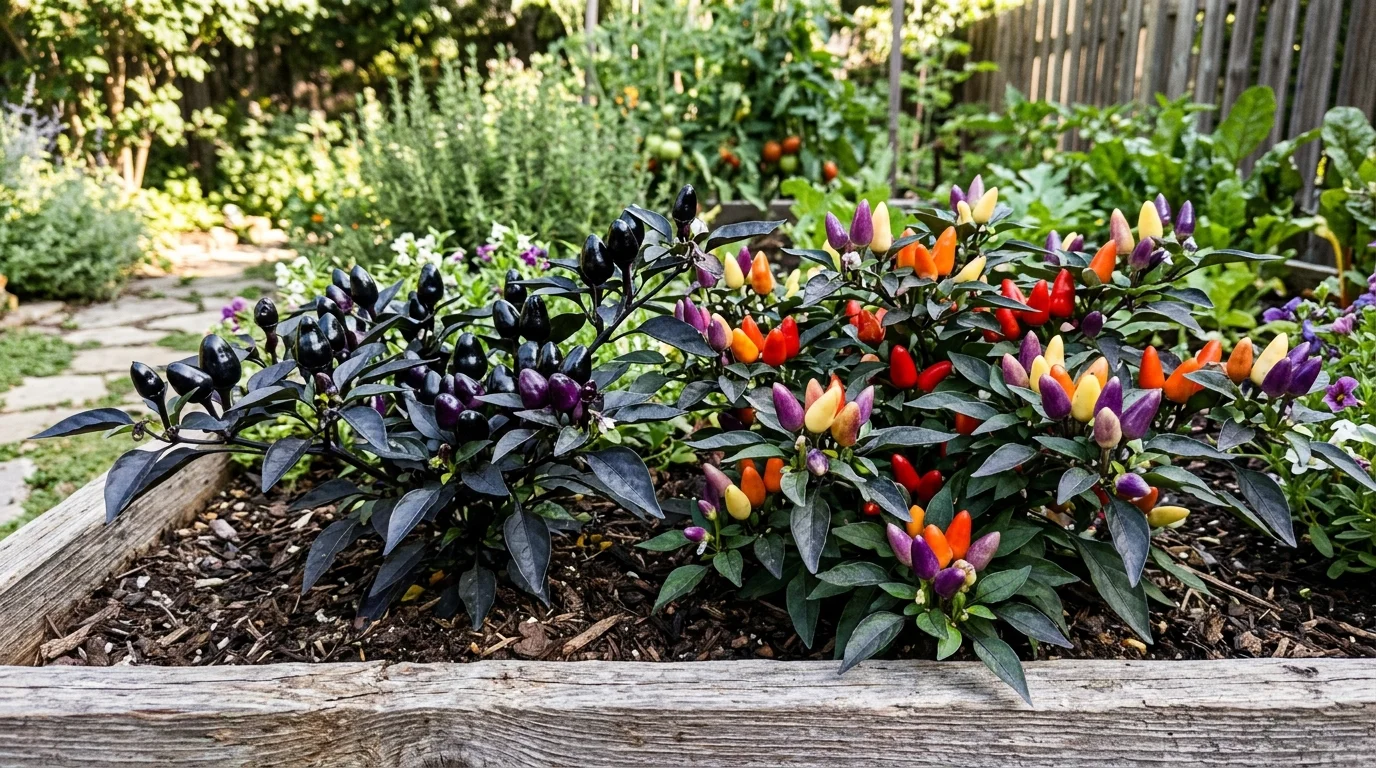
Home gardeners constantly ask whether these peppers are safe to eat. Every botanical pepper pod is edible. They are not poisonous nightshades. However, edible does not mean enjoyable.
Breeding programs for ornamental peppers prioritize three traits: compact upright growth, striking foliage variegation, and pods that stay firm and colorful on the plant for months. Flavor is completely ignored. Most ornamental cultivars carry thin, leathery walls, dry seed cavities, and a flat, bitter flavor profile with no sweetness. More importantly, their heat can be shockingly intense: varieties like Prairie Fire and Black Pearl routinely clock in between 30,000 and 60,000 Scoville Heat Units—roughly ten times hotter than an average jalapeño.
If you grow ornamentals, treat them as visual design elements that attract beneficial pollinators to your raised bed. If you harvest them for the kitchen, use them as dried flakes in hot chili oils where visual flakes matter more than fruit sugars. To keep ornamental plants pushing new flushes of colorful pods through autumn, use snips to remove older, shriveled fruit before the plant redirects its energy into seed maturation.
To explore the best-tasting decorative strains, explore our full review of ornamental pepper varieties.
The Heatless Habanero: Flavor Without the Burn
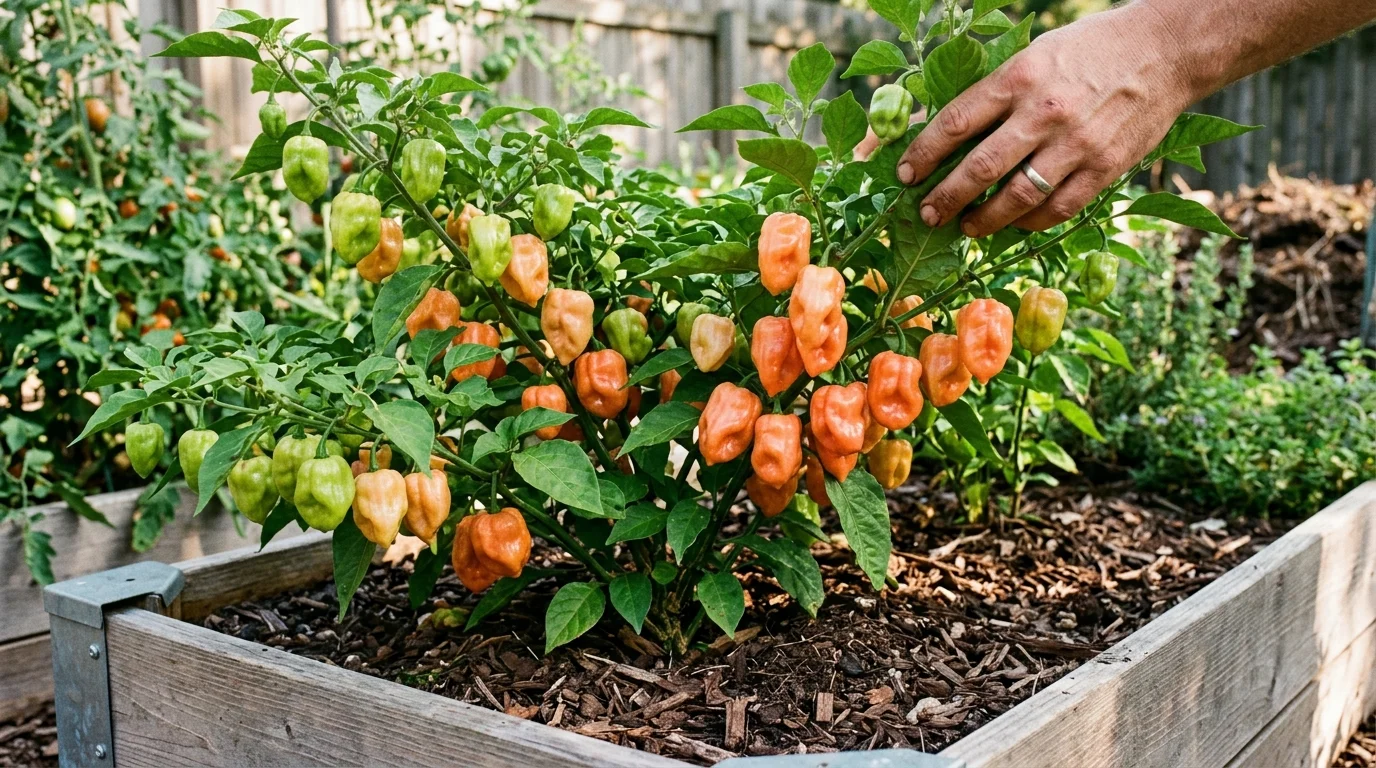
One of the most valuable breakthroughs for home gardeners is the rise of “seasoning peppers”—cultivars that deliver the intense, floral, tropical fragrance of super-hot peppers with zero capsaicin burn. The flagship example is Habanada.
Bred by Dr. Michael Mazourek at Cornell University, Habanada is a true Capsicum chinense. It grows with the classic puckered leaves, multi-blossom nodes, and compact, broad bush habit of a traditional habanero. In late summer, it sets heavy clusters of lantern-shaped pods that ripen to a vivid, glowing apricot-orange.
The Heat vs. Flavor Reality:
Capsaicin is odorless and tasteless; it is simply a chemical compound that triggers pain receptors. The actual “habanero flavor” lives in volatile aromatic terpenes—notes of melon, apricot, tropical fruit, and sweet resin. When you strip capsaicin out of a chinense pod, you unlock a flavor profile that transforms salads, purees, and roasted dishes without burning your throat.
In a raised bed, Habanada is a dream crop. It stays under 2.5 feet tall, fits comfortably on a three-foot spacing grid, and produces dozens of pods per plant. For cooks who love the perfumed aroma of Caribbean hot sauces but cannot handle 300,000 Scoville units, this variety is an essential raised bed staple. Check out our comprehensive grower’s profile on the heatless Habanada to dial in its germination and feeding schedule.
Micro-Dwarf Tomatoes: Big Flavor in a Small Footprint
Standard tomato plants belong to two broad categories: Indeterminate vines that grow endlessly until frost kills them, and Determinate bushes that reach three to four feet, set their fruit all at once, and finish. In a compact raised bed, both types can become space hogs.
Micro-dwarf tomatoes are a distinct genetic category bred specifically for tight containers, indoor grow shelves, and crowded bed perimeters. These plants rarely grow taller than 8 to 12 inches. They develop thick, rugose, dark forest-green leaves on sturdy, tree-like miniature trunks that never require trellising, cages, or heavy staking.
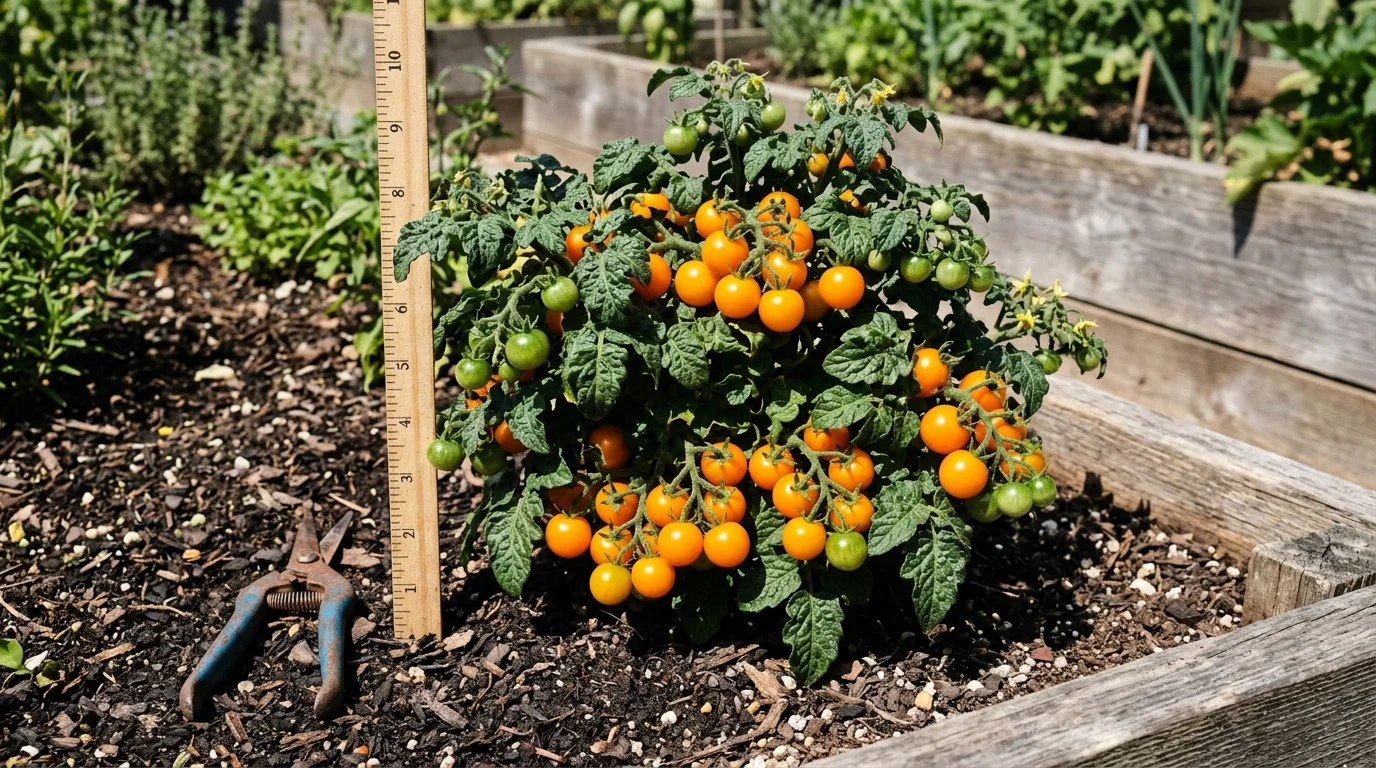
The standout performer in this class is Orange Hat. This micro-dwarf stays under ten inches tall and sets dozens of bright, glowing orange cherry tomatoes with a sweet, low-acid, punchy tomato flavor. Because its canopy is tiny, you can plant micro-dwarfs along the front southern rim of your raised bed where nothing else fits. They will soak up low-angle sunlight without shading your peppers behind them.
Expert Tip: Because micro-dwarf root balls are compact (often sitting entirely in the top six inches of soil), they dry out significantly faster than deep-rooted vining tomatoes. Mulch the base of your micro-dwarf plants with a two-inch layer of shredded straw or clean cedar chips to keep soil temperatures stable and prevent blossom-end rot.
Read our full breakdown of growing micro-dwarf tomatoes like Orange Hat to master succession planting and small-pot fertilizing.
Planning the Bed: Layout, Depth, and Spacing
Once you know the mature habit of your plants, designing a raised bed becomes a straightforward puzzle. A successful raised bed uses vertical layering to ensure every plant receives uninterrupted sunlight.
The 4-Question Variety Filter
Before buying any seed packet or nursery start, run it through this four-part checklist:
- What is the mature vertical height? (Under 12″: Front edge. 2–3 feet: Middle row. 4+ feet: Northern back wall).
- What is the days-to-maturity number? (Does your local frost-free window comfortably exceed this number by at least three weeks?).
- What are the root volume requirements? (Can your bed’s depth support the plant without restricting feeder roots?).
- What is the culinary purpose? (Are you growing for fresh snacking, thick paste sauces, or high-heat drying?).
The Raised Bed Layout Hierarchy (North-to-South Rule)
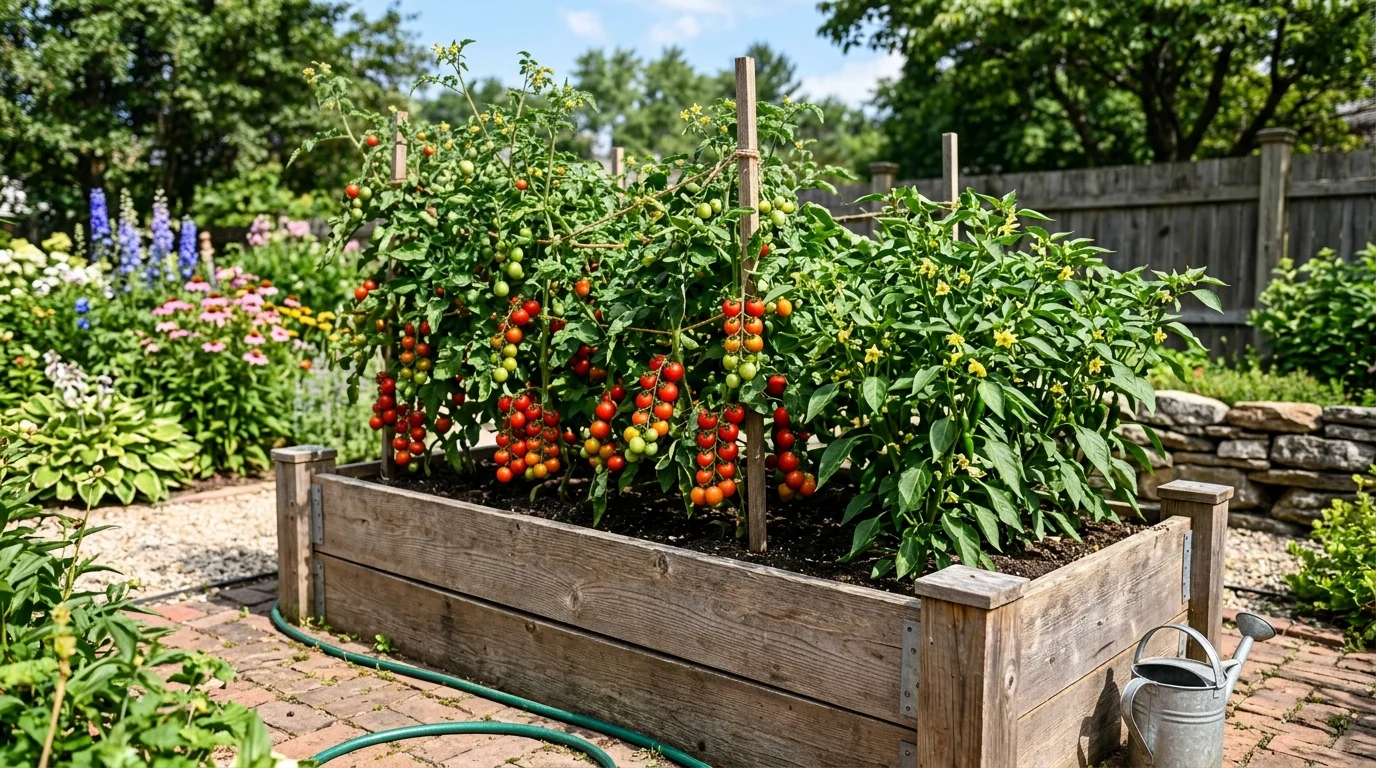
In the Northern Hemisphere, the sun tracks across the southern sky throughout the summer. That basic astronomical rule dictates your bed layout:
- The Back Wall (North Edge): Position tall, indeterminate vining tomatoes here, mounted to heavy cattle-panel trellises or sturdy conduit stakes. They will stretch six to eight feet high without casting shade on the rest of the bed.
- The Middle Tier (Center Bed): Plant your standard peppers (Jalapeño, Bell, Habanada, and compact bush varieties). They grow two to three feet tall, bask in full overhead light, and enjoy the wind protection provided by the tomato trellis behind them.
- The Front Border (South Edge): Plant micro-dwarf tomatoes (like Orange Hat), ornamental border peppers, and low-growing companion herbs like bush basil and thyme. They soak up low southern sun and hide bare soil.
Common Mistakes That Waste a Growing Season
Most garden failures do not come from bad luck or bad weather. They come from small planning errors made during the excitement of spring planting. Avoid these four recurring pitfalls:
- Trusting Marker Pens on Plastic Tags: Standard permanent markers fade to complete illegibility under direct ultraviolet sun exposure in less than forty days. By mid-summer, your plant stakes will be blank white sticks. Use a soft #2 graphite pencil on textured plastic tags, or invest in embossed metal aluminum labels. Pencil carbon never fades in UV light.
- Assuming All Small Peppers Are Mild: Never judge a pepper’s heat by its physical dimensions. A tiny, marble-sized ornamental pepper or a half-inch Bird’s Eye pepper packs enough capsaicin to blister your tongue, while a massive eight-inch Cubanelle or Sweet Banana pepper carries zero heat. If you cannot verify the variety name, cut a tiny sliver of flesh from the tip and touch it cautiously to your lips before cooking.
- Permitting Tomato Shade Creep: A single healthy cherry tomato vine can produce forty feet of vegetative foliage if left unpruned. When tomato foliage sprawls over neighboring pepper canopies, the peppers drop their flower buds due to low light levels. Prune indeterminate tomato suckers weekly to maintain single or double leader stems, keeping airflow open and lower tiers fully sunlit.
- Planting for Names Instead of Habits: Falling in love with a romantic heirloom name from an online seed catalog is the easiest way to overwhelm a small bed. An heirloom beefsteak tomato that produces three gigantic fruits over 95 days is an inefficient use of a small raised bed. A compact, prolific saladette or cluster variety provides fresh, daily harvests in the same footprint.
Expert Tip: On the day you plant your seedlings, take a smartphone photo of the seed packet or plant nursery tag resting directly beside the newly planted seedling in the bed. If physical stakes get kicked loose by a dog or washed away in a heavy downpour, the photo timestamp and location serve as permanent digital insurance for your garden map.
Conclusion: The Master Bed Blueprint
Gardening without knowing your varieties is an exercise in constant frustration. You spend three months watering mystery plants, guessing at their water needs, and reacting to unexpected growth habits that crowd your raised beds and deliver disappointing harvests.
When you learn to read a plant’s flowers, calyx structures, and growth nodes, you take control of your garden. You stop guessing what is growing and start planning your space deliberately. You can position tall indeterminates against the back trellis, anchor the center of the bed with heavy-yielding sweet or heatless peppers, and line the sunny front perimeter with productive micro-dwarf tomatoes that pack maximum flavor into minimal soil.
Take ten minutes this week to walk your garden beds. Inspect the flowers on your mystery plants, check where morning and afternoon shadows fall across your soil, and audit your cultivars against the four-question filter. A productive raised bed is never an accident; it is the natural result of knowing exactly what you are growing.
Frequently Asked Questions: 5 Common Queries Answered
01
Can I identify a pepper plant before it fruits?
Can I identify a pepper plant before it fruits?
You can narrow any pepper plant to its biological species (such as C. annuum , C. chinense , or C. baccatum ) using stem hairiness, leaf texture, and blossom morphology weeks before any pods form. However, naming the exact cultivar (like telling an early jalapeño apart from a serrano) requires mature fruit color, shape, and seed verification.
02
Are ornamental peppers safe to eat?
Are ornamental peppers safe to eat?
Yes, all true pepper pods are non-toxic and botanically edible. However, ornamental cultivars are bred exclusively for visual appeal, upright presentation, and colorful foliage. Their culinary flavor is typically flat, dry, and bitter, and their heat can be intensely sharp (30,000 to 50,000+ Scoville units). Always taste a tiny sliver cautiously before adding them to food.
03
What is a heatless habanero, and does it really taste like a habanero?
What is a heatless habanero, and does it really taste like a habanero?
A heatless habanero like Habanada is a bred variety of Capsicum chinense where the recessive gene responsible for capsaicin production is selected out. Because capsaicin has no odor or flavor of its own, Habanada retains all of the tropical, fruity, melon-like aromatics of a traditional habanero without any heat on the tongue.
04
How deep should a raised bed be for peppers and tomatoes?
How deep should a raised bed be for peppers and tomatoes?
Peppers need a minimum soil depth of 12 inches to accommodate their fibrous lateral root network. Tomatoes root deeper and perform significantly better with 15 to 18 inches of soil depth. Deeper beds hold moisture more consistently during hot mid-summer stretches and resist rapid soil temperature fluctuations.
05
What is a micro-dwarf tomato, and why would I grow one?
What is a micro-dwarf tomato, and why would I grow one?
Micro-dwarfs are genetically miniature tomato plants that mature under 12 inches in total height. Unlike sprawling indeterminate vines, micro-dwarfs develop thick, sturdy miniature trunks and dense rugose foliage. They produce real cherry tomatoes in small containers or along the front edge of raised beds without shading neighboring crops.
Raised Bed Solanaceae Spacing, Soil Nutrition & Calcium Engineering Specs
In-row spacing formulas, root architecture depth, stage-specific N-P-K ratios, and blossom end rot calcium thresholds.
| Cultivar Category | In-Row Spacing | Root Depth Potential | Veg N-P-K Need | Fruiting N-P-K Need | Weekly Water / Plant | Available Calcium Target |
|---|---|---|---|---|---|---|
| Determinate Bush Tomato (Roma, Celebrity) | 18 – 24 Inches | 18 – 24 Inches | 4-1-2 | 1-2-4 | 3.5 – 5.0 Gallons | 120 – 150 ppm (Critical) |
| Indeterminate Vining Tomato (Beefsteak, Sungold) | 24 – 36 Inches | 24 – 36 Inches | 4-1-2 | 1-3-5 | 5.0 – 7.0 Gallons | 150 – 200 ppm (Heavy Demand) |
| Compact Jalapeño & Serrano | 14 – 18 Inches | 14 – 18 Inches | 3-1-2 | 1-2-3 | 2.5 – 3.5 Gallons | 100 – 130 ppm |
| Standard Bell Pepper | 18 – 24 Inches | 16 – 20 Inches | 3-1-2 | 1-2-4 | 3.0 – 4.5 Gallons | 120 – 150 ppm |
| Habanero & Specialty Chinense | 18 – 24 Inches | 18 – 22 Inches | 2-1-2 | 1-2-4 | 2.5 – 4.0 Gallons | 100 – 130 ppm |

Pingback: How to Start a Vegetable Garden from Seed: Planning Guide